Small-desk terminal builders
If your laptop must share a desk with a notebook, dock or display, a compact built-in screen and a workable connection plan matter more than screen size alone.


Choose a laptop whose operating system supports your actual build tools, then check whether its screen, ports, memory and storage fit the space and workload. A compact MacBook Air is an option for a macOS-compatible project; a Windows laptop can provide Linux command-line tools through Windows Subsystem for Linux (WSL); and a Framework Laptop 13 offers configurable ports and replaceable parts. None of those routes removes the need to check your project dependencies and desk connections before buying.
If your laptop must share a desk with a notebook, dock or display, a compact built-in screen and a workable connection plan matter more than screen size alone.
If you need Windows applications alongside Bash or Linux utilities, WSL may provide the combination you need. Microsoft says WSL runs Linux distributions and command-line tools on supported Windows installations; check your project tooling as well.
If you expect to change your operating system, storage, memory or ports, a configurable laptop is worth considering. Framework describes replaceable parts and Expansion Cards for its Laptop 13, though card support depends on the model and slot.
Check the operating system against your toolchain before deciding how much built-in screen space, local-build capacity and desk connectivity you need.
Choose when: Your project supports macOS and you want a compact screen with an external-display option.
Trade-off: Apple lists two Thunderbolt 4/USB-C ports on the 13-inch M5 MacBook Air, so a peripheral-heavy setup may need a dock or adapters.
Choose when: You need Windows software as well as Linux command-line tools; Microsoft documents WSL for that combination.
Trade-off: You need a supported Windows and WSL setup, while local container builds may place substantial demands on memory.
Choose when: You value the option to install Linux and change components or ports over time; Framework offers these choices for Laptop 13.
Trade-off: Framework says Expansion Card support varies by model and slot, so the card arrangement needs checking.
| Concern | What to check | Who this matters to |
|---|---|---|
| Workspace and connections | Measure your available desk space and check the exact laptop dimensions, display-output support and ports needed for your monitor or dock. | If my desk also holds a notebook or display, I need enough room to work without leaving essential devices disconnected. Around 38% of consumers put workspace fit and connections first. |
| Toolchain compatibility | Check required runtimes, compilers, SDKs and container tools against your intended macOS, Windows with WSL, or Linux setup. | When my build depends on a particular environment, I need to know it will run before screen size or storage sways me. Roughly 31% of consumers prioritise toolchain compatibility. |
| Local-build headroom | Estimate your concurrent services and local data, then check memory, SSD capacity and whether the exact configuration can be upgraded. | If I run containers, tests and a local database together, I need capacity for that session rather than just terminal editing. About 31% of consumers put local-build headroom and longevity first. |
A compact laptop cannot fix a mismatch between your project and its required compiler, SDK or deployment environment. WSL provides Linux tools on supported Windows installations, but it still adds a Windows-and-WSL setup to maintain.
List the required tools and target platform first, then confirm a supported macOS, Windows with WSL, or Linux workflow for your project.
Apple lists two Thunderbolt 4/USB-C ports for the 13-inch M5 MacBook Air. Framework documents model- and slot-dependent limits for Laptop 13 Expansion Cards. A port count alone does not settle how charging, a display and wired accessories will work together.
List the devices you will connect at the same time and check the laptop, dock, display input and charging arrangement as a complete setup.
Running builds and local services can make a different demand from writing a small CLI script. Docker notes that its WSL 2 workflow uses dynamic memory and can run memory-intensive image builds.
Size memory and storage around your busiest normal development session, and check upgrade options if that workload may grow.
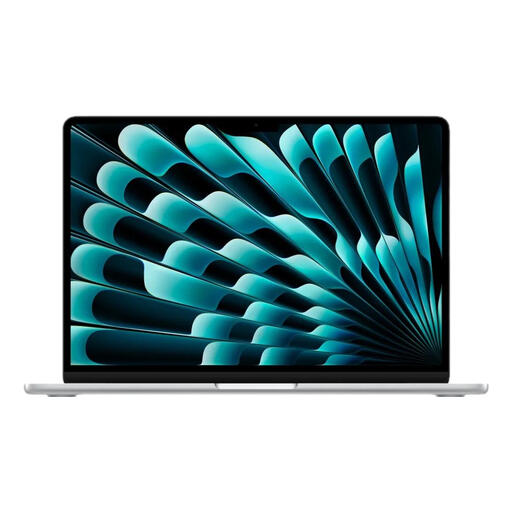
The 13-inch MacBook Air M5 is a compact macOS option when your development tools support that operating system.
The ThinkPad X1 Carbon Gen 13 is a 14-inch Windows route for someone who needs Windows applications and may also use WSL.
Framework Laptop 13 is a compact route for buyers who want to select ports, consider Linux and replace components over time.
These laptops offer compact macOS and Windows-oriented choices, plus larger-screen options if you would rather use more desk space for the built-in display. Check your toolchain and connection needs against each exact configuration.
 No image available
Consider this 13-inch-class option if built-in screen space is limited and you expect to keep substantial project files locally.
The named configuration has an FHD+ 60 Hz touch display, Intel Core Ultra 7 155H, 32 GB LPDDR5 RAM and a 1 TB SSD. Check its exact ports, display connections and support for your development tools before arranging a dock.
 No image available
The 14-inch format may suit a desk where you want a usable built-in coding screen without moving to a larger laptop.
This configuration names a Snapdragon X processor, 16 GB RAM and a 512 GB SSD. Check that every required runtime, compiler and container tool works with its ARM-based setup; confirm that 16 GB will cover your local workload.
 No image available
This compact macOS route makes sense if your command-line project and its dependencies support macOS.
The named variant has a 10-core CPU, 10-core GPU, 16 GB unified memory and a 1 TB SSD. Apple lists two Thunderbolt 4/USB-C ports for the 13-inch M5 model; check how your display and peripherals will connect together.
 No image available
Consider the larger built-in screen if you usually work without an external monitor and can spare the desk space.
The named configuration has an Intel Core 5 120U, 24 GB RAM and a 1 TB SSD. Measure the space available for its 15.6-inch format rather than judging its fit by screen size alone.
 No image available
The 14.5-inch touch display offers another built-in-screen size to assess against the space on your desk.
The named configuration includes an Intel Core i9, 16 GB RAM, a 1 TB SSD, RTX 3050 and Windows 11 Home. Confirm the physical dimensions, ports and external-display arrangement, as well as compatibility with your project tools.
No: a 13- or 14-inch laptop can suit terminal work on a small desk if you are comfortable with its screen and have the external-display connection you need. Apple lists a 13.6-inch MacBook Air display, Framework describes a 13.5-inch Laptop 13, and the cited Lenovo ThinkPad X1 Carbon Gen 13 is a 14-inch model. A larger built-in display is worth considering if you will usually work without a monitor.
Yes, if your Windows installation and project tools support WSL. Microsoft says WSL lets developers install a Linux distribution and use Linux applications, utilities and Bash tools on Windows. Check the requirements for your chosen Windows version and any containers or SDKs you need.
Base the choice on the services, builds, language tools and local databases you expect to run together, not on terminal editing alone. Docker says its WSL 2 workflow allocates memory dynamically and supports memory-intensive image builds; check the memory in the exact laptop configuration and whether you could upgrade it later.
Framework offers a DIY Laptop 13 option for installing a preferred operating system, including Linux, and uses Expansion Cards to select ports. Check the specific mainboard and slot arrangement: Framework says not every card type works in every slot on the AMD Ryzen AI 300 model.
Check your local authority or retailer for an appropriate electrical-equipment collection or take-back route rather than putting the laptop in ordinary residual waste. GOV.UK describes equipment that depends on electrical current as electrical and electronic equipment under the UK WEEE framework; the collection arrangement to use depends on what is available to you.