Space-constrained command-line learner
If most of your work happens at one desk, a compact desktop may leave more room for your monitor and coursework. Check that its operating system runs the tools you need and that the complete setup fits.


Choose a compact desktop if desk space is tight, but confirm that your course software and command-line tools support its operating system and processor architecture before deciding between a Mac and a PC. A tower makes more sense when you have a concrete need for internal expansion and room to accommodate it; memory and storage should reflect the projects you expect to run.
If most of your work happens at one desk, a compact desktop may leave more room for your monitor and coursework. Check that its operating system runs the tools you need and that the complete setup fits.
If your course requires Windows, Linux or x86-oriented tools, consider a PC configuration that supports the required environment. A mini desktop keeps the computer itself small, but the exact operating system and tool compatibility still matter.
If you expect to add internal cards or need substantial future memory expansion, a tower is worth considering. Allow for its larger footprint before committing space in a student room.
Consider it when: Your project and course tools support macOS and Apple silicon, and a small desktop suits your desk.
Allow for: Check x86-dependent tools or virtual-machine images before choosing this route, along with storage capacity and external peripherals.
Consider it when: Your required PC-based environment is available in a compact configuration.
Allow for: The operating system, connections and upgrade options depend on the exact model; a mini PC offers less room for internal expansion than a tower.
Consider it when: You have a specific need for internal cards, graphics or substantial future memory expansion.
Allow for: The larger case must fit alongside the display and other equipment in your room.
| Concern | What to check | Who this matters to |
|---|---|---|
| Desk space and setup | Measure space for the computer, monitor and input devices; check display connections and what the bundle includes. | If my desk is crowded, I need the whole workstation to fit, not just a small computer case. Around 42% of consumers put setup space first. |
| Toolchain compatibility | Confirm the course-required operating system, processor architecture and support for essential tools or virtual-machine images. | When a course specifies particular software, I need a machine that can run it before considering other features. Compatibility comes first for roughly 33% of consumers. |
| Capacity and expansion | Compare RAM and SSD capacity with your planned local workloads; check the exact model's upgrade options if you expect to expand it. | If I plan to keep project files and run local services or virtual machines, I need capacity that suits that work. About 25% of consumers prioritise capacity or future expansion. |
Microsoft's installation minimums are not a measure of how much memory and storage your project will need. The University of Hertfordshire recommends at least 8GB RAM for a student computer and identifies 16GB as a better long-term option.
List the editor, browser, compiler, local services and any virtual machines you expect to use together, then choose capacity for that workload.
A compact case cannot resolve a mismatch between a course tool, virtual-machine image or target environment and the computer's operating system or processor architecture.
Check the project requirements and required tools before choosing macOS, Windows or a Linux-capable configuration.
A tower takes more room than a mini desktop. Its expansion options matter most when you can name the internal cards, graphics or memory capacity your work will require.
Measure its intended location and compare a mini desktop first if your planned command-line work has no concrete expansion requirement.
For an ordinary UK online goods contract, the cancellation period normally ends 14 days after the day the goods reach the consumer or their nominated recipient, under the Consumer Contracts Regulations 2013. Exceptions and conditions can affect a particular order; cancellation is separate from remedies for faulty goods. Electrical equipment is also covered by the UK's WEEE framework, as described by GOV.UK.
Before ordering, check the seller's delivery and cancellation information, the exact configuration and any available route for recycling an old computer.
Mac mini is a compact macOS option when course software and project dependencies support Apple silicon.
ThinkCentre neo 50q Gen 5 is a compact PC line to consider for a Windows-oriented student-room setup.
OptiPlex Tower Plus illustrates the expandable-tower route for projects with a defined need for internal expansion.
These compact Windows PCs, specialised small desktop and expandable tower suit different project requirements. Check your course toolchain and available space before comparing their configurations.
 No image available
Consider this mini PC for a space-limited Windows setup if its software environment meets your course requirements.
The named configuration has Windows 11 Pro, 16GB LPDDR5 memory and a 512GB NVMe SSD. Check whether its memory can be upgraded if that matters to your plans.
 No image available
This mini PC is an option for a stationary Windows-based project once the required tools have been checked.
The product name specifies Windows 11, 16GB LPDDR4 memory and a 512GB SSD. Confirm the monitor, keyboard and mouse arrangements for your setup.
 No image available
Consider this compact desktop if your course uses a compatible Windows toolchain and you want to keep the computer off a large tower footprint.
The named variant has an Intel Core 5 processor, 16GB RAM and a 512GB SSD. Check its dimensions and included peripherals against your available desk space.
 No image available
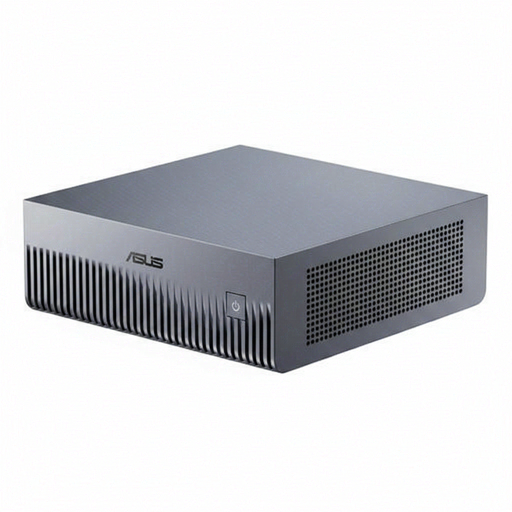
This specialised desktop is worth considering only if your project calls for its NVIDIA DGX OS environment and your required tools support its Arm-based platform.
The named configuration has 128GB unified memory and a 1TB NVMe SSD. Its memory is not user-upgradeable, so check the environment and long-term capacity requirements before choosing it.
 No image available
Consider this tower if you have a specific need for its configuration and enough room for a larger desktop.
The product name specifies Windows 11 Home, 32GB RAM and a 1TB SSD. Measure the intended space and check which display and input peripherals are included.
Yes, if you mainly work from one room and do not need to take the same computer to campus. The University of Hertfordshire notes that a desktop cannot be carried around campus, so check whether your course also calls for a portable device.
Match capacity to your tools and local workloads rather than treating one configuration as mandatory. The University of Hertfordshire recommends at least 8GB RAM, describes 16GB as a better long-term option and prefers an SSD of at least 256GB; projects with local services or virtual machines may justify checking a 16GB/512GB configuration.
No. Microsoft's Windows 11 requirements establish an installation minimum, including 4GB memory and 64GB storage, not the capacity your editor, project files and other tools will need. Check the exact PC against both the operating-system requirements and your development workload.
For an ordinary UK online goods contract, the cancellation period normally ends 14 days after the day the desktop reaches you or your nominated recipient, under the Consumer Contracts Regulations 2013. Check the applicable terms and exceptions; cancellation for a change of mind is distinct from remedies if goods are faulty, damaged or misdescribed.
Check an appropriate electrical-equipment recycling route before disposing of it. GOV.UK describes the UK WEEE framework for electrical and electronic equipment; ask the retailer about available take-back arrangements or check your local authority's collection options.