
24/7 Customer Support

Free returns

Same-day & Next-day Delivery

Quality Guaranteed

Unlock Your Welcome Offers: FREE Delivery | Up to 80% OFF | Free 30-day JoyPlus trial
Download the APP
As a Joybuy Product Recommendation Officer, I see many UK commuters looking for a single piece of gear to solve multiple problems. The idea of a commuter bike helmet with light and visor is appealing: one item that protects your head, improves your visibility and shields your eyes. However, the market is filled with options where these integrated features can become frustrating points of failure. Before you buy, it's crucial to understand the common pitfalls that lead to disappointment and wasted money.
Many helmets promise convenience but fail in execution. Here are the three most common issues we see:
adjustable commuter helmet needs a precise, reliable mechanism.To avoid these pitfalls, focus on a few core technical specifications. These are the non-negotiable elements that separate a reliable piece of safety equipment from a gadget that will let you down.
Before looking at any other feature, check for safety certifications. In the UK, helmets should meet specific standards. Look for a CPSC certified bike helmet (a common US standard widely respected here) or one that meets EN 1078 (the European standard). This certification ensures the helmet's shell and foam core have passed rigorous impact absorption tests. It is the fundamental proof that the helmet can perform its primary job: protecting your head.
A good e-bike helmet with rear light should offer practical, long-term visibility. Key features to look for include:
helmet for night riding in the UK.The ideal eye-shield solution for an urban cycling helmet with light is one that adapts to your needs. A bicycle helmet with magnetic goggles offers a great balance. The magnets allow for instant attachment or removal, even with gloves on. This lets you flip the goggles up or take them off when you stop or enter a building. Ensure the lens material offers UV protection and is described as having anti-fog or scratch-resistant properties for clear, undistorted vision.
Based on these practical criteria, we've matched a few standout options to different types of UK commuters.
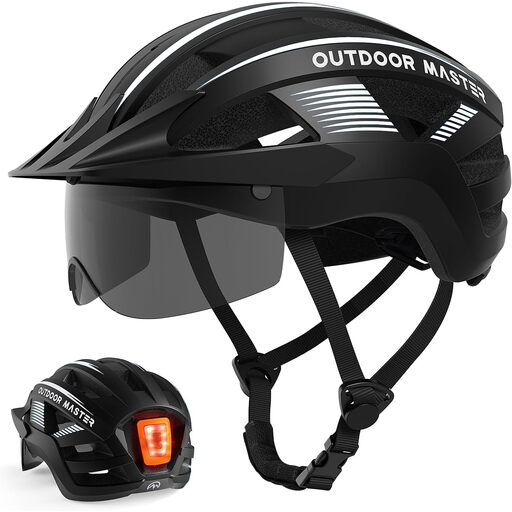
Why This Fits Their Persona: This is for the daily rider in cities like London or Manchester who values efficiency. They want a single, reliable helmet for their commute on a bike or e-bike, protecting them from traffic, weather and road debris without needing separate accessories.
It features a Type-C rechargeable rear light, avoiding the disposable battery issue. The magnetic detachable goggles provide clear, UV-protected vision without the distortion of cheap visors. Its dial-fit system ensures a secure fit, countering the "one-size" trap.
A fully integrated system that is both CPSC and ASTM certified. The combination of a modern rechargeable light and high-quality magnetic goggles offers excellent value and convenience.
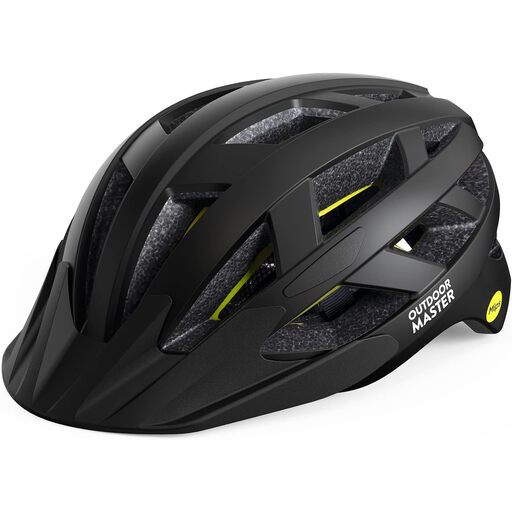
Why This Fits Their Persona: For the rider who prioritises advanced impact protection above all else. They likely already own a set of high-performance bike lights and want a helmet with a top-tier safety system and a functional visor, without paying for an integrated light they don't need.
It sidesteps the "bad integrated light" trap by not including one, focusing its value on the MIPS safety system. It provides a quality removable visor and a precise double-adjustment system, ensuring a secure fit and clear vision.
The inclusion of the MIPS (Multi-directional Impact Protection System) is designed to reduce rotational forces on the head during certain types of impact. It also features 25 vents for excellent airflow.
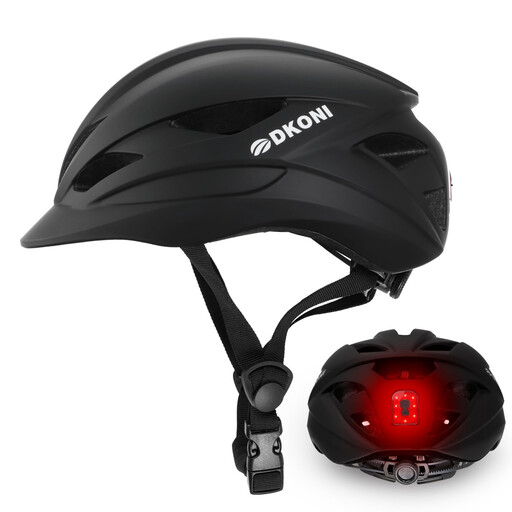
Why This Fits Their Persona: Ideal for students or commuters whose primary concern is being seen during evening rides or on overcast days. They need a reliable, certified helmet with a functional light but are happy to use sunglasses or ride without a visor to keep costs down.
This helmet focuses on doing one thing well: providing visibility. It includes a USB rechargeable LED rear light, solving the main problem of being seen at night without the added cost and potential failure point of a low-quality visor.
It offers a core safety feature (integrated rechargeable light) in a lightweight, well-ventilated and affordable package. The in-mould construction provides reliable impact protection.
We have compiled a complete, real-time list of products that fully satisfy these strict selection criteria and UK safety regulations.
1. How often should I replace my commuter bike helmet? You should replace your helmet immediately after any significant impact, even if there is no visible damage, as its protective structure may be compromised. Otherwise, it is advisable to replace it every 3-5 years. Exposure to sunlight and the natural degradation of materials can reduce its effectiveness over time.
2. Are magnetic goggles on a bicycle helmet secure enough for UK roads? Yes, for their intended use. High-quality magnetic systems use strong magnets that are more than capable of holding the goggles securely in place during normal urban and road cycling, including over potholes and bumps. They are designed to stay on during a ride but can detach in a crash to prevent additional strain.
3. Is an integrated rear light bright enough for unlit country lanes? An integrated rear light is excellent for enhancing your visibility in urban and suburban areas where there is ambient street lighting. However, for riding on completely unlit roads, it should be considered a secondary safety feature. We recommend pairing it with a more powerful, frame-mounted front and rear light set to ensure you can both see the road ahead clearly and be seen from a greater distance.