A compact camera is worth carrying alongside a phone when you have a specific use for its optical lens range, shooting controls or dedicated photo and video features, and want one fixed-lens device rather than a camera kit. Choose a pocket travel zoom for distant subjects or a compact with a brighter lens and video controls when those features matter more than reach. A bridge camera offers another long-zoom route, while a mirrorless kit makes sense only if you are willing to carry the body and lens; if your phone already meets your needs, an accessory may be enough.
Who might carry a separate camera?
Pocket travel-zoom seekers
If distant details are the reason for bringing a camera, a fixed-lens travel zoom is worth examining. Panasonic UK & Ireland lists a 24–720mm-equivalent 30x optical zoom and an approximate weight of 322g with battery and memory card for the LUMIX TZ99.
Travellers focused on photos and clips
If lens aperture, framing yourself or recording with an external microphone matters more than a long zoom, compare those features on the exact compact. Canon UK lists a 1.0-type sensor, a 24–100mm-equivalent f/1.8–2.8 lens, 4K recording and a 3.5mm microphone input for the PowerShot G7 X Mark III.
Long-reach day-trip photographers
If distant subjects are the main attraction and a pocket-sized camera is not essential, consider a bridge camera. Panasonic UK & Ireland lists a 20–1200mm-equivalent 60x optical zoom for the LUMIX FZ82D, which weighs approximately 596g with battery and memory card.
What matters when choosing?
For a holiday or day trip, decide what your phone cannot do for the pictures or clips you want. Then weigh that need against how much camera equipment you will actually carry.
Fixed-lens compact
Choose it when: You want a separate camera with a particular optical range or set of shooting features, without packing extra lenses.
Accept: The built-in lens fixes the framing range you can use without changing cameras.
Bridge camera
Choose it when: Long optical reach matters enough to carry the camera rather than pocket it.
Accept: Panasonic UK & Ireland lists its 60x FZ82D bridge camera at approximately 596g with battery and card, against approximately 322g for its 30x TZ99 travel compact.
Mirrorless kit
Choose it when: Changing lenses is more important to your trip than carrying one self-contained camera.
Accept: The lens and other kit must be accounted for alongside the camera body when planning what to carry.
Phone and accessories
Choose it when: Your phone already gives you the images you want and the remaining problem is support, handling or charging.
Accept: Check that an accessory fits your phone and solves that particular problem; it does not change the phone into a camera with a different optical lens.
The concerns below describe consumers considering a camera for a holiday or day trip, grouped by the need they would put first. Your own priorities may overlap.
| Concern |
What to check |
Who this matters to |
| Optical reach |
Compare the optical zoom and 35mm-equivalent focal-length range with the distant subjects you expect to frame. Do not treat a digital-zoom figure as the lens range. |
If I cannot move closer to a landmark or wildlife, framing it from where I stand is my reason for carrying a camera. Around 31% of consumers would put optical reach first. |
| All-day carry |
Check dimensions and the stated weight with battery and card, then compare them with the pocket or bag you intend to use. |
I want the camera with me throughout a day out, rather than leaving it behind because it is awkward to carry. For around 31% of consumers, portability would be the primary need. |
| Photo and video controls |
Compare aperture across the lens range and check the screen, microphone input and recording mode you intend to use. |
For evening scenes or self-recorded clips, I would give shooting and video features priority over maximum zoom. Around 23% of consumers would make those features their first concern. |
| Second-device burden |
Identify the phone limitation you need to solve; if considering a camera, check its charging accessories and exact-model memory-card requirements. |
If my phone already handles the shots I plan to take, I would rather avoid charging and carrying another device. Keeping the setup simple would come first for around 15% of consumers. |
Checks before you travel
-
Reading every zoom figure as optical zoom
Optical and digital zoom are different specifications. Panasonic UK & Ireland lists optical, Intelligent and Digital Zoom separately for the TZ99, so the largest zoom figure alone does not tell you the lens range.
Compare optical zoom and the 35mm-equivalent focal-length range before deciding whether the camera can frame your intended subjects.
-
Assuming the charging kit is in the box
The Panasonic Store UK listing for the TZ99 says it has USB-C charging but does not include a USB cable or AC adapter.
Check the supplied accessories for the exact version you are buying and whether you already have a compatible way to charge it.
-
Packing spare batteries without checking flight rules
Battery packing affects what you can take on a flight. The UK Civil Aviation Authority advises carrying spare batteries in the cabin and protecting them from damage.
Protect spare camera batteries in cabin baggage, check their watt-hour marking and confirm your airline’s current requirements before departure.
Brands to consider
Panasonic LUMIX
Panasonic offers relevant examples across fixed-lens travel zooms, bridge cameras and Micro Four Thirds mirrorless bodies.
- Panasonic UK & Ireland lists a 24–720mm-equivalent 30x lens and approximately 322g ready-to-carry weight for the TZ99, and a 20–1200mm-equivalent 60x lens and approximately 596g for the FZ82D, both weights including battery and card.
- The FZ82D is a larger item to pack than the TZ99; a G97 mirrorless body also calls for a separate lens choice.
Canon
The PowerShot G7 X Mark III is a fixed-lens compact to consider when a 1.0-type sensor, lens aperture and travel-video features matter more than a long zoom range.
- Canon UK lists a 24–100mm-equivalent f/1.8–2.8 4.2x optical lens, 4K video, a tilting screen and a 3.5mm microphone input.
- Its stated telephoto endpoint is shorter than the 720mm-equivalent endpoint Panasonic lists for the TZ99; check which range suits your subjects.
Sony
The RX100 VII is a fixed-lens compact to examine if you want a viewfinder alongside a moderate zoom range.
- Sony United Kingdom lists a 24–200mm-equivalent 8x optical lens, a 1.0-type sensor, an electronic viewfinder and optical stabilisation for the RX100 VII.
- Decide whether that particular lens range meets your travel needs rather than assuming it replaces a longer travel zoom.
Joybuy product choices
These choices include a fixed-lens camera for wide-angle self-recording, a pocket gimbal camera for travel clips and interchangeable-lens kits for trips where carrying more equipment is acceptable. Check the lens and complete carrying setup against the kind of trip you have planned.
 No image available
Sony ZV-1F compact vlog camera, 1-inch sensor
Consider this fixed-lens camera if self-recorded travel clips matter more to you than framing distant subjects. Its product name identifies a 1-inch sensor and an ultra-wide lens; check that the lens framing suits the photos you plan to take.
View on Joybuy
 No image available
Sony A6700 APS-C mirrorless camera with 16–50mm lens
This interchangeable-lens option suits a trip where you are willing to carry a camera-and-lens kit rather than a pocket compact. The named bundle includes a 16–50mm lens and identifies AI-powered autofocus; check the weight of the complete kit and the exact model’s weather precautions before taking it out all day.
View on Joybuy
 No image available
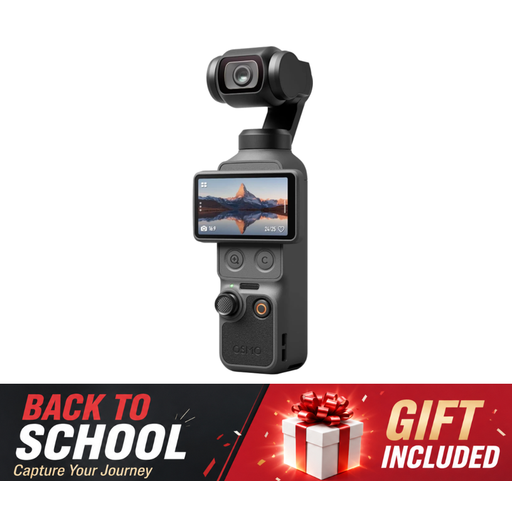
DJI Osmo Pocket 4 Standard Combo gimbal camera
Consider this for travel clips if a gimbal camera appeals more than a conventional stills compact. Its product name specifies a 1-inch CMOS sensor, 4K/240fps recording, 3-axis stabilisation, 107 GB built-in storage and a 2-inch rotating screen. It also calls the 2× zoom “lossless”; check the optical lens range separately if distant subjects are important.
View on Joybuy
 No image available
Sony A6400 APS-C mirrorless camera with 16–50mm power zoom lens
This kit is for travellers who want an interchangeable-lens camera and can accommodate it throughout the day. The named bundle includes a 16–50mm power zoom lens; check its framing range for your subjects and assess the whole kit, not just the camera body, when planning what to carry.
View on Joybuy
 No image available
Sony ZV-E10K vlog camera with 16–50mm power zoom lens
Consider this interchangeable-lens kit when recording yourself on a trip matters more than travelling with one fixed-lens compact. Its product name identifies an included 16–50mm power zoom lens; check the complete kit’s carrying size and whether that lens frames the scenes you expect.
View on Joybuy
Frequently asked questions
When is a compact camera worth taking alongside my phone?
Take one when you can identify a camera feature you will use that addresses a limitation of your phone. Panasonic UK & Ireland lists a 24–720mm-equivalent optical lens for the TZ99, while Canon UK lists a 1.0-type sensor and f/1.8–2.8 lens for the G7 X Mark III; those are different reasons to carry a camera, not a guarantee that either will improve every photo.
Travel compact or bridge camera for a day trip?
Choose a travel compact if carrying size is decisive; consider a bridge camera if longer optical reach matters enough to carry a larger body. Panasonic UK & Ireland lists the TZ99 at approximately 322g with battery and card and a 24–720mm-equivalent lens, against approximately 596g and a 20–1200mm-equivalent lens for the FZ82D.
What should I check before buying a Panasonic TZ99?
Check whether you have the charging accessories you need. The Panasonic Store UK listing says the TZ99 supports USB-C charging but does not include a USB cable or AC adapter; also confirm the exact model’s memory-card requirements for the photos or video you plan to record.
How should I carry spare camera batteries on a flight?
Carry spare batteries in cabin baggage and protect them from damage, in line with UK Civil Aviation Authority guidance. Check each battery’s watt-hour marking and your airline’s current rules before departure, particularly if you plan to carry larger batteries.


