What should you check?
Start with what your phone cannot do for your usual trips, then compare the complete kit you would actually carry—not just a camera body or a headline specification.
| Priority |
What to check |
Your needs |
| Carry and readiness |
Compare ready-to-use weight and size, including the battery and any lens. Check charging connections and what comes in the box. |
I want to take a camera on ordinary days out without planning around a larger kit. If carrying lenses would put me off, a fixed-lens compact deserves a closer look. |
| Distant subjects |
Compare optical zoom and both ends of the stated 35mm-equivalent focal-length range; a zoom multiplier alone does not describe the framing. Check whether a viewfinder matters to you. |
Landmarks or performances are often too far away for the framing I want. A travel-zoom compact keeps the lens attached; I would consider a larger bridge camera if longer reach and a viewfinder mattered more than pocketability. |
| Indoor photos |
Compare the exact sensor, lens aperture and stabilisation specifications rather than megapixels alone. If specialist lenses are important, account for the size of a mirrorless kit. |
I take family photos indoors or in the evening and want more control over the result. I would compare actual camera and lens options before assuming every compact improves on my phone in difficult light. |
| Video and sharing |
Look beyond a 4K label: check autofocus, stabilisation, sound options, screen movement and recording conditions. For a phone stabiliser, check device and app compatibility. |
For walking clips, I may only need to steady the phone I already use. If I also want a separate camera for photos, I would check its video controls and how easily footage reaches my phone. |
Relevant brand ranges
These examples illustrate different camera and phone-video routes; specifications belong to the named models, not every product from each brand.
Panasonic LUMIX
Panasonic’s TZ99 represents the travel-zoom compact route, while its FZ82D is a larger bridge-camera alternative.
- Panasonic specifies a 24–720mm-equivalent 30× optical zoom for the TZ99 and a 20–1200mm-equivalent 60× optical zoom with an OLED viewfinder for the FZ82D.
- The UK TZ99 store listing says a USB cable and AC adapter are not included; check the exact bundle and charging plan.
Canon
The fixed-lens PowerShot V1 offers a compact-camera route, while the interchangeable-lens EOS R50 serves a different kind of travel kit.
- Canon specifies a 1.4-inch sensor, 426g weight and 4K 60p recording for the PowerShot V1.
- Canon lists the EOS R50 body at approximately 328g, or 375g with card and battery, before adding a lens. Compare the weight of the complete kit.
Sony
The RX100 VII is a fixed-lens compact worth comparing if you want a separate travel camera.
- Sony specifies a 1.0-type Exmor RS CMOS sensor for the RX100 VII.
- Check the exact lens range and video controls against the subjects you shoot; the sensor designation alone does not establish which model suits your trip.
DJI
DJI’s Osmo Mobile range is a phone-stabiliser option for travellers who intend to keep filming on their phone.
- DJI describes the Osmo Mobile 7 series as using three-axis stabilisation.
- A stabiliser does not add a separate camera’s optical zoom. Check phone compatibility and the conditions for any app-based features.
Joybuy cameras and phone-video options
These options include a phone stabiliser for phone-first video and fixed-lens cameras for separate photo and video capture. Compare their stated features with the reason you are considering a second device.
 No image available
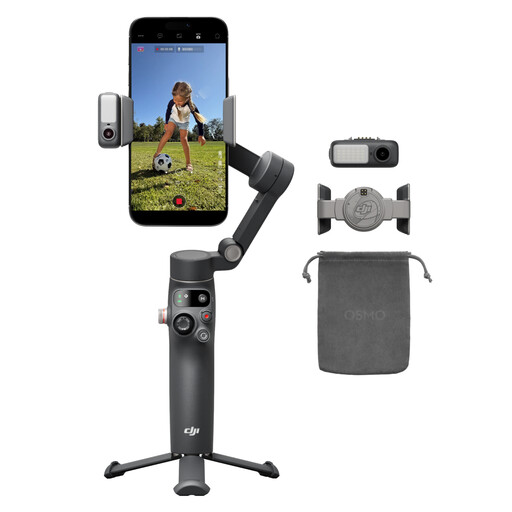
DJI Osmo Mobile 8 phone stabiliser
For filming with a phone rather than carrying a separate camera. The listing describes three-axis stabilisation, tracking, 360° pan, a built-in extension rod and tripod, and a 10-hour battery claim. Check that your phone fits and that the features you want work with its app; this accessory does not add optical zoom.
View on Joybuy
 No image available
Sony ZV-1 II compact camera
A separate camera to consider for travel photos and self-recorded video. Its listing describes an 18–50mm lens, a 1-inch sensor, autofocus, 4K video and smartphone transfer. If distant subjects matter, confirm the equivalent focal-length range rather than assuming this lens offers the reach of a travel zoom; also check ready-to-use weight and box contents.
View on Joybuy
 No image available
Sony ZV-1F compact vlog camera
Consider this fixed-lens option for self-framing rather than distant travel subjects. The listing specifies a 20mm f/2.0 prime lens, a vari-angle screen, a 1-inch sensor and 4K video; it gives a 229g body weight, not a ready-to-shoot weight. Check battery arrangements for longer outings.
View on Joybuy
 No image available
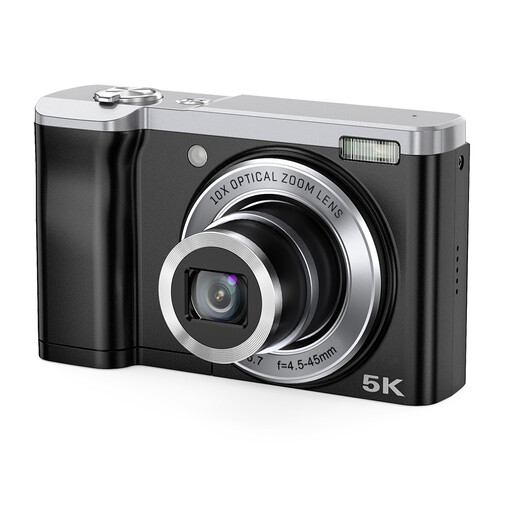
Songdian 5K digital camera, 10× optical zoom, black
A fixed-lens camera to examine if optical reach is important on day trips. The listing states 10× optical zoom, front and rear cameras, electronic stabilisation and 5K recording at 30 FPS. Check the focal-length range for your subjects, plus camera weight and sensor format before judging portability or indoor use.
View on Joybuy
 No image available
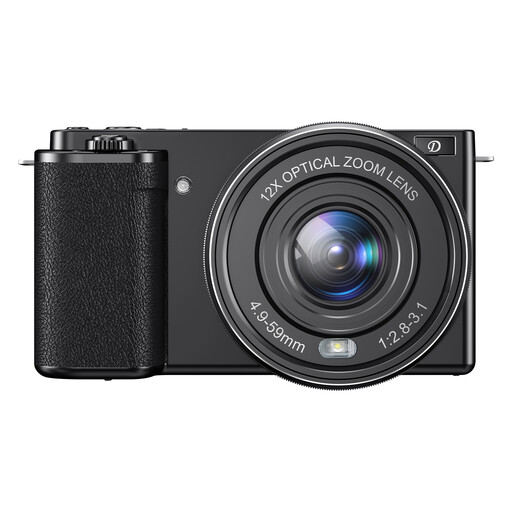
Komery W6 digital camera, 12× optical zoom
Another fixed-lens option for trips involving photos and video. Its listing states 12× optical zoom, 64MP photos, 4K video and Wi-Fi. Confirm the focal-length range and camera weight if reach and carrying size drive your choice; check video frame rate and battery arrangements if you expect to film frequently.
View on Joybuy
Common questions
When is a compact camera worth taking instead of a phone?
Consider one when you regularly need optical zoom or dedicated shooting controls and are willing to carry a second device. A phone remains simpler for immediate sharing and one-device travel; if moving video is your main concern, compare a compatible phone stabiliser before buying another camera.
Should I choose a travel-zoom compact or a bridge camera?
Choose by the reach you need and the size you will carry. Panasonic describes the pocket-sized TZ99 with a 24–720mm-equivalent lens; its larger FZ82D bridge camera has a 20–1200mm-equivalent lens and an OLED viewfinder. Check the complete camera’s carrying size before deciding.
Is a 4K label enough to judge holiday video?
No. It identifies a recording format, not how the camera handles moving subjects, sound or self-recording. Check autofocus, stabilisation, microphone needs, screen movement, recording conditions and how you will transfer clips on the exact model.
Will I need separate charging accessories for a compact camera?
Check the exact model and bundle. Panasonic’s UK TZ99 store listing says it charges by USB-C but includes neither a USB cable nor an AC adapter, so you would need compatible equipment available for that camera.
Where should spare camera batteries go on a flight?
The UK Civil Aviation Authority says to take spare batteries and power banks in the cabin, not checked baggage. Check your airline’s current requirements before packing for the journey.


