Pocket travel-zoom seekers
You want optical reach for distant buildings, viewpoints or animals without carrying a larger camera throughout a walk or day trip.


A compact camera is worth carrying when its optical zoom, controls or video features address photographs you expect to take and cannot comfortably make with your phone. For sightseeing, compare pocket-sized zoom cameras; for wet activities, check a rugged model’s limits; and for very distant subjects, consider whether a larger bridge camera is worth carrying. If quick daytime photos and sharing matter more than those differences, keeping to your phone avoids a second device.
You want optical reach for distant buildings, viewpoints or animals without carrying a larger camera throughout a walk or day trip.
You often photograph interiors or evening scenes, or record travel video, and want to compare brighter lenses, stabilisation and video controls with what your phone offers.
Your plans include rain, sand or water, making a camera’s stated protection limits more important than a long zoom range.
Start with the subjects and conditions you expect on the trip: they determine whether a phone, a pocket compact, a rugged camera or a larger bridge camera is worth carrying.
Choose it when: You want a dedicated camera for optical zoom or more control but still intend to carry it all day.
Trade-off: A longer zoom and a brighter lens serve different priorities; compare both against the size you will carry.
Choose it when: Water, sand or rough conditions are a central part of your planned photography.
Trade-off: Protection has model-specific limits and does not, by itself, make the camera a better choice for distant subjects.
Choose it when: Photographing distant subjects matters enough to make room for a larger camera.
Trade-off: Long optical reach comes with a body that may not fit your usual day bag.
Choose it when: You mainly want quick, shareable photos and are unlikely to carry another device.
Trade-off: Check whether your phone meets your needs for distant subjects, and verify any add-on lens against your exact phone and case.
| Concern | What to check | Who this matters to |
|---|---|---|
| Optical reach | Compare the 35mm-equivalent focal-length range and optical zoom; treat digital zoom separately. | If distant landmarks or wildlife are the photographs I most want, I need enough lens reach without assuming a digital-zoom figure means the same thing. Around 40% of consumers would put optical reach first. |
| Stills and video control | Check lens aperture across the zoom range, sensor format, stabilisation and the video or microphone features you intend to use. | For interiors, evening scenes or narrated clips, I would compare the camera’s controls and video features with my phone before carrying both. Roughly 30% of consumers would prioritise stills and video control. |
| Carrying and sharing | Compare dimensions and ready-to-use weight; confirm charging accessories and phone-transfer compatibility. | On a full-day walk, I want a camera that fits my bag and lets me move the photos I plan to share. Carrying and sharing would come first for around 20% of consumers. |
| Protection for the activity | Match the stated depth, dust and temperature limits and sealing instructions to your plans. | If water or rough conditions are unavoidable, I need protection suited to that activity more than extra zoom. Around 10% of consumers would make ruggedness their primary concern. |
Digital-zoom figures do not describe the lens-based range that matters when framing distant subjects.
Compare the stated optical zoom and 35mm-equivalent focal-length range before considering digital zoom.
Panasonic lists the FZ82D at approximately 596g with battery and card, with dimensions of 130.2 × 94.3 × 125.2mm. Its long reach comes with a larger body than a pocket travel zoom.
Compare ready-to-use weight and dimensions with your actual bag before choosing that reach.
OM SYSTEM specifies the Tough TG-7 as waterproof to 15m; that rating should not be extended to deeper water or activities outside the manufacturer’s conditions.
Check the depth limit and sealing instructions against your planned use, and confirm supported housing and limits if your activity requires more protection.
A dedicated camera is less convenient on a trip if its charging setup or image-transfer method does not fit how you intend to use it.
Check the box contents, suitable charging equipment, memory card and compatibility with the phone you will use for sharing.
Panasonic states that the TZ99 does not include a USB cable or AC adapter, so using one may require equipment you do not already carry.
The RX100 VII is a pocket-compact reference for travellers comparing a 1.0-type sensor with moderate optical reach.
The PowerShot G7 X Mark III is worth comparing when a bright lens and travel-video features matter more than long telephoto reach.
The TZ99 and FZ82D illustrate the choice between a smaller travel zoom and a larger bridge camera.
The Tough TG-7 represents the rugged-compact route for trips where protection is the deciding requirement.
The COOLPIX P1100 is a bridge-camera reference for trips centred on very distant subjects.
These point-and-shoot cameras are options to compare if optical zoom and travel video are your priorities. Check their focal-length ranges, ready-to-use sizes and trip essentials against your plans before choosing between them.
 No image available
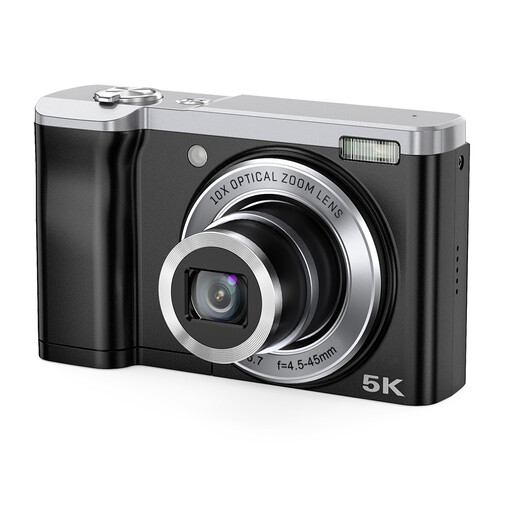
Consider this point-and-shoot camera if optical zoom and travel video are reasons to carry a separate device.
The product name specifies 10X optical zoom, 5K video, 56MP and front and rear cameras. Check the equivalent focal-length range, ready-to-use size, charging accessories and phone-transfer options against your trip plans.
 No image available
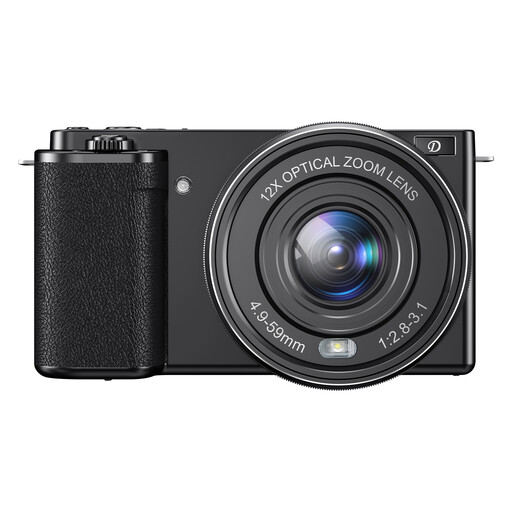
Consider this model if you want to compare optical reach, video recording and a stated wireless feature for day trips.
The product name specifies 12X optical zoom, 4K video, 64MP and WiFi. Check the equivalent focal-length range, ready-to-use size, battery arrangements and how WiFi transfer works with your phone.
It is worth considering when the subjects you expect to photograph call for optical reach or controls you will actually use. Which? notes that phones can take sharp, well-exposed photos in many conditions, so compare the camera with your current phone rather than assuming a second device will improve every shot.
GOV.UK says camera equipment can usually travel in hand or hold luggage, but airline restrictions and battery rules still need checking. Keep the camera charged in case you are asked to switch it on, and check your airline’s instructions for spare batteries.
Not necessarily: Panasonic states that the TZ99 does not include either item. Check the contents of the particular camera package and whether your existing charging equipment is suitable before travelling.
No; use it only within the model’s stated limits and conditions. OM SYSTEM specifies the Tough TG-7 as waterproof to 15m, which does not establish suitability for deeper water or every water sport.