Light-packing travel zoom seeker
You want a camera for sightseeing and everyday bags, with optical reach for landmarks or distant details that you cannot frame as you wish on your phone.


Carry a compact camera when its optical zoom or dedicated controls solve a recurring problem that your phone does not, and you still want to travel light. Which? describes compact cameras as offering more control than a phone without the bulk of a high-end interchangeable-lens camera. If distant subjects call for much greater reach, consider a bridge camera; if changing lenses matters more, compare a complete mirrorless kit.
You want a camera for sightseeing and everyday bags, with optical reach for landmarks or distant details that you cannot frame as you wish on your phone.
You regularly film outings and care about stabilisation, autofocus, audio options and preparing the right storage and charging equipment.
You repeatedly need a perspective your fixed-lens camera cannot provide and are willing to carry lenses to get it.
Decide whether carrying a separate camera solves a repeated need, then compare its ready-to-shoot size, lens and video requirements with the alternatives.
Choose it when: you want fixed-lens optical reach or dedicated handling in a camera you will take on ordinary outings.
Accept: the lens cannot be changed, and travel-zoom and video-focused models differ substantially in lens range and carrying size.
Choose it when: faraway subjects regularly make extreme built-in optical reach useful. Nikon lists a 24–3000mm-equivalent zoom for the COOLPIX P1100.
Accept: it is not a pocket-first choice; Nikon lists the P1100 at approximately 1.4 kg.
Choose it when: a particular interchangeable lens would meet a recurring need that a fixed zoom cannot.
Accept: a body-only weight does not include the lens you must carry to take photographs.
Keep using it when: carrying one device and sharing pictures promptly matter more to you than a separate camera’s controls or optical lens range.
Check: whether your particular phone provides the framing and handling you need before assuming an upgrade replaces a travel zoom.
| Concern | What to check | Who this matters to |
|---|---|---|
| Easy everyday carrying | Compare dimensions and ready-to-shoot weight, including battery and card; check how the exact model transfers images. | If I am sightseeing all day, I need a camera I will actually keep in my bag and use. Roughly 36% of consumers put easy carrying and uncomplicated use first. |
| Optical reach and controls | Compare 35mm-equivalent optical focal-length ranges rather than digital-zoom figures, alongside the controls you expect to use. | For distant details, I want to frame the subject with the lens and adjust my shot deliberately. Around 29% of consumers prioritise optical reach and photo control. |
| Practical handheld video | Check stabilisation in your intended mode, recording limits, card requirements and charging arrangements. | When I film while moving, I need a workable recording setup, not just a 4K label. Dependable handheld video comes first for roughly 21% of consumers. |
| Room to change lenses | Identify the lens you would use and compare the complete camera-and-lens kit with a fixed-lens option. | If my usual photographs call for a lens a compact cannot accept, I am prepared to carry a larger kit. About 14% of consumers put interchangeable-lens flexibility first. |
Digital extension is not the same specification as an optical lens range. Panasonic lists the LUMIX TZ99’s 30x optical zoom separately from its Intelligent Zoom mode.
Compare optical focal lengths in 35mm-equivalent terms before considering digital-extension features.
A video mode may have its own media and operating requirements. Sony specifies a UHS Speed Class 3 or higher card for RX100 VII recording at 100 Mbps and says recording duration varies with temperature and shooting environment.
Check the card requirement for your exact mode, try a short recording before travelling and confirm the camera’s charging requirements.
A suitable card or charging equipment may need to be obtained separately; Canon says the charger is not included with its listed UK PowerShot V1 package.
Canon lists the EOS R50 at approximately 328 g body-only, while Panasonic’s approximately 322 g figure for the LUMIX TZ99 includes its battery and SD card. The EOS R50 also needs a lens to take photographs.
Compare the weight and space needed for the complete kits you would take out.
An interchangeable-lens kit requires room for its fitted lens and any additional lenses you choose to carry.
Cameras considered for travel vary in carrying size: Canon lists the PowerShot V1 at approximately 426 g, while Nikon lists the bridge-style COOLPIX P1100 at approximately 1.4 kg.
Check dimensions and ready-to-shoot weight against the bag or pocket you intend to use.
Panasonic’s LUMIX TZ99 illustrates the travel-zoom compact route; its UK range also includes bridge cameras.
The fixed-lens PowerShot V1 addresses video-focused carrying, while the EOS R50 provides an interchangeable-lens alternative.
Sony’s fixed-lens RX100 VII is a compact option for buyers considering a 24–200mm-equivalent zoom and subject tracking.
The COOLPIX P1100 illustrates the bridge-camera route for people who regularly photograph distant subjects.
These choices include fixed-lens cameras for everyday photos or video, a pocket gimbal camera for video-led outings, and an interchangeable-lens kit for readers considering that alternative. Compare the particular lens and carrying setup with what you plan to photograph.
 No image available
Consider this fixed-lens option if your outings involve wide scenes and video as well as still photographs.
The listing describes a 1-inch stacked sensor, a wide-angle zoom lens, 20MP stills and 4K video.
Check the lens coverage for your usual distant subjects and confirm the ready-to-carry kit and charging arrangements.
 No image available
This video-oriented camera is worth considering if wide, self-framed clips matter more to you than zooming in on distant subjects.
Its listed features include a 1-inch sensor and an ultra-wide lens.
Check whether its fixed wide framing suits your still photographs, and confirm stabilisation and package contents for your intended use.
 No image available
Choose an interchangeable-lens kit only if changing lenses would address a recurring need that a fixed-lens camera cannot.
The product title specifies an APS-C mirrorless camera, a 16–50 mm f/3.5–5.6 Power Zoom kit lens, 26MP stills and 4K60p video.
Compare its camera-and-lens carrying weight with a compact and check the card requirement for the recording mode you intend to use.
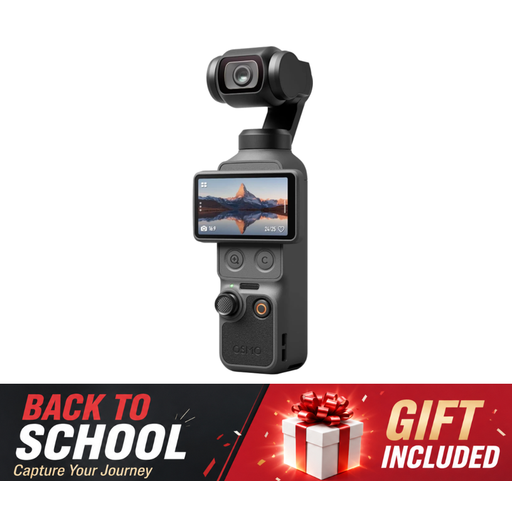 No image available
This pocket gimbal camera is a video-led choice for outings, rather than a substitute to assume will handle every still-photo task.
The listing states 3-axis stabilisation and 107 GB of built-in storage.
If photographs are your priority, check its still-photo controls and lens coverage, as well as the charging equipment supplied.
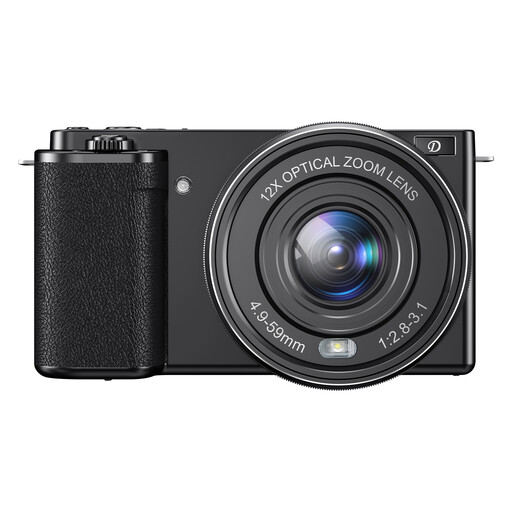 No image available
Consider this fixed-lens camera if optical reach is the reason you want to carry a separate device.
The product title states 12X optical zoom, 4K video, Wi-Fi and 64MP photographs.
Check the actual focal-length range for your preferred wide and distant framing, along with the camera’s carrying size and package contents.
It is worth carrying when a specific optical zoom range, physical controls or separate shooting workflow solves a problem you encounter regularly. Which? describes compacts as offering more control than a phone without the bulk of a high-end DSLR or mirrorless camera; compare that benefit with the extra device you would need to take out.
Check stabilisation in the recording mode you intend to use, along with framing, audio connections, card requirements, charging and recording limits. Canon lists optical and digital movie stabilisation for the PowerShot V1; Sony requires a UHS Speed Class 3 or higher card for RX100 VII recording at 100 Mbps and says recording duration varies with conditions.
Check the exact package for the battery, storage media, cable and charging equipment your planned use requires. Canon says a charger is not included with its listed UK PowerShot V1 package, while Panasonic says its TZ99 supports USB-C charging but does not include a USB cable or AC adapter.
Contact the seller promptly, explain the fault and keep your order confirmation. Coventry City Council Trading Standards explains that goods must be as described, fit for purpose and of satisfactory quality; a remedy for faulty goods is a different matter from a voluntary change-of-mind return.