Choose a compact camera when you want dedicated controls and more flexible stills or video than your phone provides, without carrying an interchangeable-lens kit. A travel zoom suits distant subjects, while wide-angle video compacts and pocket gimbals suit self-shot clips; choose a rugged or action-focused option only when water, impacts or hands-free footage are central to the trip.
Who may benefit from a compact camera
City-break and family-day-trip photographers
A pocketable or small camera can suit stills and occasional video when you want more direct handling than a phone without taking a larger DSLR or mirrorless kit. Which? describes compact cameras as a route to dedicated image quality without that bulk.
Travellers who need real telephoto reach
If you photograph distant landmarks, wildlife, performances or viewpoints, optical zoom range becomes a central choice. Panasonic’s TZ99 specifications illustrate the travel-zoom approach with a 24–720mm equivalent range.
Active or waterside holiday travellers
For snorkelling, beach days, hiking or cycling, protection and hands-free capture can matter more than conventional compact-camera reach. OM System and Insta360 position their relevant models around these more demanding situations.
What to check before buying
Start with the scenes you cannot capture comfortably on your phone, then check the lens range, video mode, carrying weight and travel preparation for the exact camera.
| Priority |
What to check |
Your needs |
| Dedicated controls |
Compare focusing, shutter response, flash operation, stills controls, video features and stabilisation on the exact model. |
I want a camera that feels purpose-built for quick holiday moments rather than simply duplicating ordinary phone snapshots. |
| Optical reach |
Check the equivalent focal-length range, optical zoom and lens aperture at the long end. Long zoom does not mean unchanged low-light performance. |
Distant landmarks, wildlife, boats or events are part of my trip, and I cannot always move closer to frame them. |
| Low light and video |
Compare sensor format, maximum aperture, stabilisation and the recording modes you will actually use. Check the current manual for recording limits and media requirements. |
I expect evening streets, interiors or handheld clips, so wide framing and video handling may matter more than telephoto reach. |
| Charging and storage |
Confirm in-box charging accessories, supported card formats and the required card speed for each recording mode. Follow airline rules for spare batteries. |
I need a setup that can keep recording through a day out and is practical to pack for a flight. |
Common holiday-camera buying mistakes
-
Buying a travel zoom solely because its zoom number is high
Optical reach helps with distant framing, but it does not automatically produce the strongest low-light telephoto results. Panasonic lists the TZ99 with a 1/2.3-inch sensor and an f/3.3–6.4 lens, with the aperture becoming smaller at telephoto.
Choose a travel zoom when distance is a recurring problem. For evening scenes or people-focused stills and video, compare sensor format, maximum aperture and stabilisation with a larger-sensor compact.
-
Assuming every compact camera is genuinely pocketable
Compact cameras can differ noticeably in weight: Panasonic lists the TZ99 at approximately 322g including battery and SD card, while Canon lists the PowerShot V1 at 426g.
Compare ready-to-shoot weight and dimensions with the pocket, jacket or bag you plan to use. Include the card, battery, cable and protective case in your packing decision.
-
Budgeting for the camera body but not charging and media
A trip can be disrupted if charging equipment or a capable memory card has not been planned. The SD Association explains that speed classes indicate minimum sustained writing performance for video recording.
Check the manual for supported card types and recording-mode requirements, and test your charging setup before departure.
Panasonic states that the TZ99 does not include a USB cable or AC adapter, so compatible charging accessories may be needed.
-
Packing spare lithium batteries without checking flight rules
The UK Civil Aviation Authority advises carrying spare batteries in the cabin and protecting them against short circuits. Airline conditions and watt-hour limits may also affect what is permitted.
Keep spare camera batteries in cabin baggage, protect their terminals, avoid travelling with damaged or swollen batteries, and confirm the airline’s current battery policy before departure.
Relevant camera brands and ranges
Panasonic LUMIX
Relevant for travellers who need a compact travel zoom rather than an interchangeable-lens system.
- Panasonic specifies a 30x, 24–720mm equivalent zoom, 20.3MP capture, 4K and USB-C charging for the TZ99.
- The TZ99 uses a 1/2.3-inch sensor and f/3.3–6.4 lens, so long reach should not be treated as equivalent to a larger-sensor bright-lens compact in low light.
Canon PowerShot
Relevant for compact video creation, wide framing and a larger sensor rather than travel-zoom reach.
- Canon specifies a 1.4-inch sensor, 16–50mm equivalent f/2.8 lens, 4K 60p, Dual Pixel autofocus and optical stabilisation for the PowerShot V1.
- At 426g with a short zoom range, the PowerShot V1 is less suited to travellers whose main priority is distant wildlife or landmark detail.
Sony ZV
Relevant for self-shot clips, wide-angle scenes and lightweight hybrid photo and video use.
- Sony specifies an 18–50mm equivalent lens, f/1.8–4 aperture range, 1.0-type sensor and 4K up to 30p for the ZV-1 II.
- The 50mm-equivalent telephoto end limits its usefulness for travel-zoom needs.
OM System Tough
Relevant for trips involving water, impacts or outdoor conditions where an ordinary compact needs protection.
- OM System states that the TG-7 is waterproof to 15m, shockproof to 2.1m, freeze-proof to -10°C and crushproof to 100kg.
- Its 25–100mm lens has much less reach than a travel zoom.
Insta360
Relevant where action-first, wide-angle travel video is the aim rather than conventional compact photography.
- Insta360 states that the Ace Pro 2 supports a 157-degree wide-angle lens, 8K 30fps and 4K 60fps Active HDR.
- Its very wide perspective is designed for immersive activity footage rather than distant-subject framing.
Joybuy product options
Joybuy product options for compact travel photography and video, with an emphasis on wide-angle scenes, self-shot clips and handheld holiday footage rather than long-distance travel-zoom photography.
 No image available
Sony ZV-1 II Premium Hybrid Travel Camera
A compact option for wide city scenes, interiors, selfies and short travel videos when long telephoto reach is not the priority.
1-inch stacked sensor, 20MP stills, 18–50mm wide-angle zoom lens and 4K video. The 18–50mm-equivalent range is not intended for distant wildlife, events or landmark detail, and the camera is stated as not water-resistant.
Joybuy
 No image available
DJI Osmo Pocket 3 Creator Combo
Consider this video-led pocket gimbal for walking tours, hikes and self-recorded travel clips where stabilised handheld footage is the main aim.
1-inch CMOS, 4K/120fps video, 3-axis stabilisation, rotatable screen and included microphone transmitter. Check the supplied bundle contents and the required card and charging setup before travel.
Joybuy
 No image available
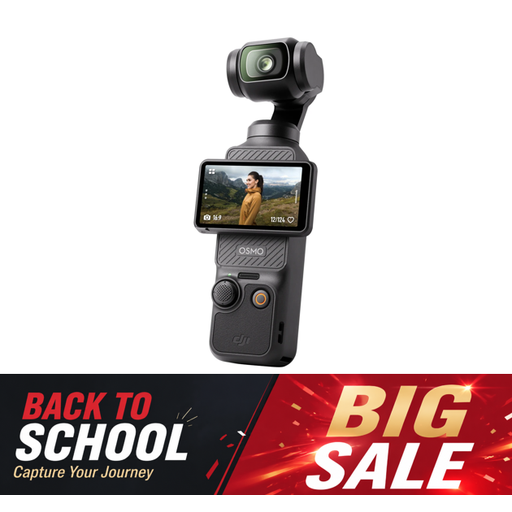
DJI Osmo Pocket 3 Vlogging Camera
This suits travellers who prioritise moving footage, quick self-framing and stabilised clips over conventional travel-zoom photography.
1-inch CMOS, 4K/120fps, 3-axis mechanical stabilisation, fast focusing and a 2-inch rotatable touchscreen. Confirm the standard bundle if you need a microphone, tripod or extended battery arrangement.
Joybuy
 No image available
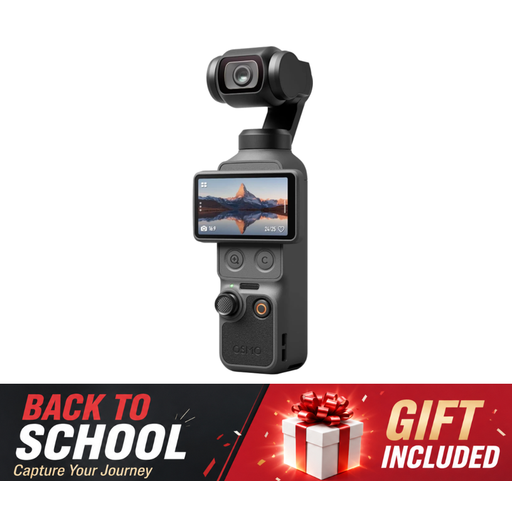
DJI Osmo Pocket 4 Standard Combo
A pocket gimbal option for short travel clips with moving subjects, especially where built-in storage and stabilised video matter.
1-inch CMOS, 4K/240fps, 3-axis stabilisation, 2× lossless zoom, 107GB built-in storage and a 2-inch rotatable screen. It is stated as not waterproof, and its lens coverage should be checked if distant framing is important.
Joybuy
 No image available
Sony ZV-1F Compact Vlog Camera
A lightweight choice for city-break selfies, interiors and travel vlogs where ultra-wide framing is more useful than zoom.
229g body, 1-inch 20.1MP sensor, fixed 20mm-equivalent f/2.0 ultra-wide lens, 4K video and vari-angle screen. The fixed lens does not provide optical telephoto framing, and the supplied details do not establish a weatherproof rating.
Joybuy
Frequently asked questions
Can I take a compact camera in hand luggage on a UK flight?
Usually, yes. GOV.UK says camera equipment can usually be taken in hand and hold luggage, though specialist equipment can be restricted. Keep the camera charged because a device that cannot be switched on when requested may not be allowed on board, and check your airline’s rules before flying.
Where should I pack spare camera batteries for a flight?
Pack spare camera batteries in cabin baggage and protect them against damage and short circuits. The UK Civil Aviation Authority advises keeping spare batteries in the cabin; airline approval may be required for batteries between 100Wh and 160Wh, while batteries above 160Wh are prohibited in passenger baggage.
Do I need a special memory card for 4K holiday video?
Use the card type and minimum speed stated in your camera’s manual for the recording mode you want. The SD Association explains that speed-class symbols indicate minimum writing speed for video, but a V30 or U3 label is not a universal requirement for every 4K or high-frame-rate mode.
Will a USB-C compact camera include everything needed to charge it?
Not always. Panasonic’s UK TZ99 listing states that the camera supports USB-C charging but does not include a USB cable or AC adapter. Check the in-box contents, charging method and whether your existing cable and charger meet the manufacturer’s requirements before travelling.


