Who might use a compact camera?
The reason to carry a separate camera depends on what you photograph most often, not simply on whether you take pictures while travelling.
Travellers photographing distant subjects
If landmarks, scenery or activity across a field are regular subjects, a travel-zoom compact offers optical framing that may address a limitation of your phone. Compare the actual lens range rather than assuming every compact has a long zoom.
Families taking stills and short videos
A pocketable dedicated camera may appeal if you want camera controls, stabilisation or shooting features for active subjects without carrying interchangeable lenses. Check the individual model’s handling and lens before deciding it suits your usual family occasions.
People recording themselves on days out
A movable screen, sound options and stabilisation may matter more than telephoto reach if handheld video and self-framing are the main tasks. A video-focused camera is not automatically the right choice for distant still photographs.
What should you check before choosing?
Start with the shots your phone struggles to frame or the filming controls you would actually use. Then decide whether those gains are worth charging, carrying and storing files from another device.
| Priority | What to check | Your needs |
|---|
| Phone or separate camera |
Identify a recurring need for optical zoom, direct controls or camera-specific video features. Consider whether you need to share pictures immediately. |
I would rather carry only my phone unless a dedicated camera solves a problem I meet regularly on trips or family days out. |
| Lens range |
Compare the stated focal-length ranges for the subjects you photograph. Panasonic lists the LUMIX TZ99 at 24–720mm equivalent; Sony lists the RX100 VII at 24–200mm equivalent, while Canon lists the PowerShot V1 at 16–50mm. |
Distant landmarks or children across a sports field make reach important to me. For nearby groups and self-recording, I would check that the wide end frames everyone comfortably. |
| Stills and handling |
Check the controls, viewfinder or screen, autofocus options and stabilisation of the exact model. Stabilisation addresses camera shake; it does not by itself freeze a moving subject. |
I want controls I will use for family photographs, rather than a longer specification list that does not change how I shoot. |
| Handheld video |
Check the recording mode, movable screen, sound options and stabilisation together. Canon lists 4K 60p, a vari-angle screen and optical stabilisation for the PowerShot V1; its 16–50mm lens is not a long travel zoom. |
If I mainly film family clips or speak to the camera while walking, framing and sound matter more to me than photographing distant subjects. |
| Kit for a full day |
Check box contents, charging, battery options and the card required for your recording mode. Panasonic says the TZ99 includes neither a USB cable nor an AC adapter; Sony specifies UHS Speed Class 3 or higher for RX100 VII XAVC S recording at 100 Mbps. |
I need to know that I can charge the camera and record throughout the day with the equipment I plan to take. |
| Fixed-lens limits |
Decide whether one built-in lens covers your repeated subjects. If not, compare the carrying and lens-management demands of a mirrorless kit with the framing flexibility it would provide. |
I am willing to carry interchangeable lenses only if a compact’s lens repeatedly stops me getting the framing I need. |
Which camera lines are relevant?
These brands illustrate different fixed-lens approaches; their listed specifications apply to the named models, not every camera each brand makes.
Panasonic LUMIX
The LUMIX TZ99 is a travel-zoom option for buyers who regularly frame distant subjects.
- Panasonic lists a 24–720mm-equivalent optical zoom and USB-C charging for the TZ99.
- Panasonic says the TZ99 does not include a USB cable or AC adapter; check your charging setup before travelling.
Sony
The RX100 VII is an advanced compact to consider when a moderate zoom range and fast stills shooting matter.
- Sony specifies a 1.0-type sensor, 24–200mm-equivalent lens and continuous shooting at up to approximately 20 fps.
- Its stated telephoto reach is shorter than the TZ99’s. Sony also specifies card-speed requirements for XAVC S recording modes.
Canon
The PowerShot V1 is a video-oriented compact for nearby subjects, handheld clips and self-framing.
- Canon lists a 16–50mm lens, optical stabilisation and 4K 60p recording.
- Its lens does not offer long telephoto framing, and Canon says a USB-C charger is not included.
Fujifilm
The X100VI is a stills-focused fixed-lens option for buyers comfortable composing without a zoom.
- Fujifilm specifies a 23mm F2 lens, 40.2MP sensor and five-axis in-body stabilisation rated at up to 6.0 stops.
- The lens has one fixed focal length. Fujifilm recommends UHS Speed Class 3 cards for 4K recording.
Joybuy options for different needs
These options cover nearby video and self-recording as well as a digital camera with optical zoom. Check each model against your usual subjects; this selection does not replace the phone-versus-camera decision above.
 No image available
Sony ZV-1F compact vlog camera
Consider this for self-recording and nearby family clips rather than distant subjects. Its listed 20mm wide-angle prime lens has no zoom range; check whether that framing suits your photographs. The product information also describes a vari-angle screen and directional microphone. Confirm the memory card you need and what is included.
View on Joybuy
 No image available
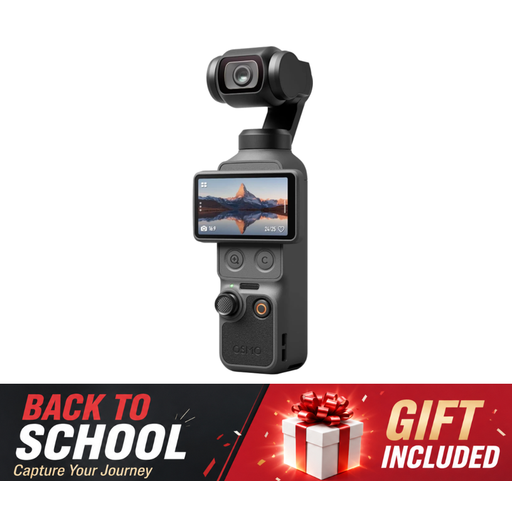
DJI Osmo Pocket 4 Standard Combo
This gimbal-style camera is an option for handheld video while moving around on a day out. The product title specifies three-axis stabilisation, a rotatable screen and 107 GB of built-in storage. If still photographs are your priority, check the still-image specification and usable framing range for your subjects.
View on Joybuy
 No image available
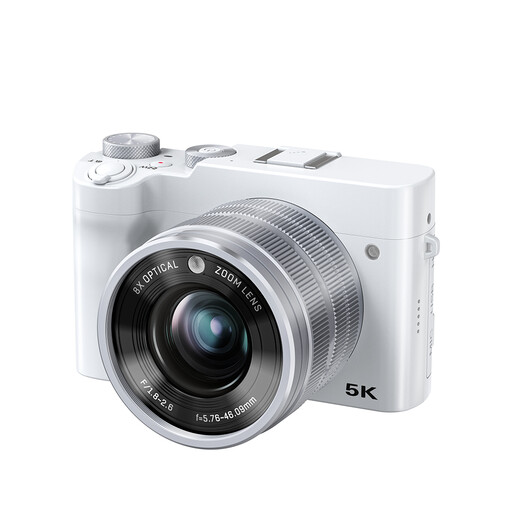
Songdian 8× optical zoom dual-lens camera, white
The stated 8× optical zoom makes this a model to examine if framing more distant subjects is your main reason for carrying a camera. Its listing also describes autofocus and a touchscreen. It is stated not to be waterproof; check its size, weight and battery life against your plans for a full day out.
View on Joybuy
Common questions
When is a compact camera worth carrying instead of a phone?
It is worth considering when you repeatedly need a built-in optical zoom, direct camera controls or particular video features. If those needs are occasional and immediate sharing matters more, using your phone avoids carrying and charging another device.
What should I choose for distant attractions or a sports day?
Start by comparing optical lens ranges. Panasonic lists the TZ99 at 24–720mm equivalent, Sony the RX100 VII at 24–200mm equivalent and Canon the PowerShot V1 at 16–50mm. Choose a range that covers the subjects you expect to photograph, rather than treating all compacts as travel zooms.
What matters most for family video and self-recording?
Check framing, screen movement, sound options and stabilisation alongside the recording mode. Canon lists 4K 60p, optical stabilisation and a vari-angle screen for the PowerShot V1; its 16–50mm lens is better suited to checking nearby framing than assuming it will cover distant action.
Will I need separate charging equipment?
Check the contents for the exact camera you buy. Panasonic says the TZ99 supports USB-C charging but includes neither a USB cable nor an AC adapter; Canon says a USB-C charger is not included with the PowerShot V1. Also check battery compatibility if you plan to carry a spare.
Can I use any SD card for video?
Use the card specification for your camera and recording mode. Sony requires a Class 10 or higher SDHC/SDXC card for RX100 VII XAVC S recording and UHS Speed Class 3 or higher at 100 Mbps. Fujifilm recommends UHS Speed Class 3 for X100VI 4K recording.


