What matters when choosing
Check the Linux installation path first, then make sure the computer fits your desk and has room for the work you plan to add.
| Concern |
What to check |
Who this matters to |
| Linux compatibility |
Match any Ubuntu certification to the exact configuration and release. If you can test before installing, try a live USB with the wireless connection, sound and display outputs you intend to use. |
I want my first direct installation to work with the hardware I will use every day, rather than discover a driver problem afterwards. Around 42% of consumers put installation confidence first. |
| Desk space and connections |
Measure the chassis and cable clearance; confirm the required monitor outputs and any mounting compatibility. |
My monitor and peripherals already take up the desk, so the computer needs to fit without making connections awkward. For around 33% of consumers, placement and connectivity come first. |
| Memory and storage |
Check installed RAM and SSD capacity, then whether the exact model allows the upgrades your projects may need. |
I plan to move beyond one Linux desktop into virtual machines or larger projects, and need capacity for that work. Project headroom is the first concern for around 25% of consumers. |
Compact desktop brands to consider
These examples concern particular compact desktop lines and configurations, not every computer made by each brand.
Lenovo
Lenovo's ThinkCentre Tiny line includes the M90q Gen 5. Lenovo lists DDR5 SODIMM memory and an M.2 2280 PCIe Gen4 SSD in its shown UK configuration.
- Canonical lists a ThinkCentre M90q Gen 5 desktop among its Ubuntu-certified hardware, making the matching configuration worth considering for a direct Ubuntu installation.
- The Lenovo configuration shown is supplied with Windows 11 Pro. Check the purchased components and Ubuntu release rather than extending certification to every ThinkCentre variant.
Dell
Dell's OptiPlex Micro line offers a compact business-desktop format. Dell lists the OptiPlex 3000 Micro chassis at 36 × 178 × 182 mm.
- Canonical lists an OptiPlex Micro 7010 configuration with a Core i5-13600T as Ubuntu-certified.
- That certification does not establish Ubuntu compatibility for an OptiPlex 3000 Micro or every refurbished OptiPlex configuration. Match the precise unit before buying.
ASUS
The ASUS NUC 14 Pro is a configurable mini-PC line. ASUS lists options including DDR5-5600 memory, M.2 NVMe storage, 2.5Gb Ethernet, Thunderbolt 4 and HDMI 2.1.
- Its listed component and connection options give you specific configurations to assess for a compact, multi-display workstation.
- ASUS offers board, kit and complete-PC purchase forms. Confirm the included RAM, storage and operating system, then test the exact configuration's Linux hardware functions before committing to installation.
Joybuy products for this topic
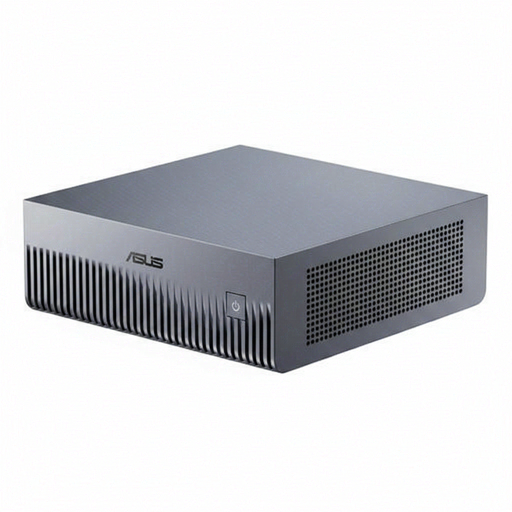
The ASUS Ascent GX10 is a compact option for consumers specifically interested in its NVIDIA DGX OS Linux environment and AI-development focus. If your aim is a general-purpose Ubuntu learning desktop, check the software and hardware compatibility you need before choosing it.
 No image available
ASUS Ascent GX10 with NVIDIA GB10 Grace Blackwell, 128GB unified memory and 1TB SSD
Consider this compact desktop if you intend to learn within its NVIDIA DGX OS environment, rather than assuming it matches a conventional Ubuntu desktop setup.
The product name specifies 128GB unified memory, a 1TB NVMe SSD and NVIDIA DGX OS. Before buying, confirm that your required Linux distribution, applications and peripherals suit the system, and check its upgrade and power-supply requirements.
View on Joybuy
Common questions
Should my first Linux desktop be Ubuntu-certified?
An exact Ubuntu-certified configuration is a sensible starting point for a first direct installation because Canonical tests listed hardware for Ubuntu. Match the configuration and Ubuntu release rather than assuming that every variant or replacement wireless card is covered.
Can I try Ubuntu before replacing Windows?
Yes. Canonical's guidance describes using a bootable USB to try the Ubuntu desktop without changing the existing PC configuration. Test the connections and devices you need, then back up your files before proceeding with an installation; preparing the USB drive erases its existing contents.
Is 4 GiB RAM enough for learning Linux?
Ubuntu community guidance lists 4 GiB RAM and 25 GB storage as a baseline for a physical graphical installation, not a target for every learning workload. If you plan to use virtual machines, containers or substantial projects, choose capacity with that work in mind and check whether the desktop can be upgraded.
What if a desktop bought from a UK trader is faulty?
A faulty desktop may give you statutory remedies separate from a retailer's change-of-mind policy. Coventry City Council's consumer guidance says faulty goods can usually be rejected for a refund within 30 days; keep the listing and order details so you can describe the fault to the trader.
What should I do with an old desktop?
Remove personal information before donating or recycling it. Oxfordshire County Council advises cleansing computers of personal data before taking them to a waste recycling centre; check the collection or recycling arrangements available to you.


