
24/7 Customer Support

Free returns

Same-day & Next-day Delivery

Quality Guaranteed

Unlock Your Welcome Offers: FREE Delivery | Up to 80% OFF | Free 30-day JoyPlus trial
Download the APP
A compact dish rack can make washing up easier, but the wrong design may create new problems. A rack that appears space-saving in a product photo could still block your tap, leave water pooled on the worktop or fail to hold the plates your household uses every day.
Before buying a dish-drying rack, look beyond colour and appearance. The most useful features are often practical details such as dimensions, drainage direction, material quality and how easily each component can be cleaned.
A narrow kitchen dish rack may fit beside the sink but hold only a few plates. Check the full measurements, not just the marketing description. A rack measuring 38cm by 33cm may still require considerable worktop space, particularly if it has a separate utensil holder or drainage tray.
Also consider the height. A taller rack may accommodate more crockery but could obstruct a window, wall cupboard or tap. Measure the available area beside or inside your sink before ordering.
A dish rack without effective drainage can leave standing water beneath plates and bowls. This may lead to repeated wiping, water marks and a damp worktop. Some worktop dish rack designs rely on a removable tray, while others use a spout to direct water into the sink.
A dish rack with drainage spout is useful when the rack sits on the worktop near the sink. However, check whether the spout can reach the bowl and whether it rotates to suit your kitchen layout. A fixed outlet may be inconvenient if your sink is on the opposite side.
A stainless steel dish rack can provide a sturdy frame and a modern finish, but it may require more parts to clean. A plastic dish rack is often lighter and easier to move, although the overall construction and drainage design still matter.
Look for coated or rust-resistant components where metal is used. Protective caps on wire sections can also help reduce direct contact between crockery and the rack. Avoid abrasive cleaners unless the care instructions specifically allow them, as these can mark plastic coatings and finishes.
Write down the available length, width and height beside your sink or on your worktop. Compare these measurements with the product’s stated size:
For example, a compact drainer measuring approximately 37.1cm long by 32.8cm wide may suit a standard sink or a modest worktop, but the available space should always be measured first.
A good drainage system should move water away from clean dishes without requiring constant repositioning. A 360-degree pivoting spout can be particularly practical in smaller kitchens, as it allows the rack to face different directions.
If you prefer a simple plate-draining rack, check whether it includes a tray or whether water is expected to run directly into the sink. A low-profile design may save visual and physical space, but it may not be intended for large amounts of crockery or standing water.
Consider how often you wash up and how much handling the rack receives:
Removable trays and utensil holders are useful because they allow more thorough cleaning. Always follow the manufacturer’s instructions for dishwasher suitability and avoid abrasive products where warned.

Why This Fits Their Persona: Its simple, low-profile format suits students, renters and smaller households that mainly need a dedicated place for plates beside the sink.
The stated 38cm x 33.5cm x 5cm dimensions make its space requirement clear, helping buyers assess a small worktop before purchase.
Plastic construction, linen cream colour and a minimalist plate-focused layout.

Why This Fits Their Persona: The stainless steel frame and organised internal layout suit homeowners who want a structured worktop solution for everyday washing up.
Its integrated tray and 360-degree swivel spout address the common problem of water remaining on the worktop; the spout is also removable for cleaning.
Brushed stainless steel frame, silicone-capped wire rack, utensil holder and anti-slip rubber feet.
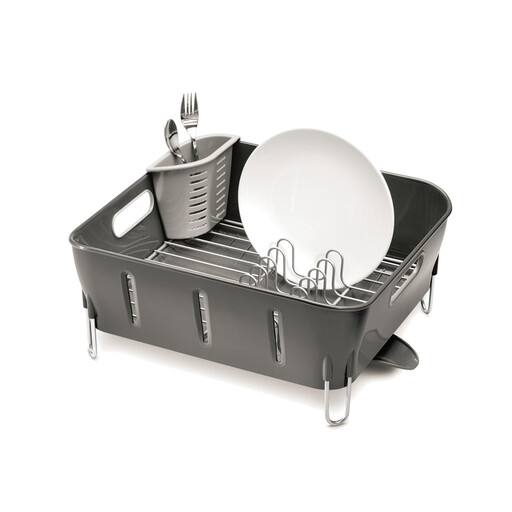
Why This Fits Their Persona: Its sink-compatible design and movable drainage system are practical for busy households that wash several full-size plates and need to reclaim worktop space.
The rack fits in the sink or on the worktop, while its 360-degree spout directs water towards the sink from different positions.
Coated steel wire, removable interior tray, integrated handles and stated dimensions of H17.3 x W32.8 x L37.1cm.
We have compiled a complete, real-time list of products that fully satisfy these strict selection criteria and UK safety regulations.
Place the rack on a stable, level surface and check that the drainage spout is aligned with the sink before loading it. Avoid overloading one side with heavy pans, as uneven weight can increase the risk of tipping.
Rinse away food residue regularly and clean trays, utensil holders and wire sections according to the care instructions. Warm soapy water is suitable for many components, while abrasive cleaners may damage coatings. If the rack is used inside the sink, lift it periodically to clean underneath and prevent residue collecting around the feet.
It can be, provided the capacity matches your washing routine. Check the plate arrangement, utensil storage and overall dimensions rather than relying on the word “compact”. Families may prefer a design with a dedicated utensil holder and a structured wire section for full-size plates.
This depends on sink size and how you use your kitchen. Sink placement can free worktop space, while a worktop dish rack may be more convenient when the sink is frequently needed. A model with a rotating drainage spout gives more flexibility for worktop placement.
There is no fixed lifespan because it depends on materials, cleaning habits, loading weight and exposure to standing water. Rust-resistant components, removable parts and regular cleaning can help maintain performance. Inspect the rack periodically for corrosion, cracked plastic, loose feet or damaged protective caps, and replace it if it becomes unstable.