Choose a compact keyboard if desk width is your main constraint, but check whether its number-entry and navigation keys suit the records you use. A compact ergonomic design may be worth considering for longer typing sessions, while a separate numeric keypad offers another way to handle frequent dates and figures without keeping a wider keyboard on the desk. Whichever layout you choose, the Health and Safety Executive advises keeping the screen and keyboard central and placing the keyboard just below elbow height.
Who this is for
Small-desk family historians
If your laptop, mouse and paper records share a narrow surface, a shorter keyboard may free space beside the keys. Logitech describes its MX Keys Mini as space-saving, but you still need to check the keys used in your research.
Long-session note takers
If you spend extended periods transcribing records or writing family-tree notes, consider both the keyboard shape and where it can sit. The Health and Safety Executive advises keeping the keyboard central and just below elbow height.
Record-entry researchers
If you often enter dates, ages and spreadsheet fields, decide whether you need a dedicated numeric keypad. Logitech G explains that a tenkeyless layout removes that keypad, so a smaller keyboard changes more than its footprint.
What matters when choosing
Start with the space available for your keyboard and mouse, then weigh that against your typing sessions, number-entry habits and devices. A compact label alone does not tell you whether the keys you use most are easy to reach.
| Concern |
What to check |
Who this matters to |
| Desk space and everyday keys |
Measure the available width; inspect the exact layout for arrow, navigation and frequently used shortcut keys. |
I need room for documents and a mouse, but I do not want routine searches to depend on awkward shortcuts. Around 33% of consumers put usable desk space first. |
| Long-session fit |
Check desk depth and whether the keyboard can sit centrally, just below elbow height; assess any palm rest as part of the whole setup. |
When I am transcribing for a long stretch, the position of the keyboard matters as much as its shape. For around 33% of consumers, long-session fit is the primary concern. |
| Number entry |
Decide whether the number row suffices or whether frequent date and spreadsheet entry calls for a separate or built-in numeric keypad. |
I regularly enter dates and figures, so giving up a dedicated keypad could interrupt my work. Around 17% of consumers place number entry first. |
| Device connections |
Confirm the exact model’s operating-system support, connection method and any receiver or Bluetooth requirements. |
If I move between research devices, I need a connection each one can use without disrupting my notes. Device flexibility comes first for around 17% of consumers. |
Buying pitfalls
-
Assuming every compact layout keeps familiar keys
A smaller layout may remove the dedicated numeric keypad or place commands behind shortcuts. That matters if your family-history work involves repeated dates, reference numbers or spreadsheet navigation.
List the keys you use most, then inspect the exact layout and shortcut arrangement rather than relying on a percentage-layout label.
If number entry proves awkward, you may need space for a separate numeric keypad.
-
Choosing ergonomic features without checking placement
A shaped keyboard or palm rest does not fix a screen and keyboard positioned off-centre. The Health and Safety Executive advises keeping both central, avoiding twisting and placing the keyboard just below elbow height.
Measure the desk’s width and depth before choosing a shape. If you use a laptop for prolonged sessions, consider whether a separate keyboard and mouse would let you position the screen appropriately.
-
Assuming wireless models have the same requirements
Connection and operating-system requirements vary by model. Microsoft, for example, specifies Windows 10 or 11 and Bluetooth 4.0 or later for its Designer Compact Keyboard.
Check your computer against the exact keyboard’s stated requirements, including its pairing method and any accessories you intend to use.
-
Assuming every listed configuration is ready to order
Layout and switch options can differ within a product family, and a listing does not establish availability for the configuration you want.
Confirm the selected layout, switch option, availability and delivery conditions before ordering.
Brands to consider for these layouts
Logitech
Its relevant ranges include compact keyboards and the shaped Wave Keys, giving small-desk researchers different layouts to compare.
- Logitech describes MX Keys Mini as space-saving and says Pebble Keys 2 can switch between three devices.
- Check the exact physical layout and whether its number-entry keys suit your records; a compact design alone does not establish typing comfort.
Keychron
The K3 Max is a compact mechanical option to examine if you want a UK-ISO configuration and more connection choices.
- Keychron lists 75% low-profile K3 Max configurations with 2.4 GHz, Bluetooth and wired connections, plus QMK/VIA remapping.
- Confirm the selected UK-ISO layout, switch option and availability before buying.
Lenovo
Its ThinkPad Compact Bluetooth Keyboard with TrackPoint is a layout reference for desks where mouse space is especially tight.
- Lenovo lists an integrated TrackPoint and a rechargeable battery for this model.
- Check whether the specialist pointing layout suits you and whether the model is available before treating it as a purchase option.
Joybuy product choices for small-desk research
These keyboards offer different ways to balance a smaller layout, number entry and typing preferences. Compare each one with the space on your desk and the keys your family-history work requires.
 No image available
ASUS ROG Strix Scope II 96 Wireless Keyboard, UK layout
Consider this model if you want a UK-layout wireless keyboard and need to assess how a condensed arrangement fits your desk.
Check its stated dimensions against the space beside your documents and confirm the selected switch option before ordering.
View on Joybuy
 No image available
Rapoo E9050L 75% Wireless Membrane Keyboard, US layout
The 78-key layout is worth considering when keyboard space is a priority and you can work with a US layout.
The product name specifies Bluetooth 5.0/4.0 and 2.4 GHz connections with support for four devices. Check its dimensions and whether its number-entry arrangement suits your records.
View on Joybuy
 No image available
HyperX Alloy Rise 75 Wireless Keyboard UK
Consider this 75-series wireless model if a smaller key arrangement appeals but you still need to inspect the keys used for navigation and dates.
Confirm its exact dimensions, physical UK layout and numeric-key arrangement before deciding whether it fits your desk and workflow.
View on Joybuy
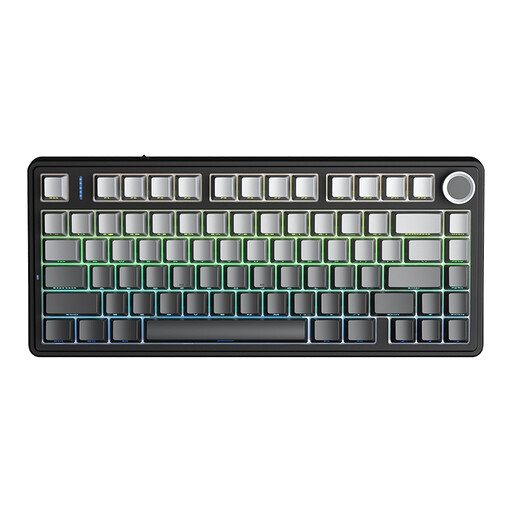 No image available
AULA F75 PRO Wireless Mechanical Keyboard, 75% US layout
This model offers a compact mechanical layout for researchers who are comfortable with US key legends.
Its product name specifies Bluetooth, 2.4 GHz and wired modes, plus hot-swappable switches. Check the dimensions and navigation shortcuts against your desk and record-entry habits.
View on Joybuy
 No image available
HP 960 Ergonomic Split Layout Wireless Keyboard with padded wrist rest
Consider the split layout if you want to assess a different typing position for longer research sessions rather than prioritising the smallest keyboard.
Check that the keyboard, wrist rest and any keypad you intend to use fit the desk, and that the split key arrangement suits your typing habits.
View on Joybuy
Questions about choosing
Do I need a full-size keyboard to enter family-history dates?
Not necessarily: frequent number entry may justify a full-size keyboard or a separate numeric keypad, while occasional dates may be manageable on a compact layout. Logitech G notes that tenkeyless keyboards omit the dedicated numeric keypad, so check the arrangement you would actually use.
Will an ergonomic keyboard fix discomfort during long research sessions?
No keyboard can guarantee that; assess its shape alongside the whole workstation. The Health and Safety Executive advises keeping the screen and keyboard central, avoiding twisting and placing the keyboard just below elbow height.
What should I check before buying a Bluetooth keyboard?
Check the exact model’s operating-system and Bluetooth requirements, its physical layout and whether you need a receiver. Requirements differ: Microsoft specifies Windows 10 or 11 with Bluetooth 4.0 or later for its Designer Compact Keyboard.
What can I do with an old keyboard when replacing it in the UK?
Ask the retailer about its electrical-equipment take-back arrangements when buying a replacement. GOV.UK describes a same-type take-back requirement for retailers to which it applies; confirm how the seller handles your old keyboard rather than putting it in general waste.


