Choose a 75% mechanical keyboard if remappable shortcuts and connection choices are central to your formatting work. A minimalist low-profile keyboard puts the emphasis on mouse space, while a compact multi-device office keyboard is worth considering if you regularly switch equipment. Before buying, check the exact key layout, access to your most-used controls, work-device restrictions and the position of the whole workstation.
Who needs which keyboard?
Shortcut-heavy help-centre formatter
If you repeatedly format headings, lists and links, accessible editing keys and configurable shortcuts may matter more than the smallest possible layout. Keychron lists QMK/VIA remapping for its compact K3 Max UK-ISO range.
Small-desk all-day typist
You want room to position both keyboard and mouse without neglecting the rest of your workstation. The Health and Safety Executive advises keeping the screen and keyboard central and the keyboard just below elbow height.
Multi-device support worker
If support work takes you between computers and other devices, check both the number of connections and the methods your workplace permits. Logitech and CHERRY specify multi-device options for the compact models discussed below.
What matters when choosing?
For help-centre formatting on a small desk, start with the need that matters most to you: editing controls, space for a well-positioned mouse, or switching between work devices.
| Concern |
What to check |
Who this matters to |
| Editing controls and shortcuts |
Check the UK key arrangement, access to your everyday navigation keys and whether remapping works on your operating system. |
When I repeatedly format headings and links, I need shortcuts I can reach without interrupting my work; around 40% of consumers would put editing controls first. |
| Desk space and typing position |
Check the keyboard footprint, height, adjustment and room left for the mouse. The Health and Safety Executive advises positioning the keyboard just below elbow height. |
I need room for my mouse without pushing the keyboard into an awkward position during long sessions; for around 40% of consumers, desk setup would be the primary concern. |
| Switching between devices |
Count your devices and check permitted Bluetooth, receiver and wired connections, along with operating-system support. |
If I move between a work computer and other devices, I need a connection method each one can use; roughly 20% of consumers would prioritise device switching. |
Buying pitfalls
-
Assuming a compact board keeps every formatting key
A smaller layout can omit dedicated keys or move functions to a secondary layer. Logitech specifies 79 keys for the MX Keys Mini, while Keychron describes the K3 Max as a 75% keyboard.
List the keys you use in your help-centre platform, then inspect the exact layout and its function-layer controls before ordering.
-
Treating a smaller keyboard as a complete workstation fix
More mouse room is useful only if the keyboard, mouse, screen and chair can still be positioned appropriately.
Follow the Health and Safety Executive’s guidance to keep the screen and keyboard central and the keyboard just below elbow height. For prolonged laptop use, a separate keyboard and mouse allow the screen to be raised.
-
Choosing wireless before checking work-device restrictions
Bluetooth, a wireless receiver and a cable require different connection routes; customisation software may also depend on the operating system.
Check the ports and connection methods your work device permits, then confirm that any shortcut software you need can be used on it.
-
Assuming every variant has UK key positions
Keyboard families can include different physical layouts, which changes where familiar punctuation and symbols sit.
If you use UK key positions, check that the exact variant in your basket is labelled English UK QWERTY or UK-ISO, as appropriate.
Brands to consider for these keyboard styles
Logitech
The MX Keys Mini range is relevant if you want a compact, low-profile productivity keyboard with an English UK QWERTY option.
- Logitech lists 79 keys, backlighting and switching among up to three devices for the specified MX Keys Mini variants.
- The MX Keys Mini for Business specification lists no tilt legs. Check whether its key layout and typing angle suit you, particularly if you need a dedicated number pad.
Keychron
The K3 Max UK-ISO range offers a 75% low-profile mechanical layout for people who want to configure formatting shortcuts.
- Keychron lists QMK/VIA remapping and wired, Bluetooth and 2.4 GHz connection options for this range.
- Check the exact key positions, your switch preference and whether you can configure VIA on the device you use for work.
CHERRY
The KW 9200 MINI is a compact scissor-switch office keyboard aimed at work across several devices.
- CHERRY specifies two Bluetooth channels, a 2.4 GHz wireless channel and a wired channel, with switching across up to four devices.
- Confirm the layout of the retailer’s exact variant and whether you need a dedicated number pad.
Joybuy keyboard choices
These choices include 75% and 65% keyboards for a small desk, plus a 96% option if you want to consider a less reduced layout. Compare their exact key positions and connection requirements with your formatting workflow.
 No image available
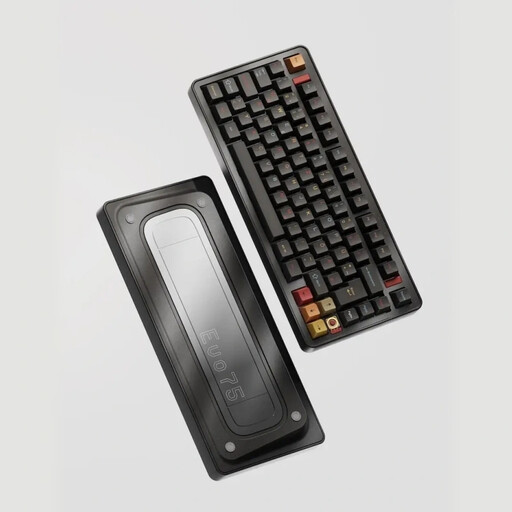
Ticktype EVO75 Tri-Mode Mechanical Keyboard, US Layout, Spray-coated Nebula
Consider this for repeated formatting shortcuts if its VIA-compatible configuration can be used on your work device. The product name specifies hot-swappable switches and an 8000mAh battery; check that the US key positions and keyboard footprint suit your desk and typing habits.
Joybuy
 No image available
HyperX Alloy Rise 75 Wireless Keyboard, UK Layout
This 75% option is worth considering if you want a UK-layout wireless keyboard for moving between text and support tools. Check its footprint, exact key positions and whether any customisation you need is permitted on your work computer.
Joybuy
 No image available
ASUS ROG Strix Scope II 96 Wireless Keyboard, Black, UK Layout
If dedicated numeric entry matters, consider this 96% UK-layout option rather than assuming a smaller layout will meet that need. Check its footprint against the space available for your mouse, and confirm any shortcut configuration you require.
Joybuy
 No image available
Rapoo E9050L 75% Wireless Membrane Keyboard, US QWERTY, White
This is an option if a slim keyboard and switching between devices matter more to you than confirmed shortcut remapping. The product name specifies 78 keys, 2.4 GHz and Bluetooth 5.0/4.0 connections, and support for four devices; check the US key positions and desk footprint before choosing it.
Joybuy
 No image available
ASUS ROG Falchion Ace HFX 65 Analog Keyboard, UK Layout
Consider this 65% UK-layout keyboard if desk space is tight and a wired connection suits your work device. Check how you would access the function-layer keys used for formatting, and confirm any remapping or macro functions you need.
Joybuy
Common questions
Do I need a UK-layout keyboard for help-centre formatting?
Choose the physical layout that matches the symbols and key positions you use every day. Logitech lists an English UK QWERTY MX Keys Mini variant, and Keychron lists a UK-ISO K3 Max option; check the exact variant rather than relying on the keyboard family name.
Will a separate compact keyboard help with a laptop setup?
It can help you arrange a laptop workstation when it allows the screen to be raised while the keyboard and mouse remain appropriately placed. For prolonged laptop use, the Health and Safety Executive advises using a separate keyboard and mouse so the screen can be elevated.
Does a compact keyboard make a small workstation ergonomic?
No: its size alone cannot settle how the workstation fits you. The Health and Safety Executive advises checking the position of the screen, keyboard and mouse, including keeping the screen and keyboard central and the keyboard just below elbow height.
What if the keyboard is for an employee working from home?
The keyboard should be considered as part of the worker’s display-screen workstation, not in isolation. The Health and Safety Executive says employers must assess workstations and reduce risks for workers who use display-screen equipment daily for continuous periods of an hour or more; its guidance also covers home workers.


