Tight-worktop reheaters
If you mainly warm small portions of peas or other leftovers, start with the available width, depth and height. Leave room for the door to open and for the clearances required by the model’s instructions.


A freestanding solo microwave is a practical choice for reheating a small serving of cooked peas. Consider a 17 L model if small portions and simple controls are your priorities, or a compact 20 L model if your usual plates need more room. Check the appliance’s full dimensions and required clearances against your worktop; when reheating, follow the food and microwave instructions for stirring and standing.
If you mainly warm small portions of peas or other leftovers, start with the available width, depth and height. Leave room for the door to open and for the clearances required by the model’s instructions.
If you mainly set a time and power level, manual dials may suit you better than programmes you would rarely use. Russell Hobbs lists manual dials on its RHM1727RG; check the controls on the exact model you choose.
If the microwave must also take your everyday dinnerware, measure the dish as well as the worktop. Panasonic says its 20 L NN-ST22QBBPQ has a 255 mm turntable intended for standard dishware.
For reheating peas in a small kitchen, check worktop fit first, then whether your usual dish rotates freely. Choose the controls you prefer without treating wattage or a turntable as a substitute for following reheating instructions.
| Concern | What to check | Who this matters to |
|---|---|---|
| Worktop fit | Measure usable width, depth and height; allow for the door and the exact model’s required clearances. | If space is tight, I need the whole appliance to fit safely, not just a cavity labelled compact. Around 33% of consumers put worktop fit first. |
| Reheating peas | Check that your bowl fits and that you can set a suitable time and power; follow food and appliance instructions for stirring and standing. | I want a small serving heated through without relying on rotation alone. For around 27% of consumers, the reheating routine is the primary concern. |
| Everyday controls | Compare manual dials with timed digital controls and programmes on the exact model. | When I warm a side dish, I want to set it up without navigating functions I do not use. Straightforward operation comes first for around 27% of consumers. |
| Dish capacity | Measure your usual bowl or plate against the turntable diameter and available cavity dimensions. | I also reheat meals on my usual plate, so it needs to fit and turn freely. Around 13% of consumers make dish capacity their first priority. |
Capacity does not tell you how much worktop an appliance occupies. The product information lists the cited 17 L Cookworks models at 44.6 cm wide and 32.3 cm deep, while Panasonic lists the 20 L NN-ST22QBBPQ at 44.0 cm wide and 32.4 cm deep; their heights also differ.
Measure all three dimensions of the available position, then check door access and the clearances in the exact model’s installation instructions.
A rotating dish does not replace the reheating steps given for the food and appliance. The Food Standards Agency advises following the manufacturer’s instructions, including guidance on stirring and standing.
Stir during reheating and allow standing time as directed, then check the peas are hot throughout before serving.
Compact models can have different turntable diameters. The cited Cookworks 17 L models have a 24.5 cm turntable, while Panasonic lists 25.5 cm for the NN-ST22QBBPQ.
Measure the base of your usual microwave-safe bowl or plate and check that it will fit and rotate freely in the model you are considering.
Recycle Your Electricals advises recycling microwaves rather than placing them in general rubbish.
Check your local electrical-recycling options or whether a retailer offers take-back before disposing of an old appliance.
The cited model range includes 17 L, 700 W solo microwaves with manual or digital controls.
The NN-ST22QBBPQ is a compact 20 L solo option to consider if everyday plates matter as well as worktop fit.
The cited RHM1727RG is a 17 L solo model for people who prefer manual controls.
These solo microwaves offer choices for basic reheating and, in some cases, larger dishes. If worktop space is your main constraint, check the full dimensions and installation clearances of the particular model before choosing.
 No image available
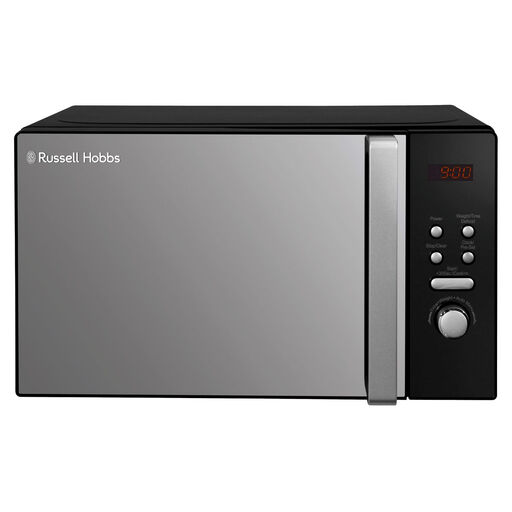
Consider this model if you want digital controls for everyday reheating. Its product name specifies 800 W output and five power levels.
Check its depth and required clearances against your worktop before buying.
 No image available
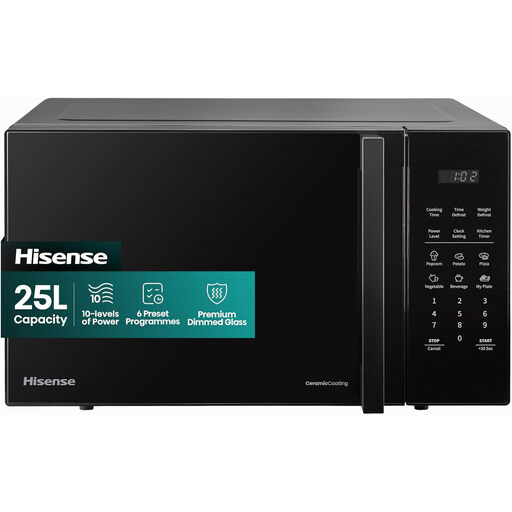
Consider this 25 L model if accommodating a larger dish matters more than choosing the smallest format. Its product name specifies 900 W output and auto defrost.
Check its width, depth and required clearances carefully if your worktop is restricted.
 No image available
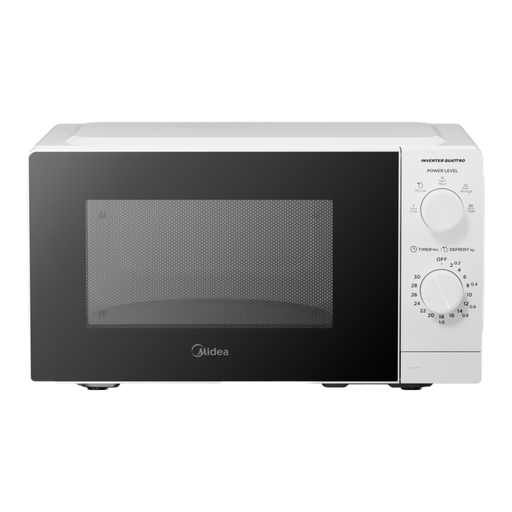
Consider this model if you prefer manual controls for small reheating tasks. Its product name specifies 700 W output and identifies it as a 20 L solo microwave.
Check that your usual dish fits and rotates freely, and allow for the appliance’s depth and required clearances.
 No image available
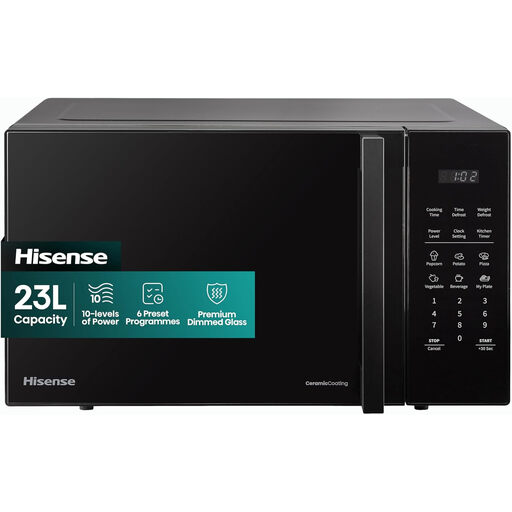
Consider this model if you need room for a larger dish as well as basic reheating. Its product name specifies 800 W output.
Check worktop fit and required clearances. Confirm the control layout before buying, as the available product information differs on this point.
 No image available
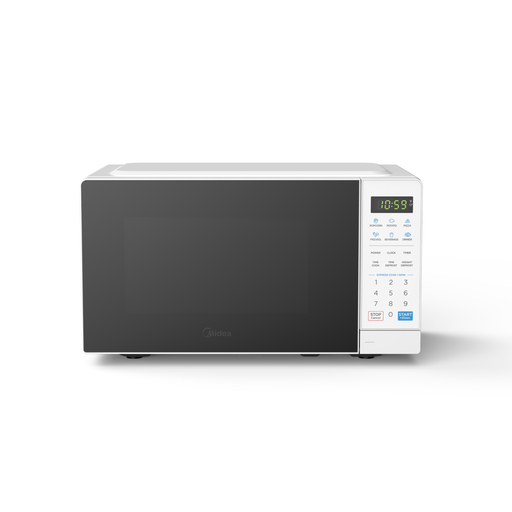
Consider this digital-control model for basic reheating if your dish fits its stated 245 mm turntable.
Measure the available worktop and check the appliance’s full dimensions and required clearances before deciding whether it suits a tight space.
Yes, a solo microwave can reheat cooked peas. Use a microwave-safe bowl and follow the food and appliance instructions; the Food Standards Agency advises following guidance on stirring and standing. Check that the peas are hot throughout before serving.
Either output can serve this basic reheating task; choose the appliance that fits your space, dish and preferred controls. An 800 W rating states a higher maximum output than 700 W, but do not transfer heating times unchanged between appliances—follow the relevant food and microwave instructions.
Measure the available width, depth and height, then compare them with the exact model’s outside dimensions and installation clearances. Also check that you can open the door and place your usual dish inside without obstructing its rotation.
Use an appropriate electrical-recycling route rather than general rubbish. Recycle Your Electricals advises recycling microwaves; check which collection or take-back options are available locally before disposing of yours.