Small-worktop soup reheaters
You mainly heat one bowl of vegetable soup or leftovers. The appliance needs to fit its intended position without losing the room required for installation and use.


If reheating vegetable soup is the main task, start with a solo microwave that fits your worktop with the required ventilation space and lets your usual bowl rotate freely. The dimensions listed for these models show why capacity in litres alone cannot predict worktop fit; consider a larger combination microwave only if you will use its grill or convection modes.
You mainly heat one bowl of vegetable soup or leftovers. The appliance needs to fit its intended position without losing the room required for installation and use.
You reheat chilled portions regularly and want controls that make it practical to pause, stir and check that the food is hot throughout.
You also want grill or oven-style cooking. A combination microwave may address that separate need, provided its larger exterior fits your worktop.
For vegetable soup on a limited worktop, check placement first, then bowl fit and reheating controls; weigh extra cooking modes only if you expect to use them.
| Concern | What to check | Who this matters to |
|---|---|---|
| Worktop fit | Compare external width, depth and height with your space, then check the model’s installation instructions for ventilation and door-opening room. | When counter space is tight, I need the microwave to fit safely where it will be used. Around 38% of consumers put worktop fit first. |
| Soup reheating | Look for controls you can pause and adjust; follow the food’s heating, stirring and standing instructions rather than using one fixed time for every portion. | I reheat chilled soup often and want to stir it and check that it is hot throughout. For around 31% of consumers, repeatable reheating is the main concern. |
| Bowl and portion fit | Measure your usual bowl and compare its base and full shape with the turntable and cavity dimensions. | My usual soup bowl needs room to rotate, particularly when I heat a larger portion. Roughly 23% of consumers prioritise bowl and portion fit. |
| Other cooking modes | Decide whether you will use grill or convection cooking, and check the combination model’s exterior dimensions before giving it worktop space. | If one appliance also needs to grill or bake, reheating alone will not settle my choice. Around 8% of consumers put those extra functions first. |
A litre figure describes cavity capacity, not the space an appliance occupies. Panasonic UK & Ireland lists its 20L NN-ST22QBBPQ at 440 × 324 × 258 mm, while the product information lists the cited 17L Cookworks model at 446 × 323 × 243 mm.
Measure the intended position and compare each model’s external dimensions and required installation space before comparing capacities.
The cited 17L models have 245 mm turntables, while Panasonic UK & Ireland specifies a 255 mm turntable for the NN-ST22QBBPQ. Cavity capacity alone does not show whether your bowl can rotate.
Measure your bowl’s base and full shape, then check the turntable and cavity dimensions of the model you are considering.
Heating time changes with the portion and its starting temperature. Food Standards Scotland advises taking care that reheated food is hot all the way through.
Follow any packaging instructions for heating, stirring and standing, then check the soup throughout before eating.
Panasonic UK & Ireland lists the grill-and-convection NN-CT55JWBPQ at 520 × 395 × 310 mm, larger than its cited 20L solo model. Those modes address cooking tasks beyond routine soup reheating.
Compare solo microwaves first if reheating is the main job; consider a combination model when you also expect to use its grill or convection functions.
Panasonic UK & Ireland lists both the NN-ST22QBBPQ solo microwave and the NN-CT55JWBPQ combination model, illustrating two different uses of worktop space.
The RHMM701R is a 17L, 700W solo model with dial controls for reheating and defrosting.
The product information lists a 700W, 17L Cookworks digital microwave with defrost and programme controls.
These Joybuy solo microwaves offer different capacities and controls for soup reheating. Compare each exterior and your usual bowl with the space available before choosing; the 25L option calls for particular attention to worktop fit.
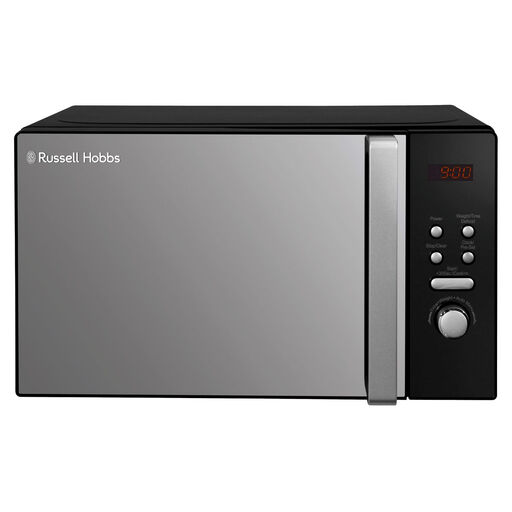 No image available
Consider this solo model if you want digital controls for routine soup reheating.
The product name specifies five power levels. Check the space required around the appliance and whether your bowl can rotate before buying.
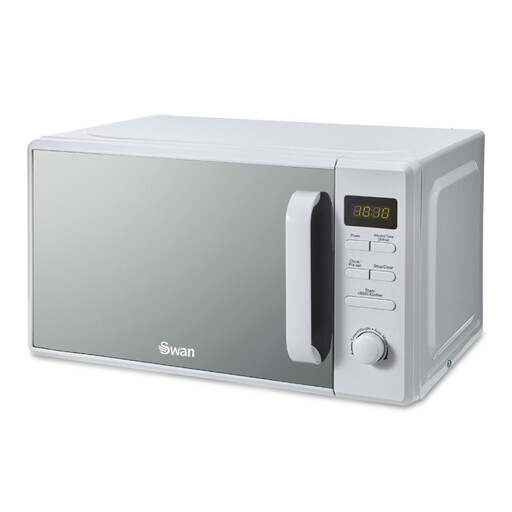 No image available
This solo model is an option for regular reheating if its exterior and your bowl suit the available space.
The product name specifies five power levels and a 95-minute timer. Check bowl clearance and the installation instructions for your intended position.
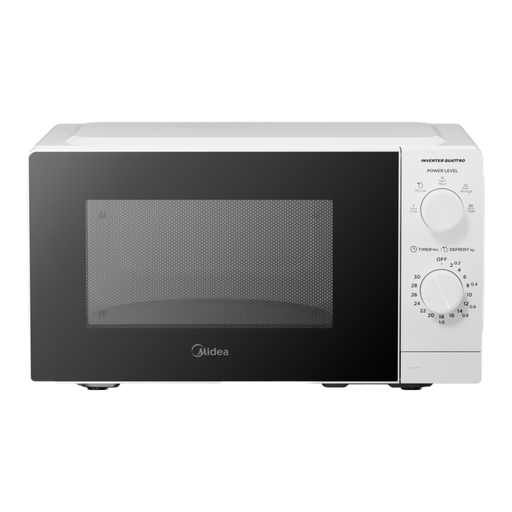 No image available
Consider this model if you prefer manual controls for reheating soup and its exterior fits your counter.
The product name identifies MET Inverter Technology and an energy-saving mode; it does not establish a measured saving for your use. Check bowl clearance and installation space.
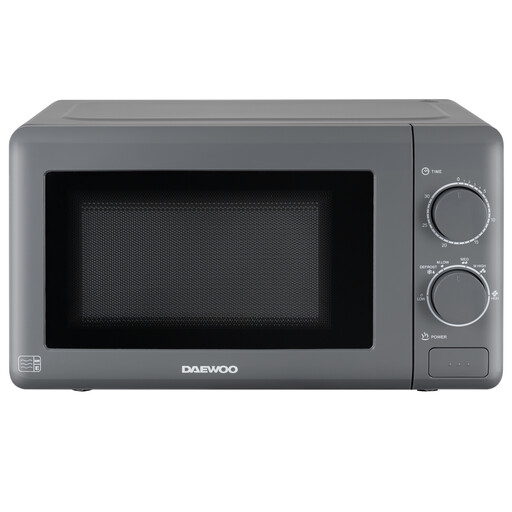 No image available
This model offers manual controls for everyday soup reheating if its size suits your intended position.
The product name includes a defrost function. Confirm the number of power settings before buying, and check the model’s stated installation clearance as well as bowl fit.
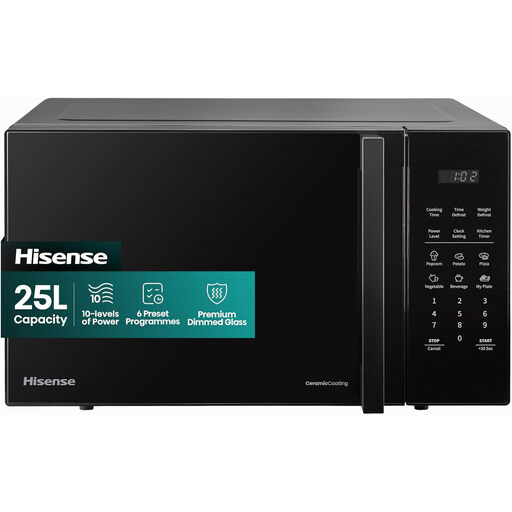 No image available
Consider this larger-capacity solo model if accommodating a wider bowl matters more than keeping the appliance particularly small.
The product name includes auto defrost. Measure the worktop and check the installation space carefully before choosing a 25L model for a restricted position.
Measure the usable width, depth and height, then compare them with the microwave’s external dimensions and installation instructions. Leave the required ventilation space and account for the door opening, socket and cable; a small cavity does not guarantee a small exterior.
Follow any heating, stirring and standing instructions on the packaging, and check that the soup is hot all the way through before eating. Food Standards Scotland advises taking particular care that reheated food is heated throughout; do not rely on the timer alone.
Avoid reheating leftover soup more than once, in line with Food Standards Scotland’s advice. Follow the food’s storage instructions and make sure the portion you do reheat is hot all the way through.
Read the manufacturer information and product documentation for the microwave you intend to buy. GOV.UK explains that the Electrical Equipment (Safety) Regulations 2016 set safety requirements for electrical equipment placed on the Great Britain market, including duties for manufacturers.