Small-space baked-pasta cooks
If baking the dish is your main task, start with worktop dimensions, the oven’s baking controls and whether your dish clears its rack and door. Extra cooking modes need not drive the choice.


Choose a countertop mini oven if baking and browning macaroni cheese is the main job, but check that your dish fits inside and that the appliance fits safely on the worktop. A mini cooker with hotplates also gives you somewhere to make the sauce; a combination microwave and convection oven is worth considering if reheating and defrosting matter too, provided its size and weight work for your kitchen.
If baking the dish is your main task, start with worktop dimensions, the oven’s baking controls and whether your dish clears its rack and door. Extra cooking modes need not drive the choice.
If you have no separate hob for the cheese sauce, a mini cooker with hotplates covers both tasks. Allow space for its hot surfaces and consider the electrical load before using other high-wattage appliances nearby.
If you also want microwave reheating and defrosting, a combination appliance may cover more everyday tasks. Check its actual footprint and weight rather than assuming that multiple functions mean a smaller unit.
Decide whether you need only an oven, an oven plus hotplates, or microwave functions as well. Then measure both the worktop and the dish: a capacity stated in litres settles neither fit question.
Choose it when: baking the macaroni cheese is the priority and you have another way to make the sauce.
Allow for: a separate sauce-making method, as well as space around the oven for placement and ventilation.
Choose it when: the same countertop appliance needs to heat the sauce and bake the pasta.
Allow for: additional hot surfaces and the electrical load of cooking alongside other appliances.
Choose it when: reheating and defrosting are regular needs alongside convection baking.
Allow for: the full depth, door clearance and weight of the particular model.
| Concern | What to check | Who this matters to |
|---|---|---|
| Worktop fit and placement | Measure available width, depth and height; check door opening and the model’s required clearances. | When every bit of worktop matters, I need room to place and use the appliance without crowding it. Around 40% of consumers put worktop fit and safe placement first. |
| Baking and dish fit | Check for a baking mode and suitable temperature range; measure your dish, including its handles, against the cavity, rack and door opening. | If my usual oven dish cannot go in and come out easily, its stated litre capacity is little help. Dish fit and baking capability come first for around 30% of consumers. |
| Sauce preparation | Check the hotplate controls and the appliance instructions for using the oven and hotplates; consider other loads on the circuit. | Without a separate hob, I need a way to make the cheese sauce as well as bake the pasta. Around 20% of consumers prioritise that combined cooking task. |
| Reheating and defrosting | Confirm that the exact model has both microwave functions and a baking-capable oven mode. | I regularly reheat portions or defrost ingredients, so I want those tasks alongside occasional baking. That is the primary need for around 10% of consumers. |
A capacity figure does not show whether your dish clears the rack, door and sides of the oven.
Measure the dish, including its handles, and compare it with the exact model’s internal dimensions and door opening before ordering.
Electrical Safety First warns that items placed on appliances can obstruct ventilation and contribute to overheating or fire.
Keep the top clear and follow the placement and ventilation clearances in the appliance manual.
Adding hotplates makes sauce preparation possible, but it also makes electrical-load planning more important. NICEIC advises against using multiple high-wattage appliances simultaneously on the same circuit.
Check the cooker’s instructions and avoid running it alongside other high-load appliances on the same circuit; seek a qualified electrical inspection if the circuit repeatedly trips.
For example, the Hisense H28SO1UK is listed at 52.9 cm wide, 43.5 cm deep and 20.5 kg. Its extra functions do not make its footprint suitable for every small worktop.
Compare the exact model’s dimensions, weight and door opening with the space where you will use and clean it.
Its 28L Mini Oven is an example of the conventional countertop route for baking dishes.
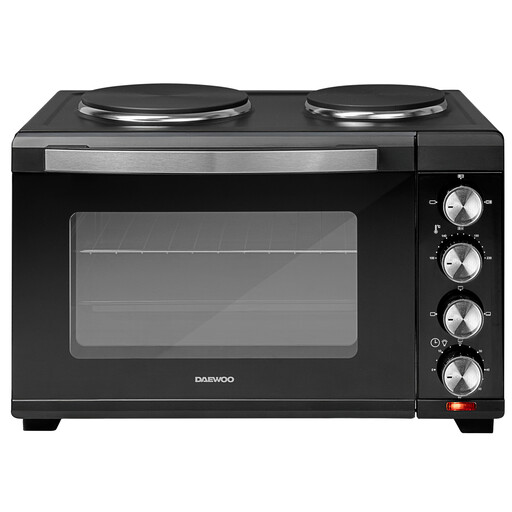
The Mini Kitchen 22780 illustrates the oven-plus-hotplates route.
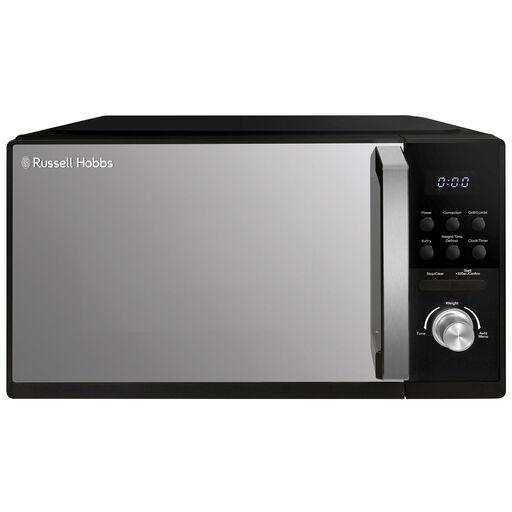
The H28SO1UK illustrates the combination microwave and convection route.
These options cover combination microwaves with baking functions and an oven with hotplates for making the sauce. Compare the exact model’s baking settings, worktop requirements and dish clearance before choosing.
 No image available
Consider this combination microwave if you want microwave cooking alongside oven-style functions. Check its convection temperature settings against your recipe, and compare your dish with the internal space and door clearance.
 No image available
The oven and hotplates make this a route to preparing sauce and baking with one countertop appliance. Its title states 3000 W; consider the electrical load, and check your dish against the oven’s internal and door dimensions.
 No image available
This model is worth checking if you want microwave cooking and convection baking in one unit. The title states 900 W; confirm the convection temperature range, installation space and internal dish clearance for your recipe and worktop.
 No image available
Consider this combination appliance if microwave use and other cooking modes matter alongside baking. Its title specifies a 900 W microwave and 1000 W grill; check the baking temperature, worktop dimensions and usable dish space separately.
 No image available
The named bake, grill, reheat and defrost functions make this relevant if you want more than microwave cooking. Check how its bake function works and whether its temperature settings, worktop footprint and dish clearance suit macaroni cheese; the title also states 2400 W.
Measure the dish’s outside dimensions, including its handles, and compare them with the exact oven’s cavity, rack and door-opening measurements. Litre capacity alone cannot confirm the fit; ask the retailer or manufacturer for internal measurements if you need them before buying.
Choose a position that keeps the appliance, plug and cable clear of water and meets its manual’s placement requirements. Electrical Safety First advises that socket-outlets and switches should be a safe distance from the sink, preferably at least 30 cm horizontally where possible.
Avoid running several high-wattage appliances simultaneously on the same circuit, as NICEIC advises. If protection devices repeatedly trip or a socket shows signs of overheating, stop using the affected setup and seek qualified electrical advice.
Yes: check the seller’s information for the exact appliance and the market where it will be used. UK Government guidance sets out requirements for electrical equipment placed on the Great Britain market under the Electrical Equipment (Safety) Regulations 2016; buyers in Northern Ireland should check the applicable market-specific information rather than assuming the Great Britain provisions are identical.