Hybrid poetry hosts
You have remote guests or a video-call contribution alongside a small seated group. Two-way speech matters more to you than amplifying a reader across the room.


Choose a compact PA with a suitable microphone input when a reader needs to be heard by people in the room. Choose a conference speakerphone when remote guests need two-way conversation and the readers can stay within its stated microphone pickup area. In dim light, check the controls and connections, then soundcheck from the reader’s position and audience seats; a meeting-room rating does not establish live-event coverage.
You have remote guests or a video-call contribution alongside a small seated group. Two-way speech matters more to you than amplifying a reader across the room.
Your priority is making a standing reader audible to people at the venue. A suitable microphone connection, speaker placement and a soundcheck matter more than conferencing features.
You need to find mute, volume and connection controls without relying on a brightly lit laptop screen. Check the chosen model’s indicators and controls in lighting like the venue’s.
Choose when: A reader needs microphone-led amplification for people physically present.
Allow for: A suitable microphone and cable, speaker placement and a soundcheck before the reading.
Choose when: Nearby, seated readers need to speak with remote guests.
Bear in mind: Readers must remain within the model’s stated pickup area, and meeting-room specifications do not establish audibility across a live audience.
| Concern | What to check | Who this matters to |
|---|---|---|
| In-room audibility | Check the microphone connection and whether a compatible microphone is supplied; listen from audience seats during a soundcheck. | If I need a standing reader to be heard across the room, I want to check speech from the seats, not judge it beside the speaker. Around 50% of consumers put in-room audibility first. |
| Remote participation | Compare the exact model’s stated pickup area with reader positions, and check its connection to the host device. | When guests contribute remotely, I need nearby voices to reach the call and their replies to be heard. Around 30% of consumers primarily need that two-way connection. |
| Low-light setup | Check control and indicator visibility, power arrangements and whether cables reach their intended positions. | In reduced light, I want to spot a muted microphone and manage the setup without moving equipment mid-reading. For around 20% of consumers, straightforward low-light operation comes first. |
A speakerphone’s close-range pickup specification addresses a different task from amplifying a standing reader for an audience. Jabra and HP describe pickup areas for their conferencing models, while Yamaha specifies dedicated mic/line inputs for the STAGEPAS 100.
Decide whether the primary listener is in the room or on a call. For in-room voice lift, check a suitable microphone-input setup and test it at the reader’s actual position.
A microphone and cable may also be needed for the live-sound setup.
Ofcom notes that licence-exempt frequency ranges are shared with other low-power equipment, so interference can affect a reading.
Check the wireless system’s UK frequency band and applicable conditions, then test it at the venue before the event.
A manufacturer’s maximum sound-pressure specification is not a listening-level target: it does not account for the room, audience positions or people working at the event.
Set the level for intelligible speech, position the speaker away from the microphone to reduce feedback, and listen from several audience seats. Where staff are working, consider their noise exposure separately, in line with Health and Safety Executive guidance.
Conference speakerphones for small hybrid readings where participants sit near the unit.
Speakerphones for a small, seated group taking part in a remote call.
Conference speakerphones for remote participation rather than dedicated live-sound reinforcement.
Portable PA equipment for a reading where the principal task is making a microphone-led voice audible in the room.
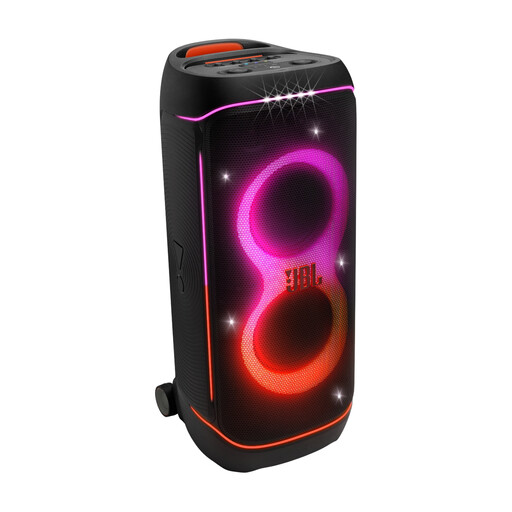
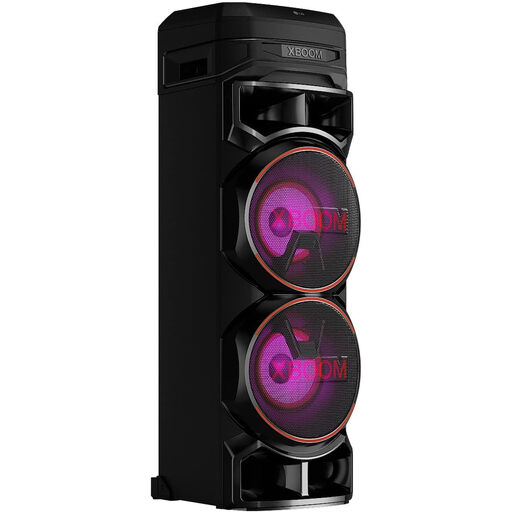
These choices cover speakerphones for seated hybrid readings and party speakers to consider for wired-microphone speech. Check microphone compatibility and audibility in the actual room before using either party speaker for a live reading.
 No image available
Consider this for a wired-microphone reading rather than a remote call. Check microphone compatibility and whether a microphone is supplied; plan for mains power and test speech from audience seats. Batteries are not included.
 No image available
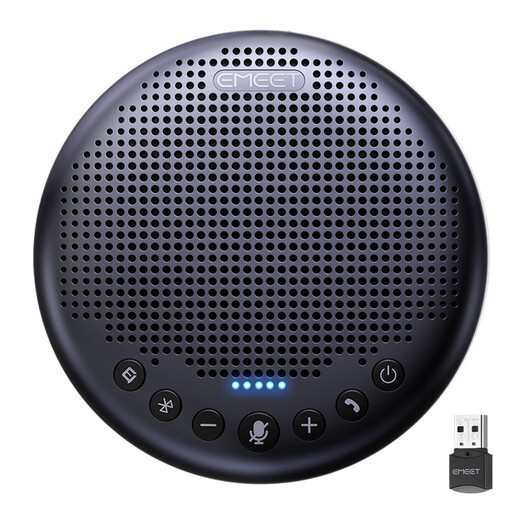
For a seated group joining a remote reading, check voice pickup at each reader’s position and the controls in low light. The product name specifies eight microphones, 360° pickup and a 5 W speaker; those figures do not establish in-room audience coverage.
 No image available
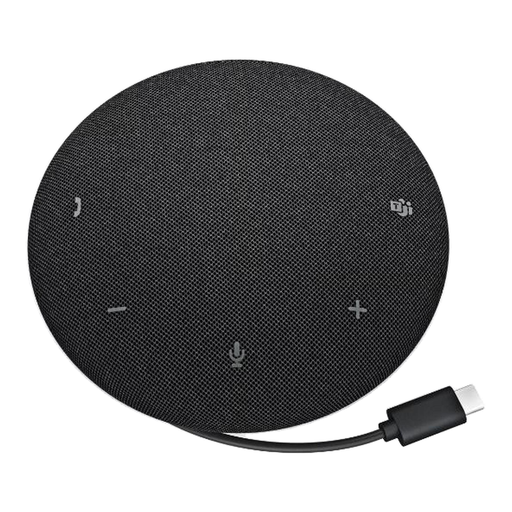
For nearby readers on a call, check the wired connection to the host device and whether the cable reaches its intended position. Test pickup from the reader’s seat; do not assume a call speakerphone will amplify speech for everyone in the room.
 No image available
Consider this for an in-room reading with a compatible wired microphone. Check whether the microphone is supplied, how the speaker is powered and whether its controls are usable in dim light; test speech at audience positions.
A conference speakerphone suits a small, close-range hybrid reading when the main job is a two-way call, but it should not be assumed to replace a PA for an in-room audience. If a standing reader needs voice lift, check a system with a suitable microphone input and soundcheck it from the audience seats.
Read aloud at the intended level from the reader’s actual position and listen from the back of the room. Check mute and volume controls, connections, power and any microphone cable in the lighting you will use; a microphone-status indicator does not tell you whether every audience seat can hear clearly.
It depends on the wireless system’s frequency and the conditions of use. Ofcom identifies 173.8–175 MHz, 863–865 MHz and 2400–2483.5 MHz as licence-exempt ranges, but shared use can cause interference; check the exact system and applicable Ofcom conditions before the event.
No. Set the system for clear speech from audience positions rather than using its maximum-output figure as a target. If people are working at the event, their noise exposure also needs consideration under Health and Safety Executive guidance.
Yes, music can raise a separate licensing question from the reading itself. GOV.UK guidance makes the answer depend on factors including the entertainment, time, venue and audience size; check the venue’s permissions and ask the local licensing authority about the planned event where necessary.