Choose a compact with optical zoom if distant subjects are the shots your phone misses; a fixed-lens premium compact is a different option when its particular field of view and manual controls suit the stills you want to take. If you plan to film yourself, check the exact camera’s screen, audio connections and recording modes. Manufacturer specifications describe features, not a guarantee of better results than your phone, and the extra camera also means more to carry, charge and protect.
Who compact travel cameras may suit
One-bag sightseers
If you will carry a camera through a full day of walking, compare the complete kit’s weight and how it charges, as well as whether it covers shots your phone usually handles. Canon lists the PowerShot G7 X Mark III at approximately 304 g with its battery and memory card.
Travellers photographing distant subjects
If landmarks or wildlife are difficult to approach, check the camera’s optical focal-length range rather than relying on digital enlargement. Panasonic lists the TZ99 at 24–720 mm equivalent; Sony lists the RX100 VII at 24–200 mm equivalent.
Deliberate stills photographers
If you want hands-on exposure control and a particular built-in lens for streets or landscapes, check that its fixed view suits the scenes you expect. The Ricoh GR III and Fujifilm X100VI are examples of fixed-view approaches, rather than optical-zoom cameras.
What to prioritise when buying
Start with the shots your phone misses, then check whether the camera and its charging kit are practical to carry on your trip.
| Concern |
What to check |
Who this matters to |
| Carrying and power |
Compare ready-to-shoot weight, bag fit, charging method and included accessories. |
If I’m walking all day, I need a camera and charging kit I’ll actually carry. Around 31% of consumers put carrying and power first. |
| Distant subjects |
Check the optical focal-length range and aperture at the long end; distinguish optical from digital zoom. |
For distant landmarks or wildlife, I want lens-based reach rather than digital enlargement. Around 31% of consumers prioritise framing subjects they cannot approach. |
| Stills and controls |
Compare the exact lens’s field of view, exposure modes and model-specific stabilisation. |
If I’m choosing a camera for deliberate stills, I want a built-in lens and controls that suit my scenes. Around 23% of consumers put still-image control first. |
| Travel video |
Check the recording mode, screen movement, microphone connection and stabilisation in that mode. |
When I plan to film myself or record spoken video, I need usable framing and audio features as well as the resolution. Around 15% of consumers prioritise travel video. |
Travel-camera buying pitfalls
-
Counting digital zoom as extra optical reach
Digital enlargement and optical zoom are different specifications, so treating them as the same can give a misleading impression of lens-based reach.
Compare the exact model’s optical zoom and 35 mm-equivalent focal-length range first.
-
Assuming video stabilisation works in every mode
Panasonic’s published TZ99 specification sheet says five-axis video compensation does not apply when recording in 4K.
Check stabilisation for the exact recording mode you plan to use.
If the camera’s stabilisation does not suit your intended footage, you may need a different support or shooting method.
-
Packing the camera but not its charging setup
The Panasonic UK listing for the white TZ99 says that a USB cable and AC adapter are not included.
Check the exact variant’s box contents and charging requirements before travelling.
A compatible cable or adapter may need to be supplied separately.
-
Expecting a fixed-view compact to zoom optically
The Ricoh GR III and Fujifilm X100VI have fixed focal-length lenses, so they offer a different framing choice from a travel zoom.
Choose a fixed field of view only if it suits the subjects you expect to photograph most.
Camera brands to consider for travel
Panasonic
The Lumix TZ99 is a self-contained long-zoom option for travellers who want to frame nearby and distant scenes with one built-in lens.
- Panasonic specifies 30× optical zoom, a 24–720 mm-equivalent range and 4K recording for the TZ99.
- Panasonic’s published specification sheet excludes 4K recording from its five-axis video compensation. The Panasonic UK white-version listing says a USB cable and adapter are not included.
Sony
The RX100 VII is a premium compact with a built-in zoom, viewfinder and manual-focus options.
- Sony specifies an 8×, 24–200 mm-equivalent F2.8–4.5 lens for this model.
- Its stated optical range is shorter than the TZ99’s; lens range alone does not establish which camera will suit a particular scene.
Canon
The PowerShot G7 X Mark III is a short-zoom compact with features for travellers who also record themselves or spoken video.
- Canon lists a 24–100 mm-equivalent F1.8–2.8 lens, 4K recording, a tilting screen and a 3.5 mm microphone input.
- Its stated lens range is shorter than the TZ99’s 24–720 mm-equivalent range; compare the focal lengths against the subjects you expect to photograph.
Ricoh
The GR III is a fixed-view compact for travellers who prefer a particular lens angle for still photography over optical zoom.
- RICOH IMAGING specifies a fixed 28 mm-equivalent F2.8 lens, an APS-C-sized sensor and three-axis sensor-shift stabilisation for the GR III.
- The model’s listed video recording is Full HD rather than 4K, and its fixed lens does not provide optical zoom.
Fujifilm
The X100VI is a fixed-lens option for travellers who prefer its 35 mm-equivalent view and hands-on exposure settings.
- Fujifilm specifies a single-focal-length F2 lens, P/A/S/M exposure modes and sensor-shift stabilisation for the X100VI.
- Its digital tele-converter settings are not optical zoom, so they do not provide lens-based reach for distant subjects.
Joybuy camera choices
These Joybuy choices relate to travel photography and video, including cameras listed for optical zoom, pocket carrying or self-framed recording. Check each model’s stated features against the shots and recording modes you need.
 No image available
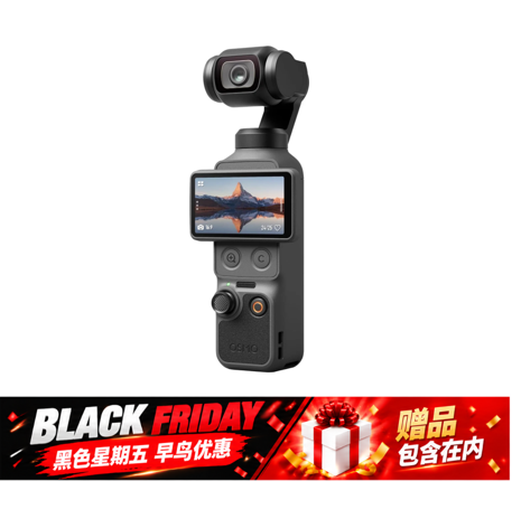
DJI Osmo Pocket 4 Standard Combo
A pocket gimbal-style camera for travel video and self-framing.
The title lists a 1-inch CMOS sensor, 4K/240fps recording, 3-axis stabilisation, 2× lossless zoom, 107 GB built-in storage and a 2-inch rotatable screen.
Joybuy
 No image available
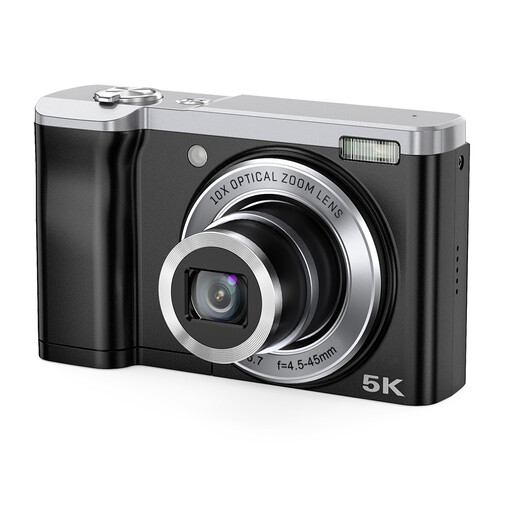
Songdian 5K Digital Camera, 56MP, 10× Optical Zoom, Black
Consider this model if you want a listed optical zoom for framing subjects without approaching them.
The title specifies 56MP and 10× optical zoom; the listing also describes dual cameras and electronic stabilisation.
Joybuy
 No image available
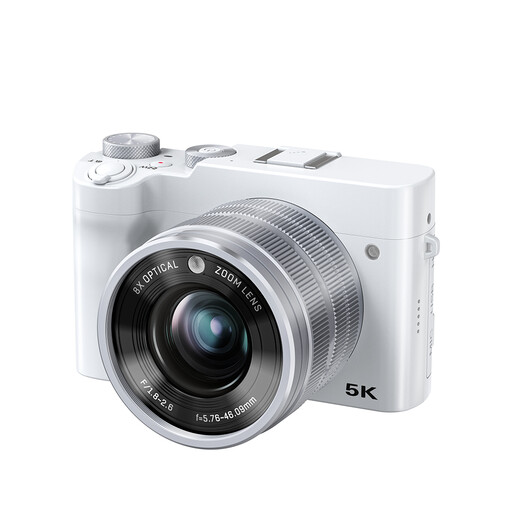
Songdian Digital Camera, 5K, 64MP, 8× Optical Zoom, White
This is another listed optical-zoom option for travellers choosing how to frame distant subjects.
The title specifies 5K, 64MP and 8× optical zoom; the listing also describes a manual focus ring and electronic stabilisation.
Joybuy
 No image available
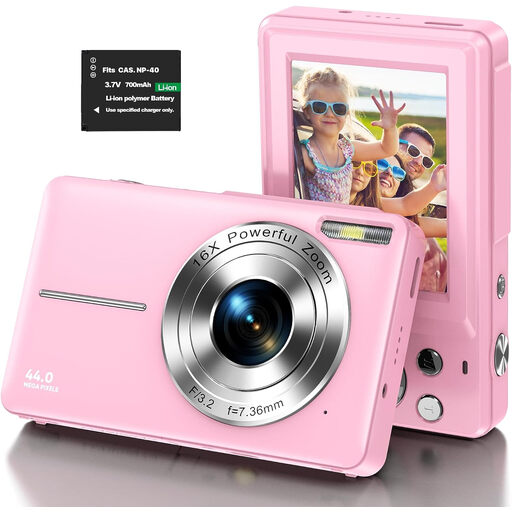
Songdian Pocket Camera, 4K, 64MP, 16× Zoom, Pink
Consider this pocket-camera listing if you want a model identified for photography and video with storage included.
The title lists 4K, 64MP and 16× zoom. The listing specifies a 2.4-inch IPS screen and an included 32GB TF card.
Joybuy
 No image available
Sony ZV-1F Compact Vlog Camera
A compact vlog camera listing with features for self-framed travel video.
The listing specifies a weight of 229 g, 4K recording, a microphone input, a vari-angle screen and a fixed 20 mm f/2.0 lens. It also lists aperture-priority, shutter-priority and manual exposure modes. The fixed wide view does not provide optical telephoto reach for distant subjects.
Joybuy
Travel camera FAQs
Is a longer optical zoom always better for travel?
No; choose longer optical reach when distant subjects recur on your itinerary, and compare the camera’s carrying size, lens aperture and the field of view you use most. Panasonic specifies a 24–720 mm-equivalent range for the TZ99, while Sony specifies 24–200 mm equivalent for the RX100 VII. Those lens specifications are not a comparative image-quality test.
What should I prepare for a day of photos and 4K clips?
Check the exact camera’s compatible memory-card type and recording-mode requirements, battery conditions, charging equipment and box contents before departure. Fujifilm specifies UHS-I SD-family storage for the X100VI; Panasonic’s UK listing for the white TZ99 says a cable and adapter are not supplied. Do not assume that these requirements or contents apply to another model or variant.
How should I pack a spare camera battery for a flight?
For a flight departing from the UK, follow UK Civil Aviation Authority guidance to keep spare batteries in the cabin and protect them from damage, and check your airline’s rules. The CAA says damaged, overheated or swollen batteries should not be carried on an aircraft; check the requirements that apply to other countries and airlines too.
What if a camera bought from a UK online seller arrives faulty?
GOV.UK guidance says a faulty item, an item not as described or one that does not do what it is supposed to do qualifies for the applicable consumer remedy. The guidance treats remedies for faulty goods separately from cancellation rights for qualifying online orders; check the conditions that apply to your purchase.


