Pocket travel-zoom seekers
You want to carry a camera comfortably on a day out and frame distant buildings, wildlife or family activities. A compact with optical reach is worth considering when your phone cannot give you the framing you want.


Carry a compact camera on travel and day trips when you will use its optical zoom or dedicated shooting controls enough to justify another device; if immediate sharing and minimal kit matter more, a phone may be enough. Choose a travel-zoom compact for distant subjects, a premium compact for a larger sensor or video features, or a larger bridge camera when very long reach outweighs pocketability. For wet or dusty outings, check the exact camera’s stated protection limits rather than assuming a small body is weatherproof.
You want to carry a camera comfortably on a day out and frame distant buildings, wildlife or family activities. A compact with optical reach is worth considering when your phone cannot give you the framing you want.
You want more shooting control than a phone offers, but not an interchangeable-lens kit. A premium compact may suit you if a larger sensor, lens aperture, stabilisation or video connections matter more than a long zoom.
Water, sand or cold may be part of your outings. Look for published protection limits for the exact camera rather than treating ordinary portability as evidence of weather resistance.
Decide whether carrying a separate camera solves a problem your phone leaves unresolved. Then put your main requirement—reach, image and video control, easy carrying, or environmental protection—ahead of secondary features.
| Concern | What to check | Who this matters to |
|---|---|---|
| Optical reach | Compare optical zoom and the 35 mm-equivalent wide-to-telephoto range. Panasonic lists the pocket-oriented TZ99 at 24–720 mm equivalent and its larger FZ82D bridge camera at 20–1200 mm equivalent; the longer range comes with a different carrying commitment. | If I often photograph wildlife or activities from where I have to stand, framing distant subjects comes first. Around 31% of consumers would put optical reach first. |
| Images and video | Check the exact sensor, lens aperture, stabilisation and video connections you intend to use. A stabilisation specification addresses camera shake, not every kind of subject movement. | When I want deliberate stills or travel video, I need controls and recording features I will actually use. For around 31% of consumers, image and video capability is the main priority. |
| Carrying and power | Check size and weight with battery and card, the charging method, box contents and the stated battery-test conditions. Panasonic says the TZ99 charges by USB-C but does not include a USB cable or AC adapter. | A camera is only useful to me on a day out if carrying and charging it fit my plans. Around 23% of consumers would prioritise that convenience. |
| Environmental protection | Read the exact model’s water, dust and temperature ratings and care instructions. OM Digital Solutions states that the Tough TG-7 is waterproof to 15 m, dustproof to IP6X and freezeproof to -10°C; those limits do not apply to other models. | For trips involving water, sand or freezing conditions, I need stated protection more than extra zoom. That would be the primary concern for around 15% of consumers. |
A small camera is not necessarily protected against water, dust or cold. The Tough TG-7’s published limits cannot be transferred to an ordinary travel-zoom or premium compact.
If difficult conditions are likely, check the exact model’s ratings, limits and care instructions before taking it along.
Panasonic’s TZ99 has a 24–720 mm equivalent 30x zoom, while its FZ82D bridge camera has a 20–1200 mm equivalent 60x zoom. The latter offers a longer stated range but is less pocketable.
Compare both ends of the equivalent focal range, then decide whether you would carry the larger body for the subjects you expect to photograph.
Panasonic says the TZ99 supports USB-C charging but does not include a USB cable or AC adapter.
Check what is in the box and confirm that your cable and power source are suitable before travelling.
A compatible cable or adapter may need to be obtained separately.
The UK Civil Aviation Authority advises passengers to carry spare batteries and power banks in the cabin and to protect them from damage.
Keep them in cabin baggage, protect exposed terminals against short circuits and check your airline’s current requirements before flying.
The TZ99 and FZ82D illustrate two distinct ways to get optical reach on a trip.
The RX100 VII is a premium compact to consider when a 1.0-type sensor and shooting controls matter more than extreme reach.
The PowerShot G7 X Mark III is a premium compact option for people balancing still photography with casual travel video.
The Tough TG-7 is relevant when published environmental limits matter more than long-range framing.
These cameras cover two different uses: listed zoom options for distant details and a wide-angle Sony model for self-recording and travel video. Compare each listing’s framing and carrying requirements with your own plans; none should be assumed to have a weather-protection rating.
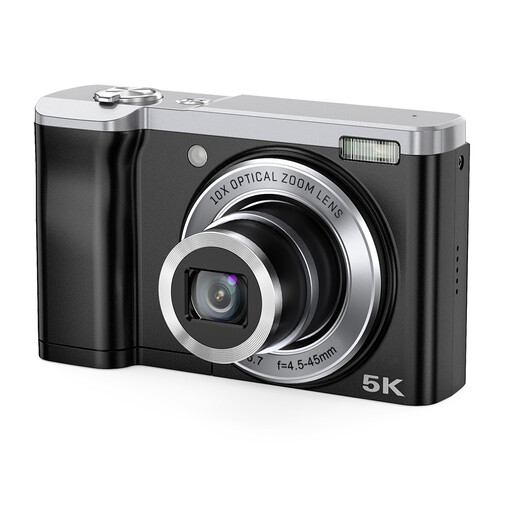 No image available
Consider this model if you want a separate camera for distant details and casual travel video, and can check its framing range before buying.
The listing names 10x optical zoom, 5K video, 56MP and front and rear cameras. Check the equivalent focal-length range to see whether the zoom covers your subjects, and confirm the exact model’s weather rating before use in wet conditions.
 No image available
Consider the ZV-1F for wide-angle self-recording and travel video rather than for framing distant sights.
Its listing identifies a 1-inch sensor and ultra-wide lens. Check whether its fixed wide-angle framing suits your still photographs, and protect the camera from moisture as the listing advises.
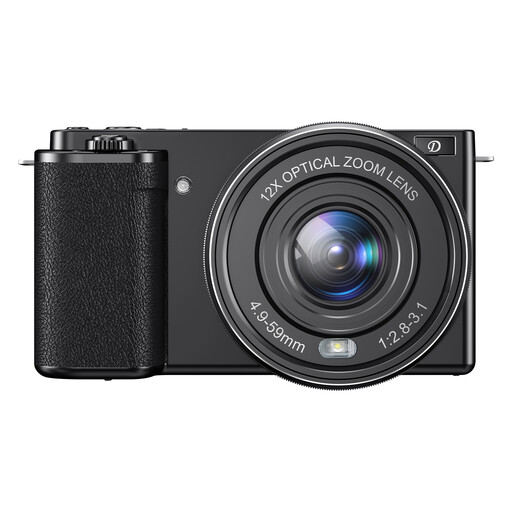 No image available
Consider this camera if your day-trip plans call for zoom framing alongside casual video, subject to checking what its lens covers.
The listing names 12x optical zoom, 4K video, Wi-Fi and 64MP. Confirm the equivalent focal-length range and the exact model’s battery and weather details before relying on it for a full day outdoors.
Yes, if you will regularly use optical reach or dedicated shooting controls that matter to your pictures; otherwise, the convenience of carrying and sharing from one device may matter more. Which? describes fixed-lens cameras as offering more versatile zoom options than phones without the bulk of a large interchangeable-lens system.
Choose a pocket-oriented travel zoom if easy carrying comes first, and consider a bridge camera if longer reach justifies a larger body. Panasonic lists the TZ99 at 24–720 mm equivalent and the FZ82D bridge camera at 20–1200 mm equivalent; compare those ranges with the subjects you expect to shoot.
No: stabilisation addresses camera shake, not movement by a child, animal or vehicle. Sony describes the RX100 VII’s optical stabilisation in camera-shake terms, so also consider the light available, shutter speed and focusing when photographing action.
A spare or a suitable charging option is worth planning if you expect a long shooting day. Check the rating and compatible accessories for the exact camera: Sony’s approximately 260-shot CIPA figure for the RX100M7A using its monitor is a standardised test result, not a promise of your own day-trip endurance.
Do not assume an ordinary compact is protected against water or sand. Check the exact model’s stated limits and care instructions; OM Digital Solutions publishes water, dust and cold limits for the Tough TG-7, but those ratings do not apply to other cameras.