
24/7 Customer Support

Free returns

Same-day & Next-day Delivery

Quality Guaranteed

Unlock Your Welcome Offers: FREE Delivery | Up to 80% OFF | Free 30-day JoyPlus trial
Download the APP
A compact under-counter fridge can solve a genuine space problem, but choosing by appearance or headline capacity alone can lead to an awkward, noisy or impractical appliance. UK flats, studio flats, student rooms and offices often have tight corners, uneven floors and limited ventilation, so the installation details matter as much as the internal volume.
Before choosing a small fridge, watch for three common buying traps:
An under-counter refrigerator should not be pushed tightly against cabinetry or a wall unless the manufacturer’s instructions specifically allow it. Measure:
A freestanding fridge can sit beneath a worktop, but it is not automatically designed for integrated installation. Models with a reversible door offer more flexibility where the hinge side could otherwise obstruct a cupboard or passage.
Capacity is measured in litres, but usable space depends on shelves, door bins, crisper drawers and cooler compartments.
If you need frozen food storage, check whether the appliance has a freezer compartment. A larder fridge provides chilled storage only, while some under-counter refrigerator models include a small icebox.
Energy class E appears on several compact models in this selection. Compare the stated annual consumption in kWh/year, rather than relying only on labels such as “energy saving”. For example, one 43L model lists annual consumption of 110 kWh/year, while the Sonlu 82L refrigerator lists 84 kWh/year. These figures are product specifications, not a guarantee of your household’s actual bill.
Noise is particularly important for an office fridge, bedroom fridge or open-plan flat. A stated level around 39–40 dB may be more suitable for shared living spaces than a louder appliance, although sound can vary during compressor start-up and when the fridge is placed on a resonant floor.
An adjustable thermostat, interior light, removable shelves and a washable door seal also improve everyday usability. Look for clear instructions about defrosting, ventilation and safe electrical connection.
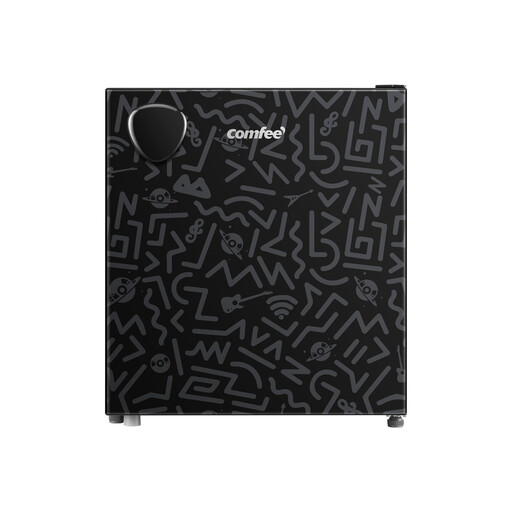
Why This Fits Their Persona: Its 445 mm width and 43L capacity suit people living alone, students and renters working with narrow kitchen gaps or limited floor space.
The product information states an adjustable three-stage temperature control and a separate chill box, helping distinguish it from a basic drinks-only cooler.
Height-adjustable shelves, a vegetable compartment, removable handle and Energy Class E specification.
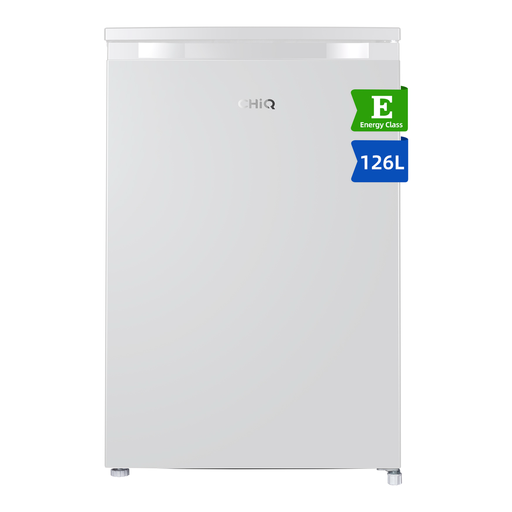
Why This Fits Their Persona: The 126L capacity and organised interior work for households wanting a substantial larder fridge without moving to a full-width appliance.
Its listed dimensions, 39 dB noise level and seven temperature settings give shoppers concrete details to compare rather than relying on vague quiet or spacious claims.
Two shelves, a crisper drawer, three door bins, LED lighting, adjustable feet and a two-year manufacturer warranty.
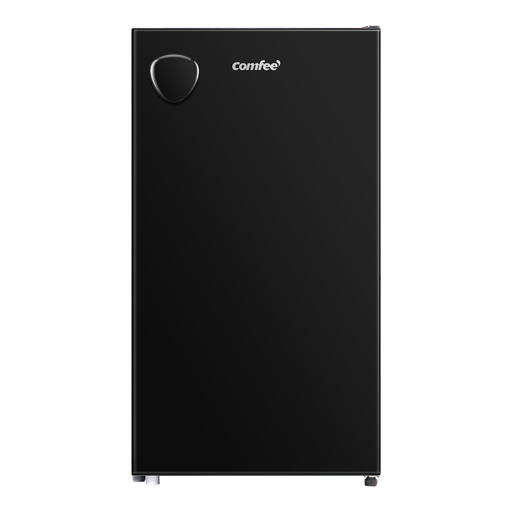
Why This Fits Their Persona: The 88L layout is suitable for regular drinks, fresh produce and everyday essentials in an office, bedroom, studio flat or secondary kitchen position.
The stated 44.5 × 47 × 82.7 cm dimensions, reversible door and adjustable feet make placement easier to plan in a compact room.
Removable glass shelves, interior light, crisper drawer, removable handle and a dedicated cooler zone for short-term drink chilling.
Allow a new compressor fridge to stand upright for the period stated in its instructions before switching it on, particularly after transport. Place it on a stable, level surface, keep ventilation openings clear and avoid positioning it beside a radiator or in direct sunlight.
Do not overload shelves or block internal air paths. Set the thermostat according to the manufacturer’s guidance and allow hot food to cool before storing it. Clean the door seal and interior regularly, and defrost a non-frost-free appliance when ice builds up.
For a bedroom or office, compare the stated dB figure and consider whether compressor cycling could disturb sleep or concentration. A 4L thermoelectric mini fridge may be quieter and portable, but it is designed for a different purpose and should not be treated as a full food-storage replacement.
We have compiled a complete, real-time list of products that fully satisfy these strict selection criteria and UK safety regulations.
It can be suitable if the room has adequate ventilation, a stable power supply and enough space around the appliance. Check the manufacturer’s noise specification before using one beside a bed. A compact model can also be useful as a bedroom fridge for drinks and snacks, but everyday food should be stored according to normal food-safety guidance.
Running cost depends on the appliance’s annual kWh figure and your electricity tariff. Multiply the stated annual consumption by your price per kWh for an estimate. Actual use may vary with room temperature, ventilation, thermostat setting and door-opening frequency.
Lifespan varies with construction, usage, maintenance and installation. Keeping ventilation clear, cleaning the seal, avoiding overloading and following defrosting instructions can help maintain normal operation. Check the warranty, spare-parts information and retailer support before purchasing.