For API documentation on a small desk, start with a compact keyboard that leaves room for a mouse without making your frequent arrow, navigation and shortcut commands awkward. A 75% layout with remapping suits writers who customise those commands; a compact productivity keyboard may suit a simpler workflow, provided its exact key map and device compatibility fit your work. Keyboard width alone will not resolve an uncomfortable desk setup.
Who needs this keyboard?
Small-desk documentation writers
If you write API references, guides or technical notes alongside a mouse, notebook or laptop stand, you need to balance keyboard width against access to editing keys. The Health and Safety Executive also advises keeping the keyboard and screen central rather than twisting towards either.
Shortcut-heavy technical writers
If you move frequently through files, headings or code-adjacent text, inspect arrow, function and navigation access before choosing a smaller layout. Remapping is worth considering when your repeated commands do not fit the default key map; Keychron specifies that option for its K3 Max UK-ISO model.
Multi-device Mac or mixed-OS users
If you alternate between computers or a tablet, check the chosen keyboard’s operating-system support, switching method and physical layout. Apple’s Touch ID keyboard has specific Mac requirements, while Logitech describes multi-device and multi-OS support for the MX Mechanical Mini.
What matters when choosing?
For documentation work, choose a layout around the commands you use every day, then check how its typing feel and connections fit your desk and devices.
Compact productivity keyboard
Consider it: If you want a straightforward compact setup for prose and device changes, inspect the exact model’s key map and switching options. Logitech describes MX Keys Mini as space-saving with programmable keys.
Trade-off: A smaller board can leave less direct access to the navigation commands you use most.
75% mechanical keyboard with remapping
Consider it: If custom shortcuts are central to your writing, Keychron specifies QMK/VIA remapping and macros for its compact K3 Max UK-ISO model.
Trade-off: Switch feel and sound need careful selection, and the precise UK-ISO switch variant matters.
Compact Apple keyboard
Consider it: If you use a compatible Apple-silicon Mac and want Touch ID, Apple offers its compact Magic Keyboard in British English.
Trade-off: Apple specifies an Apple-silicon Mac running macOS 15.1 or later for Touch ID on that model; do not assume the feature will serve a mixed-OS workflow.
| Concern | What to check | Who this matters to |
|---|
| Desk space and editing keys |
Check keyboard width against mouse space, then inspect dedicated arrows and access to navigation commands. |
If my mouse is cramped beside the keyboard, I want a narrower board without losing the editing controls I reach for. Around 31% of consumers put that balance first. |
| Shortcuts and punctuation |
Inspect the physical layout and function-key access; check model-specific remapping if you need custom commands. |
When I move between headings, files and code samples, awkward key combinations interrupt my writing. Roughly 25% of consumers prioritise that workflow. |
| Typing feel and noise |
Compare the exact switch or key mechanism and, where possible, try its feel and sound in an appropriate setting. |
For long stretches of prose in a shared space, I care about how the keys feel and whether their sound suits the room. About 25% of consumers make this their primary concern. |
| Device and connection fit |
Check supported operating systems and connection modes, including any model-specific requirements for special features. |
If I switch between computers, I need a keyboard whose connections and features work with the devices I use. Around 19% of consumers put compatibility first. |
Buying pitfalls
-
Assuming a smaller keyboard fixes an uncomfortable workstation
A narrow board may free mouse space, but its width does not correct keyboard height, screen position or a twisted posture.
The Health and Safety Executive advises placing the keyboard just below elbow height and keeping it and the screen central. Assess the board in your full desk arrangement.
-
Choosing a layout before checking daily commands
Moving arrows or navigation commands behind unfamiliar key combinations can make repeated documentation edits awkward.
List the commands you use often, inspect the exact key map and confirm model-specific remapping if custom shortcuts matter to you.
-
Assuming Touch ID works across your devices
Apple’s compact Magic Keyboard with Touch ID has Mac and macOS prerequisites for that feature.
For the cited model, confirm you have an Apple-silicon Mac running macOS 15.1 or later. If you work across other systems, check what the keyboard can do on each one.
-
Forgetting the old keyboard when replacing it
UK guidance on waste electrical and electronic equipment addresses recovery, reuse and recycling of electrical products.
Check the retailer’s take-back information and your local authority’s electrical-waste arrangements before disposing of an old keyboard, particularly one with a battery.
Brands to consider for compact keyboards
Keychron
A reference point if you want to examine a compact mechanical keyboard with a UK-ISO option and model-specific remapping.
- Keychron specifies a 75% layout, low-profile hot-swappable switches, wired, Bluetooth and 2.4 GHz connections, and QMK/VIA remapping for the K3 Max UK-ISO.
- Check the exact UK-ISO switch variant; those K3 Max specifications do not describe every Keychron keyboard.
Logitech
A reference point for compact productivity models if device switching, programmable functions or a particular typing mechanism matters to you.
- Logitech describes MX Keys Mini as compact with programmable keys; it specifies switching among up to three devices and support for several operating systems for MX Mechanical Mini.
- The two MX models have different features. Check the selected model’s British-English layout and, for MX Mechanical Mini, its switch variant.
Apple
A reference point if you use an Apple-silicon Mac and want a compact British-English keyboard with Touch ID.
- Apple lists its compact Magic Keyboard with Touch ID in British English, with Bluetooth, USB-C charging and a width of 27.89 cm.
- Apple specifies an Apple-silicon Mac running macOS 15.1 or later for Touch ID on this model; check that condition before choosing it for a mixed-device desk.
Compact keyboards on Joybuy
These compact keyboards offer different layout, connection and key-mechanism choices for a small writing desk. Compare each one’s physical layout and editing-key access against your own documentation workflow.
 No image available
HyperX Alloy Rise 75 Wireless Keyboard UK
Consider this 75% wireless model if you want a compact board for documentation work. Check its exact physical UK layout, editing-key map and switch sound against your requirements.
View on Joybuy
 No image available
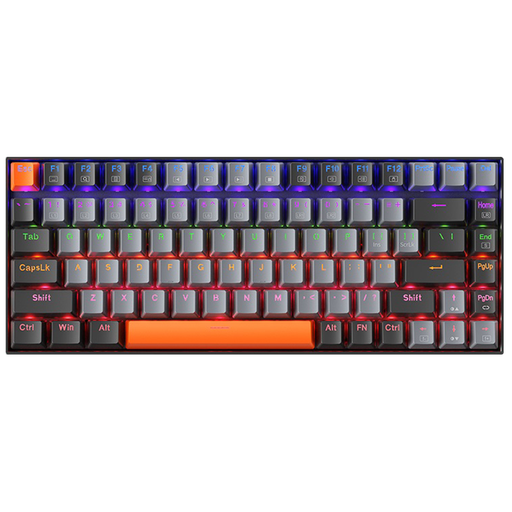
MACHENIKE K500A-B84 75% Wired Keyboard, US QWERTY, Red Switches, Light Grey
This wired 75% keyboard is an option if a cable suits your desk. The product name specifies a US QWERTY layout, red switches and LED backlighting; check whether its punctuation positions suit your writing and whether the switches sound appropriate for your workspace.
View on Joybuy
 No image available
ASUS ROG Falchion Ace HFX 65 Analog Gaming Keyboard, UK Layout
Consider this compact UK-layout model if desk width is a priority, but inspect its function and navigation key map before relying on it for frequent documentation edits. Check compatibility with the computer you intend to use.
View on Joybuy
 No image available
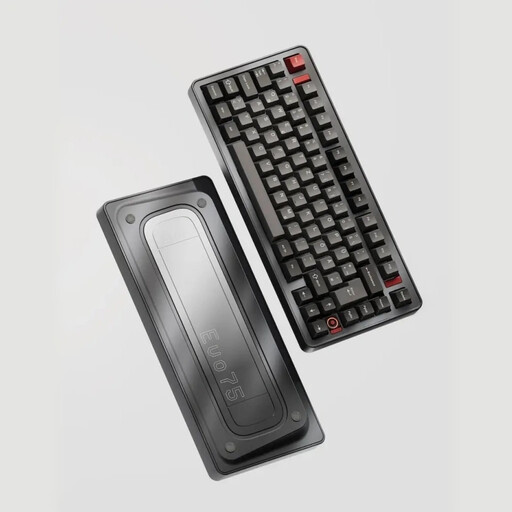
Ticktype EVO75 Tri-Mode Mechanical Keyboard, US Layout, Creamy Rye Switches, Anodized Basalt Grey
This 75% model is worth examining if you want to configure shortcuts: its product name specifies VIA compatibility and hot-swappable switches. It also specifies an aluminium body, leaf-spring mount, 8000mAh battery and RGB lighting. Check its arrow, navigation and function-key map, operating-system fit and US-layout punctuation before choosing it for API writing.
View on Joybuy
 No image available
Rapoo E9050L 75% Wireless Membrane Keyboard, US QWERTY, White
Consider this compact membrane model if you change devices at your desk. Its product name specifies 78 keys, 2.4 GHz and Bluetooth 5.0/4.0 connections, and support for four devices. Check the arrow and navigation key map and whether its US QWERTY punctuation positions work for you.
View on Joybuy
Frequently asked questions
Is the smallest keyboard the right one for API documentation?
Not necessarily: choose the smallest layout that still makes your frequent editing commands practical. A very small board may move arrows, function keys or navigation commands behind layers; Keychron’s 75% K3 Max UK-ISO is one compact model for which the manufacturer specifies remapping.
Will a compact keyboard make my desk setup comfortable?
A compact keyboard can leave more room on the desk, but comfort also depends on workstation arrangement. The Health and Safety Executive advises keeping the keyboard just below elbow height and placing it and the screen centrally so you do not twist your back.
What should I check before buying a compact Touch ID keyboard for a Mac?
Check both the physical language layout and the requirements for Touch ID. Apple lists its compact Magic Keyboard with Touch ID in British English and specifies an Apple-silicon Mac running macOS 15.1 or later for that feature.
What should I do with an old keyboard in the UK?
Check the available electrical-waste route rather than assuming the keyboard belongs in ordinary waste. UK government guidance describes the waste electrical and electronic equipment framework as supporting recovery, reuse and recycling; your retailer and local authority can explain their applicable arrangements.


