Privacy-conscious families
You want a responsive character but would rather avoid a child’s cloud account, remote viewing or unnecessary collection at home. Check the exact model and accessories rather than relying on a broad “AI” label.


For predictable reactions and less account setup, consider a locally responsive toy; if conversation is the priority, assess a connected robot only after checking its age warnings, parental controls, data handling and security information. A University of Cambridge study of a generative-AI toy found difficulties with social play and responses to emotions in the toy studied, so conversation should be treated as supervised play, not dependable emotional support.
You want a responsive character but would rather avoid a child’s cloud account, remote viewing or unnecessary collection at home. Check the exact model and accessories rather than relying on a broad “AI” label.
Your child wants to talk with a robot, and you are prepared to review account setup, controls and responses during play rather than treating the toy as a substitute for an adult.
You are choosing for a younger child and want clear age guidance, warnings and a practical supervision plan before considering sensors or conversational features.
Consider it when: you want movement, sounds or set play modes without app or Wi-Fi setup.
Trade-off: interactions may be more limited than open-ended conversation.
Consider it when: your child wants a character that reacts to handling rather than a conversational partner.
Trade-off: an optional conversation accessory can change the device’s features and setup, so assess the complete configuration.
Consider it when: conversation is a priority and you are willing to set up and supervise an account-connected device.
Trade-off: account, camera or voice functions make the provider’s data practices and product-security information important to check.
For families in Great Britain, decide how much connectivity and adult involvement you are comfortable with, then check the exact toy’s age warnings, sensors and setup requirements.
| Concern | What to check when buying | Who this matters to |
|---|---|---|
| Data and sensors | Identify microphones, cameras, account requirements, the privacy notice and how to request deletion. Check whether an optional accessory adds connectivity. | If I want a character without unnecessary collection or remote access at home, I will check the exact device and setup. About 31% of consumers put data handling first. |
| Age and supervision | Read the exact packaging warnings and instructions, and plan adult involvement where a child may discuss feelings with a conversational toy. | When I am choosing for a younger child, clear age guidance and a workable supervision plan come before extra features. About 31% of consumers prioritise age and supervision. |
| Type of interaction | Distinguish set phrases and touch reactions from network-dependent conversation. Check which features require an accessory or subscription. | If my child specifically wants back-and-forth conversation, I will check what the toy actually says and how it responds. About 25% of consumers put the interaction itself first. |
| Ongoing requirements | Check batteries or charging, included content, current service terms and, for an applicable connected product, its stated minimum security-update period. | If I want play to stay straightforward after setup, I will check power and any continuing service requirements. About 13% of consumers prioritise ongoing upkeep. |
A University of Cambridge study involving children and early-years stakeholders observed difficulties with social and pretend play and responses to emotions in the generative-AI toy it studied; that finding does not establish how every retail robot behaves.
Keep conversation within supervised play, especially when a younger child talks about feelings.
Energize Lab presents the Eilik AI Station separately from the base touch-responsive robot, so the complete configuration affects which features need to be assessed.
Check connectivity and data practices for the exact combination you intend to use.
A separately sold expansion adds another item to set up and may change how the toy connects.
Miko publishes a route for reporting vulnerabilities, but a contact route alone does not establish the other information relevant to an applicable connected product.
Check the exact model’s minimum security-update period, reporting route and applicable product-security information.
Teksta Purro represents a set-play option described as working without an app or Wi-Fi.
Miko 3 is a connected, child-focused conversation option with Wi-Fi, guardian-app and child-profile setup.
The base Eilik is a touch-responsive desktop companion, with a separately sold AI Station for natural AI conversations.
Loona Petbot is a roaming companion with app-enabled games and remote-monitoring features described in its product materials.
These Joybuy options are for interactive character and robotic-pet play, with listed features including touch, sound, movement or control. Check each exact model’s age warnings, supervision guidance and connectivity before choosing it for a young child.
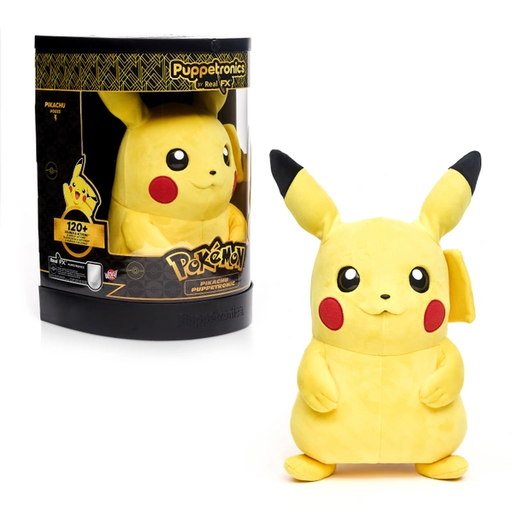 No image available
For a child drawn to hands-on character play, it offers hand control and touch-triggered reactions.
The listing describes classic voice lines and more than 120 sound-and-action combinations. It is listed for ages 8+, with direct adult supervision recommended, and requires 3 AAA batteries, not included.
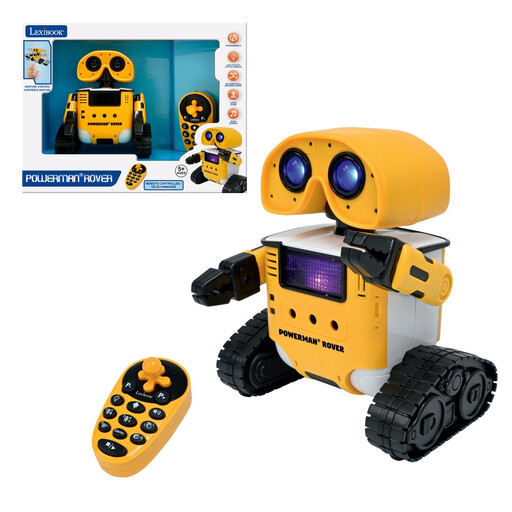 No image available
For directed play with a robot character, it offers remote and gesture controls, programmable actions and a voice-changing effect.
The listing describes dances, lights and songs. It is listed for ages 5+, with direct adult supervision recommended. The robot requires 4 AA batteries and the remote 2 AAA batteries, not included; the listing warns that flashes may affect photosensitive individuals.
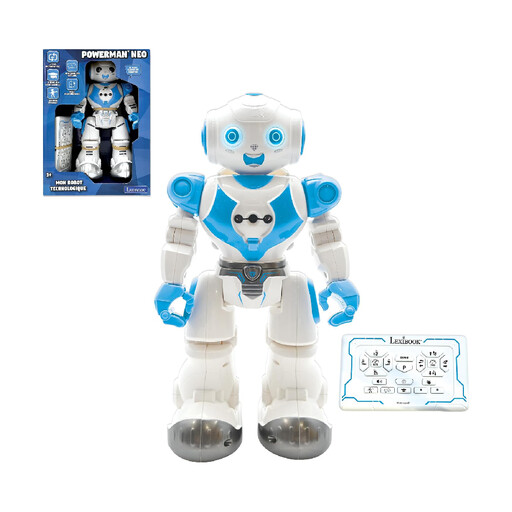 No image available
For a child who wants to direct a moving robot character, it offers remote and gesture control, movement, music and dancing.
Its described activities include quizzes and stories alongside programmed movements. It is listed for ages 3+; the listing warns about small parts and recommends direct adult supervision. Requires 2 AA batteries, not included.
 No image available
For animal-character pretend play, the product description identifies a moving squirrel toy with sounds.
The product title states ages 2+.
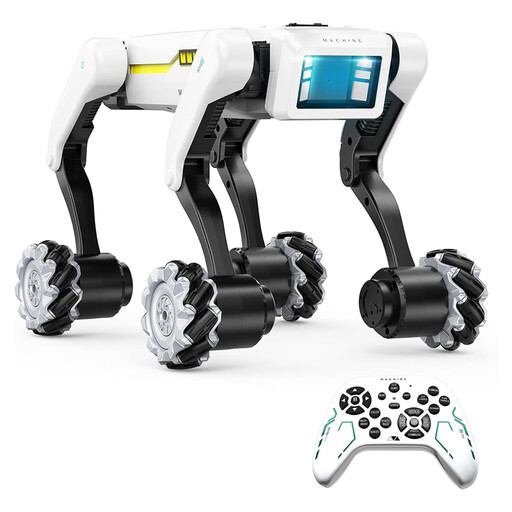 No image available
For a child who wants to direct an animal-like robot, the listing describes voice commands, remote control and programmable actions.
It lists more than 30 movements and recommends adult supervision; the product is listed for ages 6+. Adult assembly is recommended, and its electronic components should not be immersed in water.
No. Teksta Purro is described as answering questions within set play modes without requiring an app or Wi-Fi. Check what the particular toy says and does rather than assuming that “talking” means open-ended AI conversation.
Miko’s setup instructions specify charging, Wi-Fi, its phone app, guardian details, pairing and a child profile. The manufacturer recommends a 15 W power adapter; check the current UK offer for included equipment and content terms.
The Information Commissioner’s Office says children have data-protection rights, including erasure in certain circumstances, but erasure is not unconditional. Check the provider’s process and what it covers, including voice, images, profiles and backups.
The UK Office for Product Safety and Standards’ Great Britain guidance, dated 24 March 2025, says the Toys (Safety) Regulations 2011 set essential safety requirements before toys are placed on the GB market. Read the exact product’s age and hazard warnings and ask for applicable conformity information; Northern Ireland needs a separate assessment.
For a product within the UK consumer connectable-product security regime, check the manufacturer’s stated minimum security-update period, security-issue reporting route and applicable compliance information. The regime took effect on 29 April 2024, according to the UK Office for Product Safety and Standards. A published reporting route alone does not establish that all applicable information is in place.