
24/7 Customer Support

Free returns

Same-day & Next-day Delivery

Quality Guaranteed

Unlock Your Welcome Offers: FREE Delivery | Up to 80% OFF | Free 30-day JoyPlus trial
Download the APP
A compartment serving tray can make family meals, children’s portions and party snacks easier to organise. It can also prevent sauces, fruit and savoury foods from mixing during transport. However, attractive photographs and broad descriptions do not always reveal whether a tray is suitable for everyday food use.
The most common buying mistakes are usually linked to three details: unsuitable materials, impractical compartment sizes and cleaning requirements that are easy to overlook. This guide explains what to check before buying a divided serving dish, followed by product recommendations matched to different household needs.
Some trays are designed for candles, ornaments or home displays rather than serving meals. For example, an iron decorative tray may look substantial but still require dry-cloth cleaning and indoor decorative use only. It may not have food-contact guidance, raised dividers or sections designed to contain liquids.
Before ordering, check whether the product is specifically described for food use. A party serving platter and a decorative tray may look similar, but their materials, coatings and care instructions can be very different.
A five-section food tray is useful for separating several ingredients, but each compartment may be relatively small. It can work well for tasting portions, children’s meals or organised catering, but may be less suitable for a large main course.
Conversely, a three-compartment plate generally provides more room per section for a main item, side dish and dip. Consider the foods you normally serve rather than choosing a tray solely because it has more divisions.
Cleaning instructions vary substantially. A porcelain snack dish may be dishwasher safe, while an acacia wood serving dish normally needs gentle hand washing and immediate drying. Stainless steel may be dishwasher safe, but some products are not suitable for microwave use.
Always review the full care guidance. A product that requires hand washing is not necessarily unsuitable, but it may be inconvenient for a busy family or frequent host.
For frequent family meals, 304 stainless steel offers a practical combination of a relatively light construction, resistance to rust and a shatterproof surface. It is particularly suitable for picnics, camping, nurseries and catering environments where ceramic or porcelain could be more vulnerable to impact.
Porcelain provides a clean, traditional appearance and is suitable for snack presentation and entertaining. Check whether the item is described as dishwasher safe and handle it carefully around hard surfaces.
Acacia wood brings natural grain and warmth to a table. It is a strong choice for nibbles, cheese, fruit and dips, but it should not normally be soaked or placed in a dishwasher. Look for instructions covering drying and occasional food-safe oiling.
Raised edges help keep contents in place, especially when carrying a sectioned food tray from the kitchen to a dining table or garden. Deeper sections are useful for dips, olives and sauces, while broader shallow sections may suit sandwiches, fruit or crisps.
Round trays can be easy to place at the centre of a table. Square and rectangular options often make better use of cupboard or picnic-bag space. Measure your available storage area before ordering, particularly if you need several trays.
Look for clear information covering:
For children, avoid assuming that a compartment plate is suitable for unsupervised use. Hot food can heat the surface, and small children may misuse tableware that is not intended as a toy.
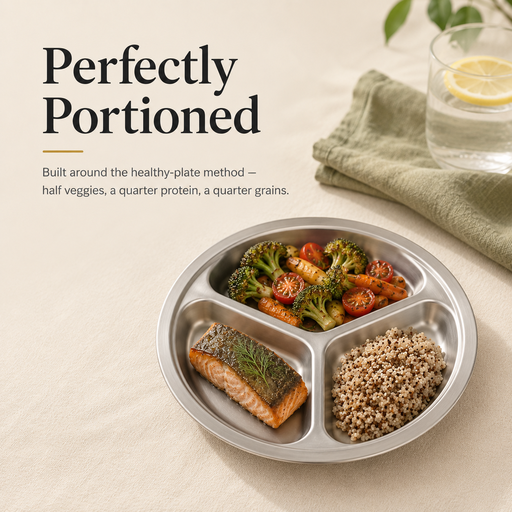
Why This Fits Their Persona: A two-piece set gives households a straightforward way to introduce organised meals, packed lunches or children’s portions without choosing a large catering-style tray.
The integrated three-section design is intended for food use, while the care information clearly states dishwasher compatibility and that it is not suitable for microwave use.
Food-grade 304 stainless steel, 19.5 cm diameter, three sections and a shatter-resistant construction.
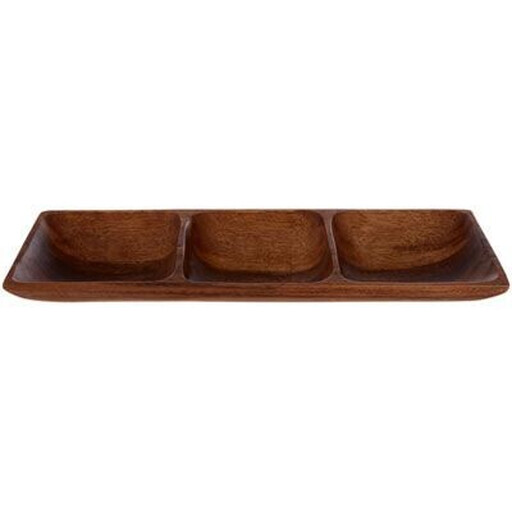
Why This Fits Their Persona: This acacia wood divided serving dish suits hosts who want organised snack presentation with a natural material and a decorative table presence.
The three clearly defined sections and raised edges help keep nibbles, dips and condiments apart, while the hand-wash guidance sets realistic maintenance expectations.
Solid acacia wood, rectangular presentation area, raised edges and three separate compartments.
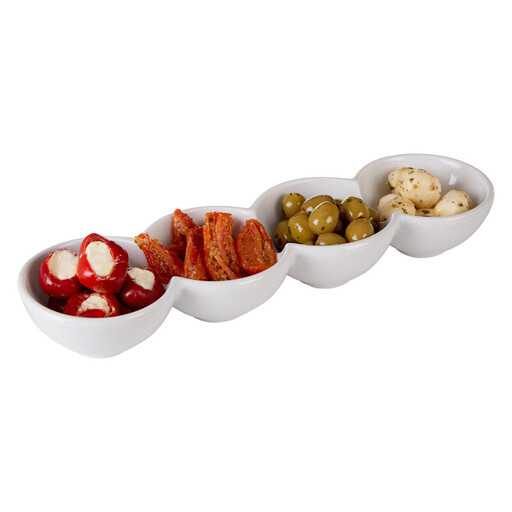
Why This Fits Their Persona: Four sections make it suitable for children’s parties, playdates and adult gatherings where crisps, fruit, nuts and dips need to be displayed together but kept separate.
The product description specifies four distinct sections and dishwasher-safe cleaning, reducing uncertainty during post-party tidying.
White porcelain finish, four compartments and dishwasher-safe construction for convenient serving and cleaning.
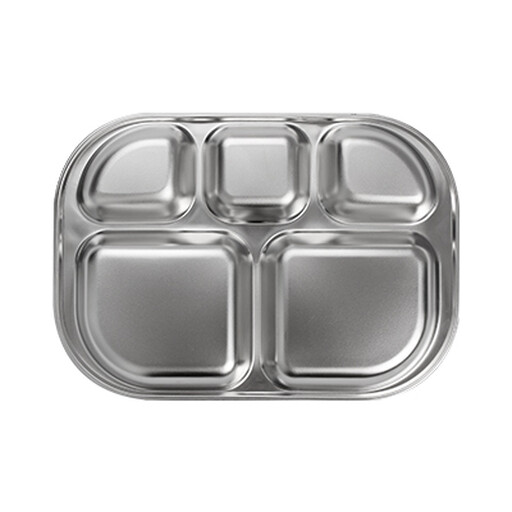
Why This Fits Their Persona: The five-section format is suited to nurseries, camping, family meal preparation, cafeterias and households serving several separate ingredients at once.
The single-piece stainless steel format avoids seams between sections, while the listed dishwasher-safe care suits frequent use.
Food-grade 304 stainless steel, five independent compartments, shatterproof construction and dishwasher compatibility.
If you need a wider choice of formats, materials and sizes, browse the servers tray range.
We have compiled a complete, real-time list of products that fully satisfy these strict selection criteria and UK safety regulations.
Many are suitable for children’s meals, but check the product’s age and safety guidance. Stainless steel options are shatterproof, while porcelain can break if dropped. Always supervise young children with hot food and place the tray on a stable, flat surface.
Some can. The PURECOOK stainless steel trays and Maison by Premier porcelain snack dish listed above include dishwasher-safe guidance. Acacia wood products require different care and should generally be hand washed, dried promptly and kept away from prolonged moisture.
Lifespan depends on material, frequency of use and care. Stainless steel can suit regular handling when abrasive cleaners and sharp utensils are avoided. Porcelain can remain attractive with careful use, while wood needs drying and periodic maintenance to help preserve its surface. Always follow the individual product instructions rather than relying on material assumptions.