What matters when choosing?
Start with the games, settings and display you will use; then compare complete PC configurations and the support attached to the particular system.
| Concern |
What to check |
Who this matters to |
| Responsive input |
Check the game’s Reflex support if considering NVIDIA for that feature, alongside your monitor and input devices. |
If I am practising quick corrections and movement, I want the PC and the rest of my setup to feel responsive. Around 31% of consumers put responsiveness first. |
| Game-specific performance |
Compare the exact CPU, GPU, memory and storage with each game publisher’s recommended requirements and your intended settings. |
When I switch between games, I need a configuration suited to each one at my chosen resolution, not merely a PC that meets a minimum specification. Roughly 31% of consumers prioritise that game-specific fit. |
| Component balance |
Compare full component lists and stated upgrade options; decide whether a fixed system or a configurable build better matches your plans. |
If I know which games I will play, I want the components to serve those needs rather than choosing by a gaming label alone. About 23% of consumers make component balance their primary concern. |
| Software and support |
Confirm the included operating system, relevant event settings and the separate parts, labour and collection warranty terms. |
Before ordering, I want to know whether the PC is ready for my software or intended event and what happens if it needs repair. Approximately 15% of consumers put those checks first. |
Joybuy product choices
These pre-built desktops and gaming laptops are options to compare against your games and display target. The bundle includes a monitor and peripherals; for the other desktops, check what you need to supply separately. A laptop’s listed screen refresh rate is not a promise of the frame rate a game will achieve.
 No image available
CyberPowerPC JOYB1004 gaming PC bundle
Consider this bundle if you want a desktop, monitor and listed peripherals together; confirm the monitor’s model and refresh rate for your practice target.
AMD Ryzen 5 7500F, NVIDIA GeForce RTX 5060 8GB, 16GB DDR5, 1TB NVMe SSD and Windows 11 Home. The bundle lists a monitor, keyboard, mouse, headset and mousepad.
Joybuy
 No image available
Lenovo LOQ Essential 15ARP11 gaming laptop
Consider this laptop if you want a built-in display for practice; check that your games and settings suit the configuration rather than treating screen refresh rate as an achieved frame rate.
AMD Ryzen 7 170, GeForce RTX 5050, 16GB RAM, 1TB SSD and a 15.6-inch FHD 144Hz display.
If you plan to add memory later, confirm the upgrade options for this configuration.
Joybuy
 No image available
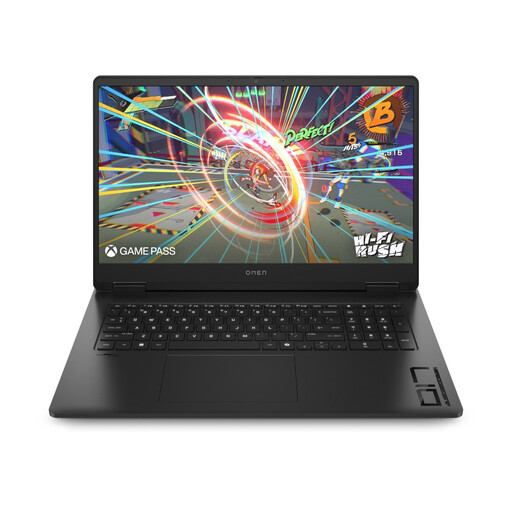
HP 17-db1000na OMEN 17 gaming laptop
Consider this laptop if you prefer a larger built-in screen; check its display specifications and how your intended games run at your chosen settings.
17-inch Full HD gaming laptop with AMD Ryzen AI 7 350, RTX 5060, 16GB RAM, 1TB SSD and Windows 11 Home.
Joybuy
 No image available
Lenovo Legion Pro 7 16IAX10H 83F5000UUK gaming laptop
Consider this configuration if you need its listed memory and storage as well as a built-in screen; check whether your games benefit from that configuration at your intended resolution and settings.
16-inch model with Intel Core Ultra 9, NVIDIA GeForce RTX 5090, 64GB RAM, 2TB SSD and Windows 11 Home.
Joybuy
 No image available
CyberPowerPC JOYB1013 gaming desktop PC
Consider this desktop if you want to pair a specified PC configuration with your chosen display and input devices. Confirm what accessories are included and check performance for your main game and settings.
AMD Ryzen 7 9800X3D, NVIDIA GeForce RTX 5080 16GB, 32GB DDR5, 2TB NVMe SSD and Windows 11 Home.
Joybuy
Frequently asked questions
Do I need an NVIDIA PC for competitive movement practice?
No: choose the PC for your games and display target first. If a game supports NVIDIA Reflex and reducing PC-side latency is a priority, an NVIDIA configuration gives you that feature to consider; NVIDIA notes that peripheral and display latency are separate parts of system latency.
Should I use a game’s minimum or recommended PC specification?
Start with the game publisher’s recommended specification, then check it against your resolution, refresh-rate target and settings. Epic Games lists 16 GB RAM or higher and an NVMe SSD for its recommended Fortnite specification; Electronic Arts publishes its own requirements for Apex Legends, so one game’s figures should not be applied to the other.
Do TPM 2.0 and Secure Boot matter for tournaments?
They may matter for the operating system or a particular event, rather than for every competitive game. Microsoft states that Windows 11 requires TPM 2.0, while Epic Games identifies system-requirement checks affecting eligibility for certain Fortnite tournaments. Check the current rules for the exact event before ordering or changing security settings.
Can I cancel a custom gaming PC order if I change my mind?
Do not assume an individually configured PC has the same change-of-mind cancellation position as a standard pre-built model. UK Government guidance distinguishes personalised or custom-made goods from ordinary online returns; ask the seller how its written cancellation terms apply to your exact order. This is separate from remedies if goods are faulty, damaged or misdescribed.
What does a gaming-PC warranty actually cover?
Check parts, labour, collection or return shipping, exclusions and the applicable periods separately. PCSpecialist’s published standard warranty, for example, lists one year of parts cover, three years of labour and six months of collection cover; read the terms attached to the system you are considering.


