
24/7 Customer Support

Free returns

Same-day & Next-day Delivery

Quality Guaranteed

Unlock Your Welcome Offers: FREE Delivery | Up to 80% OFF | Free 30-day JoyPlus trial
Download the APP
Navigating the aisles of pet food can feel overwhelming. Every bag promises a happy, healthy dog, but the sheer variety of options for complete dry dog food can make choosing the right one a challenge. As pet owners in the UK, we want to provide quality nutrition that is both convenient and affordable. However, it is easy to fall into common purchasing traps driven by clever marketing.
This guide, from my perspective as a Joybuy Product Recommendation Officer, is designed to help you cut through the clutter. We will look at the key factors to consider, helping you make an informed choice for your companion. While this guide focuses on dogs, many of the same principles of checking ingredients and life stage apply when choosing dry cat food.
Before you add a bag to your basket, be aware of these frequent misunderstandings that can lead to a poor choice for your pet and your wallet.
To avoid these traps, focus on these three practical parameters. They will give you a much clearer picture of what you are actually buying.
A dog's nutritional needs change dramatically throughout its life. Always choose a food that is explicitly formulated for your dog's current life stage.
The ingredient list is your most powerful tool. Ingredients are listed by weight, so the first few items make up the bulk of the food.
This table on the back of the bag gives you the nutritional breakdown. Here is what the key numbers mean in practical terms:
Based on these practical criteria, here are a few recommendations from our catalogue, matched to specific types of dog owners in the UK.
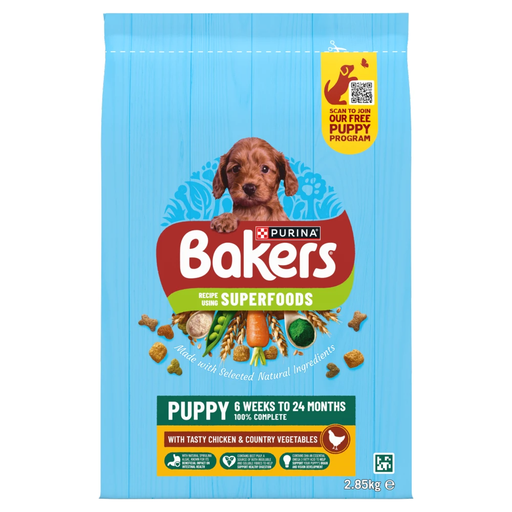
Why This Fits Their Persona: This food is specifically designed for the high-energy and developmental needs of a growing puppy, taking the guesswork out of their early-life nutrition. The bite-sized kibble is also ideal for smaller mouths.
It avoids the "one-size-fits-all" trap by being a life-stage-specific formula. It contains DHA (0.05%), a nutrient crucial for puppy development that is not a required component of standard adult food.
Formulated with 25% protein for healthy growth and includes vitamins and minerals to support strong bones and teeth. It's a complete meal designed for puppies from 6 weeks to 24 months.
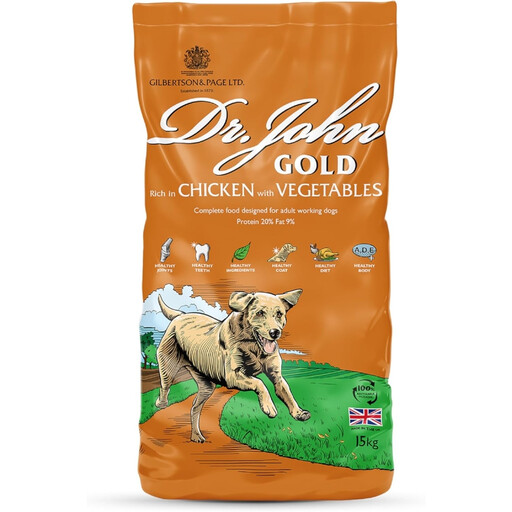
Why This Fits Their Persona: Ideal for owners of working dogs or highly active pets who need a cost-effective food that provides sustained energy. The large 15kg dog food bag offers excellent value for money.
Instead of focusing on a single high protein number, this food uses a whole-grain base for slow-releasing carbohydrates, providing steady energy rather than a short-lived spike.
A balanced ratio of 20% protein and 9% fat is tailored for active dogs. It also includes yucca extract to aid digestion and joint health.
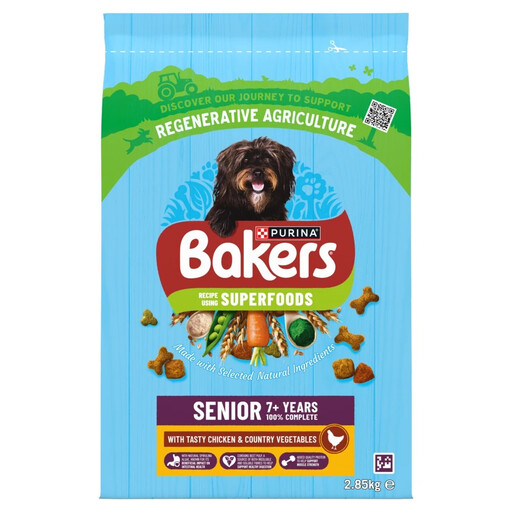
Why This Fits Their Persona: Perfect for owners of older dogs who are becoming less active. This recipe is tailored to help maintain vitality and a healthy weight in their later years.
This is a dedicated senior dog food, not a generic adult formula. It has a lower fat content than the standard adult recipe to help prevent unwanted weight gain in less active dogs.
Features a reduced fat content of 8% while maintaining 24% protein to support muscle mass. It also contains antioxidants to help support natural defences.
We have compiled a complete, real-time list of products that fully satisfy these strict selection criteria and UK safety regulations.
1. How do I safely switch my dog to a new complete dry dog food? To avoid digestive upset, it is important to transition your dog to a new food gradually. Start by mixing a small amount of the new food (around 25%) with their old food (75%). Over 7-10 days, slowly increase the proportion of the new food while decreasing the old food until you are feeding 100% of the new diet.
2. Is more expensive dry dog food always better? Not necessarily. Price can be influenced by marketing, packaging and import costs, not just ingredient quality. A mid-priced food from a reputable brand that uses clear, specific ingredients (like named meats) and is appropriate for your dog's life stage can be just as nutritious as a premium-priced one. Focus on the ingredient list and analytical constituents rather than the price tag alone.