
24/7 Customer Support

Free returns

Same-day & Next-day Delivery

Quality Guaranteed

Unlock Your Welcome Offers: FREE Delivery | Up to 80% OFF | Free 30-day JoyPlus trial
Download the APP
Bringing a new puppy home is an exciting time, filled with new experiences and a lot of learning. One of the first and most important decisions you will make is what to feed them. The shelves are packed with options, all making different claims, which can feel overwhelming. The goal is to find a high-quality, complete dry puppy food that provides all the nutrients your new companion needs to grow up healthy and strong.
This guide is designed to help you understand what to look for in a quality puppy kibble and to offer some practical recommendations available right here in the UK. We will focus on the key factors that contribute to a balanced diet, helping you make an informed choice for your puppy.
Before choosing a bag, it helps to know what makes a puppy food suitable for this crucial growth stage. Here are a few key things to consider.
When a food is labelled "complete," it means it contains all the necessary nutrients in the correct proportions to support your puppy's daily needs, without requiring additional supplements. In the UK, reputable manufacturers formulate their foods to meet the nutritional guidelines set by FEDIAF (the European Pet Food Industry Federation). This ensures your puppy gets the right balance of protein, fat, carbohydrates, vitamins and minerals for healthy development. Look for this assurance on the packaging.
The ingredients list is your best insight into the quality of the food. Look for a high-quality, named source of animal protein (like 'chicken', 'salmon' or 'lamb') listed as the first ingredient. This indicates that protein, essential for muscle and tissue development, is the main component. Many owners also seek out natural puppy food options, which are typically free from artificial colours, flavours and preservatives.
For puppies with digestive issues, you might consider a puppy food for sensitive stomachs. These formulas often use easily digestible proteins and may be grain-free. A grain free puppy food replaces common grains like wheat and maize with alternatives such as sweet potato or peas, which can be gentler on a puppy's digestive system.
Puppies eat a surprising amount, and their food bill can add up. Buying bulk puppy food in larger bags (10kg or more) is often more economical and means fewer trips to the shop. Also, check that the puppy kibble size is appropriate for your puppy's breed and age. Smaller kibble is easier for tiny mouths to chew and digest. Supporting brands that manufacture puppy food UK based is also a priority for many pet owners.
Based on their formulation, ingredients and suitability for growing puppies, here are a few standout options to consider.
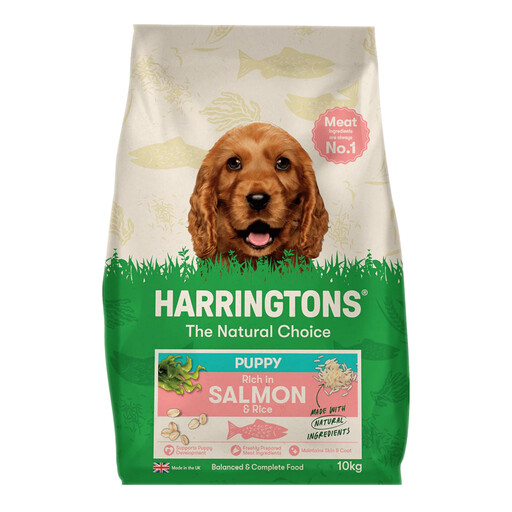
Why It Stands Out: This formula from Harringtons places meat as its number one ingredient, with salmon providing a rich source of protein and omega fatty acids. The inclusion of salmon oil and linseed contributes Omega 3 and 6, which are important for cognitive development, immune support and maintaining a healthy, shiny coat. The kibble is specifically designed to be smaller, making it easy for young puppies to manage.
Pros:
Who is it for?: A great choice for owners looking for a fish-based protein source that supports both growth and coat health, suitable for puppies from 3 weeks of age.
View Harringtons Puppy Salmon 10kg on Joybuy.co.uk
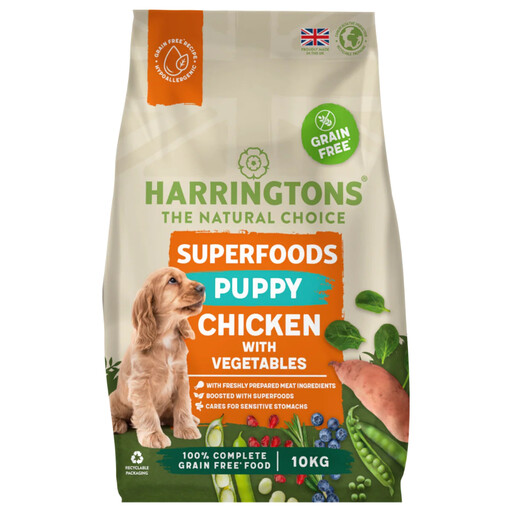
Why It Stands Out: This is a grain free puppy food designed for puppies who may have sensitivities. It avoids common allergens like grain, dairy and soya. Instead of grains, it uses sweet potato and peas for energy. The recipe is enhanced with a blend of superfoods, including spinach, pomegranate and blueberries, providing natural antioxidants.
Pros:
Who is it for?: Ideal for owners seeking a high-protein, hypoallergenic and grain-free diet to support a puppy with a sensitive digestive system.
View Harringtons GF Superfoods Puppy 10kg on Joybuy.co.uk
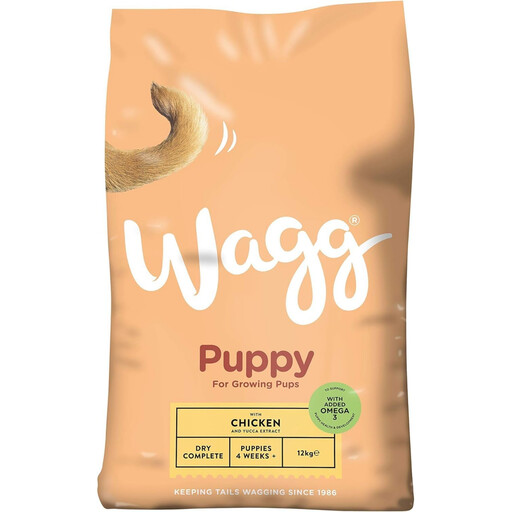
Why It Stands Out: Wagg offers a balanced and affordable option without compromising on core nutritional needs. This complete formula provides 28% protein and is fortified with essential vitamins and minerals, including calcium and vitamin D for strong bones and teeth. The inclusion of prebiotic chicory root helps to support healthy gut flora, promoting consistent digestion.
Pros:
Who is it for?: A solid and economical choice for owners who need a dependable, complete food that covers all the essential nutritional bases for a growing puppy.
View Wagg Complete Puppy 12kg on Joybuy.co.uk
Every puppy is an individual, and what works for one may not be the perfect fit for another. If you are looking for different protein sources, breed-specific formulas or other specialised diets, there are many other excellent choices available.
To see a wider selection, you can explore our full range of puppy food and find the ideal match for your new family member.
1. How much puppy kibble should I feed my puppy? The correct amount depends on your puppy's age, breed (and expected adult weight) and activity level. Always start by following the feeding guide on the food's packaging. These are a good starting point, but you may need to adjust the portion to maintain a lean, healthy body condition. It is also wise to split the daily amount into 3-4 smaller meals for young puppies.
2. Is grain-free food always better for puppies? Not necessarily. A grain free puppy food is primarily beneficial for puppies with a diagnosed grain allergy or sensitivity. For most puppies, grains like rice and oats are excellent sources of energy and nutrients. The most important factor is the overall quality and digestibility of the ingredients, whether they are grain-inclusive or not. If you suspect a food sensitivity, it is always best to consult with your vet.
3. How do I switch my puppy to a new dry food? To avoid digestive upset, you should transition your puppy to a new food gradually over 7-10 days. Start by mixing a small amount of the new food (around 25%) with their old food (75%). Every few days, slowly increase the proportion of the new food while decreasing the old, until you are feeding 100% of the new diet.