Managing kitchen food waste is a commendable part of modern, sustainable living in the UK. However, it often comes with the less-than-glamorous task of dealing with a messy, smelly food caddy. The right liner can make all the difference, turning a chore into a simple, clean process. But with terms like 'biodegradable' and 'compostable' often used interchangeably, and various sizes and styles available, choosing the correct compostable caddy liners can be confusing.
This guide is designed to help you select the most suitable food waste caddy liners for your household, ensuring they fit your caddy, comply with council food waste bags regulations and make your recycling efforts as seamless as possible.
A Practical Guide to Choosing the Right Food Waste Caddy Liners
Before you add a roll of liners to your basket, consider these key factors to ensure you get the right product for your needs.
1. Getting the Size Right: 5L vs. 10L Compostable Bags
The most common sizes for kitchen caddy liners are 5L and 10L, designed to fit the standard countertop caddies provided by many local councils.
- 5L Caddy Liners: These are ideal for smaller households, individuals or couples. Their smaller capacity encourages you to empty the caddy every 2-3 days, which helps to minimise odours. They fit snugly in the most compact caddies.
- 10L Compostable Bags: A better choice for larger families or keen home cooks who generate more food scraps. If you find yourself emptying a 5L caddy daily, upgrading to a 10L liner can provide more convenience.
Always measure your caddy's volume if you are unsure. A liner that is too small will slip down, while one that is too large is wasteful.
2. Understanding the Terminology: Compostable vs. Biodegradable
This is the most critical point for compliance with council collection schemes. While all compostable items are biodegradable, not all biodegradable bin bags are compostable.
- Biodegradable: This simply means the material will break down over time, but the process can take many years and may leave behind microplastics. These are generally not suitable for food waste collections.
- Compostable: This means the material will break down completely into natural elements in a composting environment within a specific timeframe (typically 90-180 days). For council collections, liners must be certified to the EN 13432 standard. Look for the 'seedling' logo on the packaging to be sure.
Using non-compliant bags can result in your food waste bin not being collected, so always check for the official compostable certification.
3. Convenience Features: Tie Top vs. Flat Top Liners
This choice comes down to personal preference and how you handle your waste.
- Tie Top Bin Liners: These liners feature two built-in handles that make it easy to lift the bag out of the caddy and tie it securely shut. This is excellent for containing odours and preventing spills on the way to the outdoor bin.
- Flat Top Liners: A more basic and often more economical option. These liners do not have built-in handles, so you simply gather the top and tie a knot. They perform the same core function but with one less convenience feature.
Top Compostable Caddy Liner Recommendations
Here are our recommendations, selected to meet the needs of different UK households participating in food waste recycling.
Morrisons 20 Tie Top Bio Caddy Bin Liners 5L
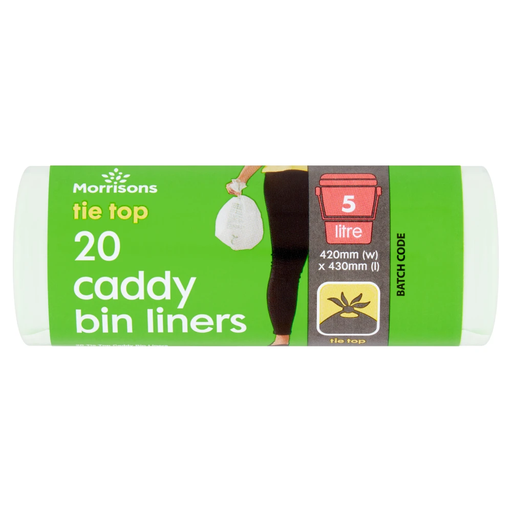
- Why It Stands Out: These liners combine the ideal 5L caddy liners size with the convenience of a tie top closure. They are certified 100% compostable and biodegradable, making them fully compliant with most council food waste schemes.
- Pros:
- Convenient tie handles for easy and clean closure.
- 5L capacity is perfect for smaller households.
- Certified compostable for council collections.
- Who is it for: Individuals, couples or small families who value the clean and simple disposal offered by tie-top handles and use a standard small kitchen caddy.
Ecozone Caddy Liner 10L 100% Compostable 22 Bags
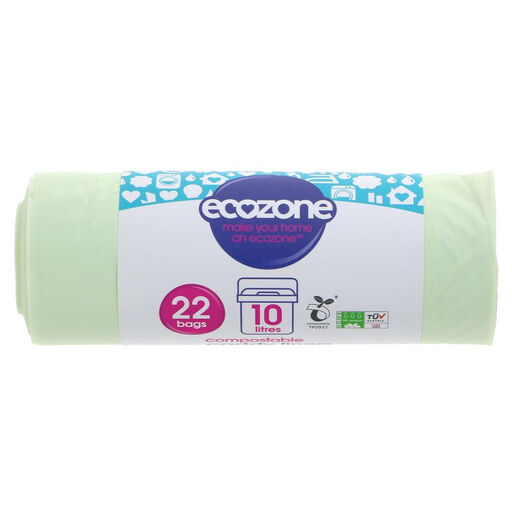
- Why It Stands Out: Made from plant-based materials like corn starch, these 10L compostable bags are designed for those who generate a higher volume of food waste. They are certified 100% compostable for industrial composting facilities.
- Pros:
- Larger 10-litre capacity suits families and avid cooks.
- Made from renewable, plant-based materials.
- Durable and leak-resistant design.
- Who is it for: Larger households or anyone who finds they are filling their caddy too quickly. A great choice for those looking for a product made from renewable resources. Note that the packaging specifies they are for industrial composting, which aligns with council collections.
Morrisons Flat Top Caddy 10 Bin Liners
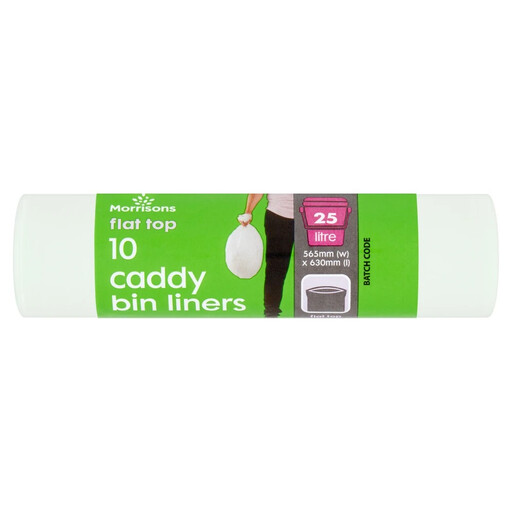
- Why It Stands Out: This is a straightforward, no-frills option that gets the job done. These flat-top liners are 100% compostable and biodegradable, suitable for both home composting (in well-maintained systems) and local authority schemes.
- Pros:
- Economical flat-top design.
- Certified 100% compostable and biodegradable.
- Suitable for a range of composting methods.
- Who is it for: Anyone looking for a simple, effective and affordable liner without the need for tie-top handles.
Looking for Other Home Organisation Solutions?
Getting your kitchen waste in order is a great first step towards a more organised and efficient home. If you're inspired to tackle another common clutter spot, our range of laundry storage solutions can help streamline your utility room or bedroom.
Explore Our Range of Laundry Storage Baskets
Frequently Asked Questions about Compostable Caddy Liners
Can I put any biodegradable bag in my food waste bin?
No. For your council's food waste collection, you must use bags that are certified 'compostable' to the EN 13432 standard. Standard biodegradable bin bags will not break down correctly in the industrial composting process and can contaminate the entire batch. Always look for the 'seedling' logo on the packaging.
How often should I change my kitchen caddy liner?
To prevent odours, leaks and fruit flies, it is best practice to change your liner every 2 to 4 days, or sooner if it is full. Regular emptying keeps your kitchen caddy cleaner and more hygienic.
Not necessarily. Many compostable caddy liners are designed to break down at the high temperatures found in industrial composting facilities. While some may be suitable for a well-managed home compost bin, others will not decompose effectively. Always check the product's packaging for specific guidance on home compost suitability.


