
24/7 Customer Support

Free returns

Same-day & Next-day Delivery

Quality Guaranteed

Unlock Your Welcome Offers: FREE Delivery | Up to 80% OFF | Free 30-day JoyPlus trial
Download the APP
Planning an event, whether it's a family barbecue, a birthday party or a catered function, often involves a trade-off between convenience and environmental responsibility. Traditional disposable plates contribute to landfill waste, while reusable ones create a mountain of washing up. This is where compostable plates offer a practical solution.
However, the market is filled with options, and not all eco-friendly plates are created equal. Some buckle under the weight of a jacket potato, while others can't handle a drizzle of dressing. As a Joybuy Product Recommendation Officer, my role is to help you navigate these choices. This guide will walk you through key considerations and highlight some excellent options to ensure your event is both convenient and a little kinder to the planet.
Before you add a pack to your basket, consider a few factors that will determine whether your chosen plates are a party success or a soggy disappointment.
The material is the most significant factor in a plate's performance and environmental footprint. The two most common materials you'll encounter are sugarcane and bamboo.
Consider what you'll be serving. A small, flimsy plate won't suffice for a main course.
The term "compostable" means the product can break down into natural elements in a commercial composting environment. While many biodegradable party plates will break down over time, certified compostable products do so within a specific timeframe (usually 90-180 days) without leaving toxic residue. Always check with your local council for guidelines on disposing of compostable tableware, as not all areas have the facilities to process them.
After reviewing the features of various products available, here are a couple of standout options that balance performance, sustainability and value.
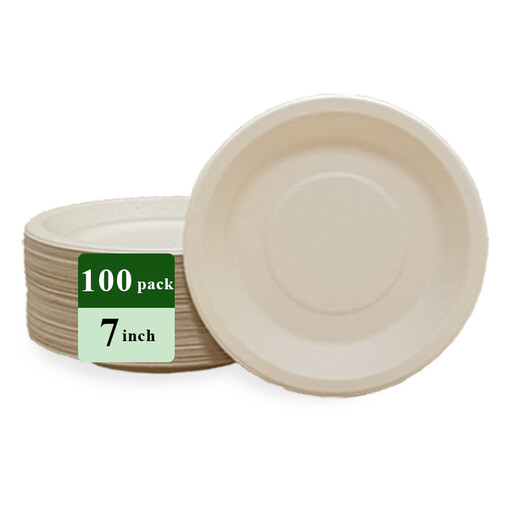
Why It Stands Out: This option from Rui provides exceptional value with its 100-plate pack size. Made from renewable bamboo fibre, these plates are a solid choice for those hosting larger gatherings. A key feature is their microwave-safe design, allowing for quick and easy reheating of food—a convenience not always found in disposable tableware. Their leak-resistant properties ensure they can handle a variety of foods without issue.
Pros:
Who is it for? Event planners, caterers, food truck owners and large families who need a reliable, bulk supply of eco-friendly disposable plates for frequent events or daily convenience. The 7-inch size makes them particularly suitable for appetisers, desserts and light meals.
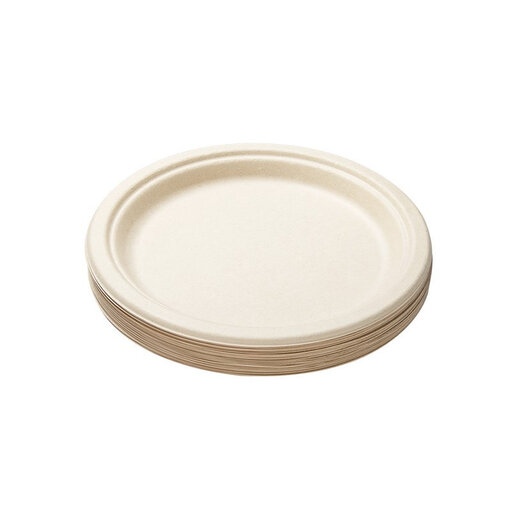
Why It Stands Out: COOKER KING's plates are crafted from 100% biodegradable sugar cane pulp, making them a standout for sturdiness. These plates are engineered to resist grease and prevent sogginess, making them a dependable choice for barbecues, buffets and parties where saucy or oily foods are on the menu. The natural beige colour provides a rustic, stylish aesthetic that elevates the presentation of your food.
Pros:
Who is it for? Hosts of smaller gatherings, picnics or barbecues who prioritise strength and reliability above all else. If you're serving dishes with sauces, dressings or oils, these heavy duty disposable plates are an excellent choice.
While these two products are excellent all-rounders, your specific event might call for a different size, shape or material. If you need larger plates for main courses, matching bowls for soup or different pack sizes, there are many other choices available.
Explore our full collection of Disposable Plates & Bowls to find the perfect match for your needs.
Yes, in several ways. They are typically made from renewable resources like bamboo or agricultural waste like sugarcane, which reduces reliance on fossil fuels used to make plastic. When disposed of correctly in a commercial composting facility, they break down into soil-enriching organic matter, unlike plastic which can persist in the environment for hundreds of years.
Absolutely. High-quality compostable plates, particularly those made from sugarcane (bagasse), are designed to handle hot, wet and oily foods. They are generally far more robust than traditional uncoated paper plates and will not lose their structural integrity when faced with a hot meal or a salad with vinaigrette.
The best method is to place them in your food or garden waste bin if your local council accepts them for industrial composting. Home composting piles rarely reach the high temperatures needed to break down these products efficiently. Do not place them in your standard recycling bin with paper and cardboard unless specifically instructed to do so, as they are treated differently. Always check your local council's waste disposal guidelines.