
24/7 Customer Support

Free returns

Same-day & Next-day Delivery

Quality Guaranteed

Unlock Your Welcome Offers: FREE Delivery | Up to 80% OFF | Free 30-day JoyPlus trial
Download the APP
Waking up to windows streaming with condensation, spotting the first signs of mould in a corner or noticing that persistent musty smell are all-too-common issues in UK homes. Excess indoor humidity is not just a nuisance; it can affect your property and your comfort. A compressor dehumidifier is a practical and effective tool for managing moisture levels, helping to create a drier, healthier living environment.
Navigating the different models and features can be confusing. This guide is designed to help you understand what to look for and to highlight some reliable options that suit various household needs, from tackling damp in a large living room to drying laundry indoors more efficiently.
As the Joybuy Product Recommendation Officer, my role is to provide clear, objective information to help you make a confident choice.
Before looking at specific models, it's useful to understand the key features that will determine how well a dehumidifier works for you.
The "extraction rate," measured in litres per day (L/day), indicates how much moisture a unit can remove from the air in 24 hours. A higher number doesn't always mean better; it's about matching the power to the space.
An energy efficient dehumidifier is a priority for many households. Compressor models are generally efficient in typical UK indoor temperatures (above 15°C). To keep running costs down, look for a unit with an adjustable humidistat. This feature allows you to set a target humidity level (usually around 50-55%). The machine will then automatically switch on and off to maintain that level, preventing it from running unnecessarily.
Modern dehumidifiers come with features designed for convenience. A dehumidifier with continuous drainage is a great example. It allows you to connect a hose that drains water directly into a sink or drain, so you never have to empty the water tank. This is ideal for long-term condensation control.
If you plan to use the unit in a bedroom or living area, a quiet dehumidifier is essential. Check the decibel (dB) rating—anything around 40-45 dB is comparable to a quiet library and shouldn't be too disruptive.
Here are a few recommendations from the EcoAir dehumidifier range, selected for their practical features and suitability for common UK household scenarios.
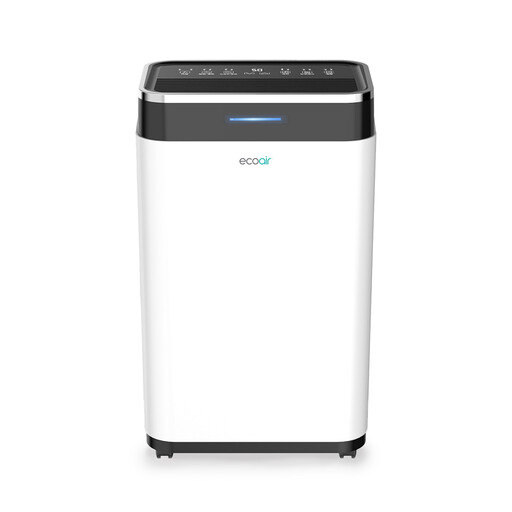
Why It Stands Out: The DC18 MK2 offers a great balance of performance and capacity, making it a versatile choice for the average UK home struggling with persistent damp.
Pros:
Who is it for? This model is well-suited for families living in medium to large homes, particularly for use in living rooms, large bedrooms or utility rooms where damp and condensation are a regular concern.
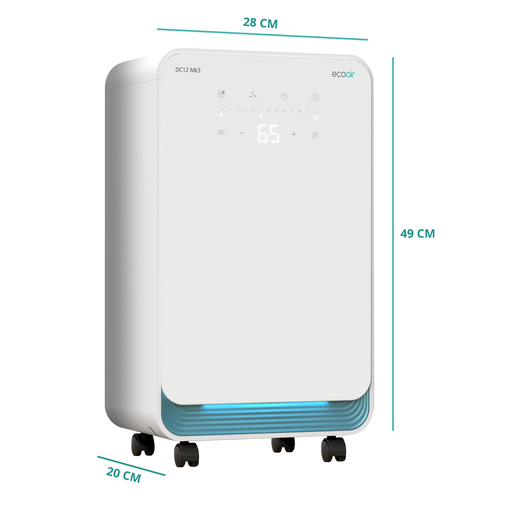
Why It Stands Out: This is a compact and efficient unit that provides reliable moisture control without taking up too much space.
Pros:
Who is it for? A great option for those in flats, smaller houses or for targeting specific problem areas like a damp bedroom or a study. Its quiet performance is a significant benefit for everyday living spaces.

Why It Stands Out: This is a high-capacity workhorse designed for tackling serious humidity issues in large or challenging environments.
Pros:
Who is it for? Households with significant damp problems, very large rooms or those who frequently dry laundry inside and need a powerful solution to prevent moisture build-up.
If the models above aren't quite the right fit, or if you're interested in exploring other types such as desiccant dehumidifiers for colder spaces like garages, there are more choices available. Browse our full range to compare different sizes and features.
Explore our complete collection of Dehumidifiers
A compressor dehumidifier works by cooling a metal plate, causing moisture from the air to condense on it and drip into a tank. They are most energy efficient in typical heated home temperatures (above 15°C). Desiccant dehumidifiers use a special material to absorb moisture and work well at lower temperatures, making them better for unheated spaces like garages, sheds or caravans in winter.
To optimise energy use, choose a model with an adjustable humidistat and set it to around 50-55% relative humidity. This stops the machine from running constantly. Also, ensure the model's extraction rate is appropriate for your room size; a unit that is too small will have to work continuously, while one that is too large may cycle on and off too frequently.
A dehumidifier is a tool for prevention. It tackles the root cause of many mould problems—excess airborne moisture. By maintaining a lower humidity level, it creates an environment where it is difficult for mould to grow and thrive. For existing mould, you will need to clean the affected surfaces thoroughly first. Afterwards, using a dehumidifier is an excellent way to manage condensation control and help prevent the mould from returning.