
24/7 Customer Support

Free returns

Same-day & Next-day Delivery

Quality Guaranteed

Unlock Your Welcome Offers: FREE Delivery | Up to 80% OFF | Free 30-day JoyPlus trial
Download the APP
Choosing the right computer desk is fundamental to creating a productive and comfortable home workspace. Whether you're carving out a corner in your living room, setting up a dedicated home office desk or upgrading a student's bedroom, the sheer number of options can be overwhelming. The ideal desk should not only fit your space but also support your daily tasks and complement your home's style.
This guide is designed to simplify your search. We will walk through key considerations to help you identify your needs and then present a selection of desks that cater to different requirements, from compact solutions to expansive workstations.
Before you start browsing, a little planning can ensure you find a desk that you'll be happy with for years to come. Here are a few practical points to consider.
The most important factor is size. Start by measuring the exact area where the desk will go. Remember to account for chair space and room to walk around it. If you're working in a smaller flat or a multi-purpose room, a small computer desk around 80 cm in width might be ideal. For those with a dedicated office and multiple monitors, a larger workstation desk of 160 cm or more will provide the necessary surface area.
Consider what you need to keep within arm's reach. A minimalist setup for a laptop may only require a flat surface. However, if you have books, files, a printer and stationery, a desk with shelves can be an incredibly efficient solution. Integrated shelving uses vertical space, keeping your work surface clear and organised without taking up more floor space.
A desk is a significant piece of furniture, so its style matters. Modern, minimalist desks with clean lines and neutral colours blend easily into most contemporary homes. For a more characterful look, an industrial desk combining wood-effect surfaces with a black metal frame offers a timeless and robust aesthetic that is currently very popular in UK homes.
Based on function, style and user feedback, here are our recommendations for a range of common needs.

Why It Stands Out: This desk is the definition of functional minimalism. Its simple design and compact footprint make it a versatile choice for almost any room, providing a dedicated workspace without dominating the area.
Pros:
Who is it for? This is an excellent study desk for students or professionals who need a simple, reliable surface for a laptop and a few essentials. It's particularly well-suited for those living in flats or needing to create a functional work corner in a living room or bedroom.
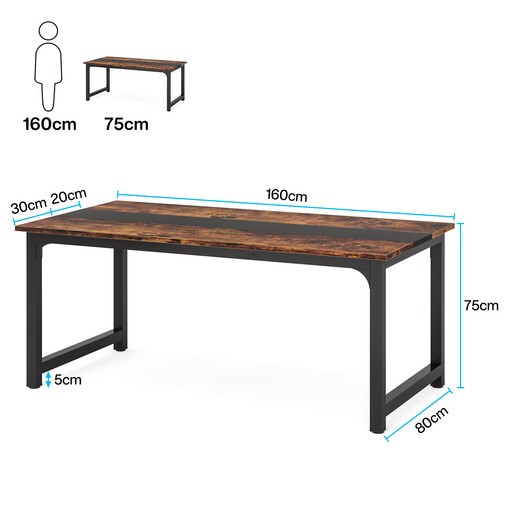
Why It Stands Out: If space is a luxury you have, this desk lets you use it. Its expansive 160 x 80 cm surface and remarkable strength make it a true command centre for any serious home office.
Pros:
Who is it for? This workstation desk is built for remote professionals, creatives, gamers or anyone who needs a large, durable surface. Its size and strength make it suitable for heavy equipment and demanding workflows.
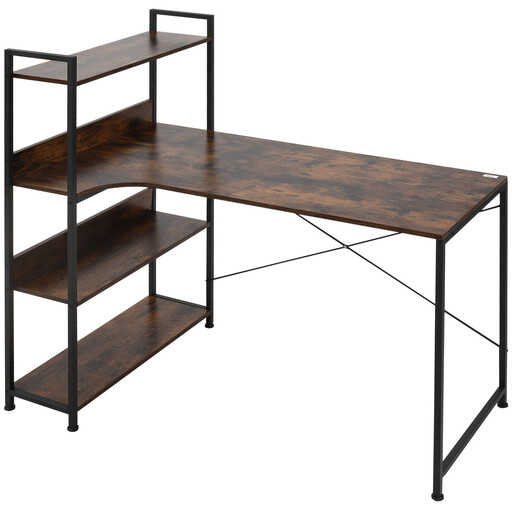
Why It Stands Out: This desk cleverly combines a spacious work surface with a four-tier shelving unit. It’s a complete office solution in one piece of furniture, perfect for keeping everything organised and accessible.
Pros:
Who is it for? This is the ideal choice for anyone who needs to maximise storage in a limited area. It’s perfect for students with textbooks, home workers with files and folders or anyone who appreciates a tidy, well-organised workspace.
If these specific models aren't quite what you're looking for, or if you have a particular colour scheme in mind, there are many other styles available. For a classic and versatile look, explore our wider collection of desks.
? Discover more options in our black desk category
A good size depends entirely on your needs and available space. A small computer desk around 80-100 cm wide is sufficient for a laptop and basic tasks. For a setup with one or two monitors, a desk between 120-140 cm is recommended. For extensive setups with multiple monitors and peripherals, a 160 cm or larger desk provides the most comfortable workspace.
Comfort often comes down to ergonomics. Ensure your desk height allows your arms to rest at a 90-degree angle when typing. Your chair should allow your feet to rest flat on the floor and there should be enough clearance under the desk for your legs. Keeping your monitor at eye level can also help reduce neck strain.
Weight capacity varies significantly by design and materials. A simple, minimalist desk like the Ochama model can typically hold around 50 kg, which is more than enough for a computer and accessories. In contrast, a heavy-duty workstation desk with a reinforced steel frame, like the Tribesigns model, can support up to 400 kg, making it suitable for very heavy equipment. Always check the manufacturer's specifications before purchasing.