What to check before choosing
Start with the fit of your standing workstation, then decide whether familiar shortcuts or configurable controls are your greater priority. A split shape, a compact layout and programmable keys solve different parts of that decision.
| Concern |
What to check |
Who this matters to |
| Standing posture |
Check keyboard height against your elbows at the desk setting you use. If considering a split model, check its tilt and the space it needs. |
Long editing sessions make it important to work without raising my shoulders or reaching awkwardly for the keys. Around 42% of consumers put standing posture first. |
| Shortcuts and switching |
Check the keys your DAW uses, device-switching support and operating-system compatibility for any programming software. |
When I move between session files and devices, I want the commands I repeat to remain easy to reach. Around 33% of consumers give shortcut and device workflow their highest priority. |
| Custom controls and layout |
Check physical UK key placement, the keys retained by a compact layout and the software needed for remapping. |
I would accept a different layout if I could configure the controls I use most, but unfamiliar key positions could slow me down. Roughly 25% of consumers prioritise custom controls or compactness. |
Joybuy keyboard choices
These computer keyboards offer different layouts for shortcut-based track preparation: a near-full-size model with an adjustable typing angle and two compact wireless options. Check their physical keys against your DAW workflow and standing-desk setup; their inclusion does not establish a posture benefit.
 No image available
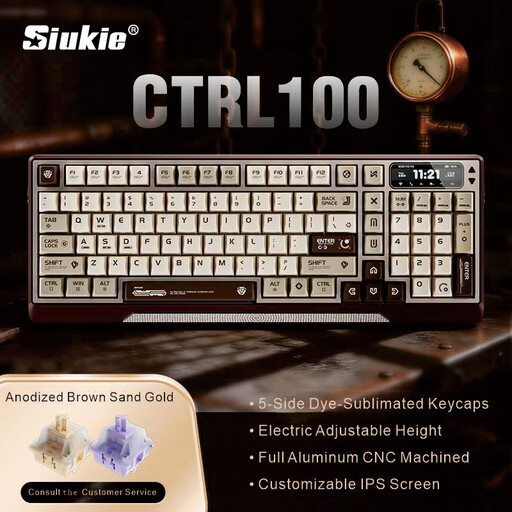
Siukie CTRL100 mechanical keyboard, 96% US QWERTY, brown
Consider this if you want to adjust your typing angle while preparing tracks. Its named features include a motorised lift and tri-mode wireless connectivity; check the lift range against your standing-desk height.
The physical layout is US QWERTY. Confirm that its key positions suit your shortcuts and check programming compatibility if you need macros.
View on Joybuy
 No image available
Rapoo E9050L 75% wireless membrane keyboard, US QWERTY, white
Consider this compact keyboard if switching between devices matters during track preparation. The product name specifies 78 keys, support for four devices and 2.4GHz and Bluetooth connections.
Check that the US QWERTY key placement and reduced key count retain the shortcuts you use. If you need programmable DAW actions, confirm the required support before buying.
View on Joybuy
 No image available
HyperX Alloy Rise 75 wireless keyboard, UK version
Consider this 75% wireless model if you want a compact computer keyboard for track-preparation shortcuts. Check the exact physical keys and legends of the UK version against the commands you use.
If custom assignments are central to your workflow, confirm that the required software works with your computer and DAW before relying on them.
View on Joybuy
Common questions
Where should my keyboard sit at a standing desk?
Place it just below elbow height, following Health and Safety Executive guidance, so you do not need to shrug your shoulders. Keep the keyboard and screen central, and adjust the workstation rather than expecting the keyboard alone to resolve an awkward position.
Will an ergonomic keyboard fix wrist pain?
An ergonomic keyboard cannot promise to fix pain or prevent injury. Kinesis says its ergonomic keyboards are not medical treatments; if discomfort persists, assess the whole workstation and seek appropriate professional support rather than relying on a purchase alone.
Do I need a MIDI controller to prepare rehearsal tracks?
Not necessarily: a computer keyboard handles text entry, navigation and shortcuts when preparing tracks. Choose a MIDI controller separately if you need to play software instruments or use hands-on controls; Ableton notes that assigning MIDI keys to remote functions can stop those keys playing notes on a MIDI track.
Do UK display screen equipment rules affect keyboard choice at work?
They concern workstation use, not a required keyboard model. The Health and Safety Executive says the UK display screen equipment rules apply to employees who regularly use screens as a significant part of normal work, described as daily use for continuous periods of an hour or more; employers must assess workstations and reduce risks.


