Position the screen to avoid direct window reflections before choosing a monitor. For concert-programme work, a 27-inch 4K display suits close proofreading and detailed artwork, while a 34-inch ultrawide gives more horizontal room for layouts, copy and references; either choice still needs to fit the desk and lighting.
Who this is for
Bright-window document designers
If you create and proofread programme pages near a window, start with screen placement and reflection control. The Health and Safety Executive advises arranging the desk and screen to avoid glare and bright reflections.
Colour-conscious programme editors
If your pages include photographs, artwork or sponsor logos, compare documented colour specifications and plan how you will check the final print proof. A monitor’s stated colour figures alone cannot establish how the printed programme will look.
Laptop-based multitaskers
If you keep layout software, copy and reference material open together, consider the available screen space as well as desk space. Check USB-C video and charging compatibility against your laptop before relying on one cable.
What matters when choosing
Decide how you will control reflections, then choose between detailed page viewing and a wider side-by-side workspace. Treat colour documentation and laptop connectivity as separate checks for your workflow.
| Concern |
What to check |
Who this matters to |
| Reflections and readability |
Plan the screen’s position relative to the window; check its surface treatment and stand adjustment. |
If reflections fall across programme text, I need to reposition the screen or control the window light before judging the display. Around 33% of consumers put reflection control first. |
| Layout workspace |
Compare native resolution and 16:9 or ultrawide format against your software windows and available desk width. |
When copy, page layouts and references must stay visible together, I want room for those windows without constant switching. This is the primary need for around 27% of consumers. |
| Artwork colour |
Check colour-space specifications and calibration documentation relevant to your files; assess print-critical work using a proof. |
With photographs or sponsor artwork going into print, I need a way to assess colour beyond how it looks on screen. Around 20% of consumers place colour handling first. |
| Laptop connection and positioning |
Confirm USB-C video support, the laptop’s charging requirement and the monitor’s stand adjustments. |
If my laptop drives the layout work, I want a suitable display connection and a screen position I can adjust at the desk. For around 20% of consumers, that is the main priority. |
Buying pitfalls
-
Expecting a coating or higher brightness to fix direct reflections
Bright reflections can still cross the page you are proofing. The Health and Safety Executive advises arranging the desk and screen to avoid glare and using window coverings where needed.
Plan the desk position first, then compare matte or anti-glare surfaces and the brightness specifications of monitors that fit that position.
-
Assuming colour specifications guarantee a matching print
A manufacturer’s gamut or calibration figures describe the named display under its stated conditions, not the result from your printer, paper and files.
For a print-critical programme, use a colour-managed workflow and check a proof with the intended print supplier.
-
Assuming any USB-C connection will charge your laptop
USB-C video support and charging power must both suit the laptop. For the named models, BenQ specifies 90W USB-C power delivery on the PD2706UA, while LG specifies charging up to 65W on the 34WR55QK-B.
Compare your laptop’s video mode and charging requirement with the exact monitor specification, and check what cable is included.
-
Treating a category listing as confirmation of the exact model
A monitor category page and an individual product listing answer different questions; the model and its listed configuration matter when you compare features.
Before ordering, check the model number, screen surface, resolution, connections and current availability on the product-detail page.
Relevant monitor brands for reference
Dell
Dell’s UltraSharp range is worth examining if you want a conventional 27-inch 4K workspace with laptop-oriented connections.
- Dell lists an anti-glare, anti-reflective surface, height adjustment, an ambient light sensor and a 90W power-delivery option for the U2725QE.
- Those are specifications for the U2725QE, not features to assume across the UltraSharp range. Window placement still affects reflections.
BenQ
BenQ’s creator-focused monitors are relevant when programme artwork and documented colour specifications are central to the choice.
- For the PD2706UA, BenQ states a matte 27-inch 4K display, 350-nit typical brightness, 100% sRGB and Rec.709 coverage, 95% P3 coverage, and a factory calibration report.
- BenQ’s stated colour figures are not an independent validation of a match to your finished print.
LG
LG’s UltraWide range is relevant if keeping programme copy, layout tools and research visible side by side matters more than a compact 16:9 screen.
- LG lists a 34-inch, 3440 × 1440 curved display, picture-by-picture and USB-C charging up to 65W for the 34WR55QK-B.
- LG states 300-nit typical brightness for that model; check desk width, placement and window reflections rather than relying on its ultrawide format to address glare.
Joybuy monitor choices for programme work
These monitors offer different approaches to detailed pages, artwork and desk space. For a bright-window setup, check the surface and positioning options of the particular model rather than assuming that resolution or screen size controls reflections.
 No image available
ASUS ProArt PA27DCE-K OLED 4K UHD
Consider this OLED 4K UHD model if detailed programme pages and artwork are your priorities. If your work leaves static page elements on screen for long periods, take account of the listing’s OLED burn-in warning; also confirm the brightness and laptop-connection details that matter to your setup.
View on Joybuy
 No image available
ASUS ProArt PA278CV IPS WQHD
This IPS WQHD model is an option for programme layouts and artwork when a 4K display is not the deciding requirement. Check its screen surface against your window position, and confirm USB-C video and charging compatibility if you plan to connect a laptop.
View on Joybuy
 No image available
Dahua 32-inch 4K 165Hz Curved OLED Gaming Monitor, Type-C 65W
If you want a larger 4K display for programme pages, check whether this curved format fits your desk and viewing position. The product name states 3840 × 2160 resolution and Type-C 65W; confirm the screen surface and your laptop’s video compatibility before choosing it for a bright-window workstation.
View on Joybuy
 No image available
iiyama ProLite XUB2792UHSU-B6 27-inch 4K UHD, Matte Black
This 27-inch 4K UHD, 16:9 model is a choice to assess for detailed programme pages. Matte Black names its colour, not its display coating: check the screen surface for your window position, along with any laptop charging and video requirements.
View on Joybuy
 No image available
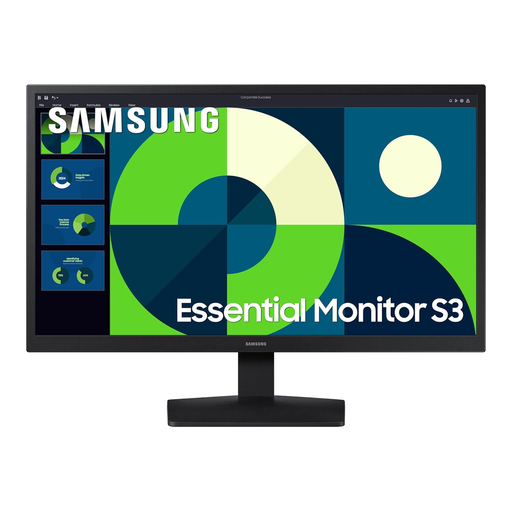
Samsung Essential S3 S31D (LS24D310EAUXXU) Monitor
Consider this model for text-led programme work if its display size and resolution suit how closely you proofread pages. Check its screen position relative to the window and whether its stand adjustment meets your desk needs.
View on Joybuy
Frequently asked questions
Will an anti-glare screen be enough beside a bright window?
No: screen placement remains important even with an anti-glare surface. The Health and Safety Executive advises arranging the desk and screen to avoid glare and bright reflections; use curtains or blinds where needed to control intrusive light.
Should I choose 27-inch 4K or a 34-inch ultrawide for a concert programme?
Choose a 27-inch 4K format if close proofreading and detailed page work matter most; consider a 34-inch ultrawide if keeping copy, layout tools and references visible together is the greater priority. Check desk width and window reflections with either format.
Can one USB-C cable handle my laptop’s display and charging?
It can if the laptop supports the required USB-C video mode and the monitor provides enough charging power for that laptop. Check both devices’ specifications and the cable supplied; a USB-C socket alone does not establish either condition.


