What matters when ordering?
100% apple juice
Choose when: The event calls for undiluted, ready-to-pour apple juice.
Plan for: Naturally occurring sugars and the storage conditions on the chosen pack; the NHS advises limiting juice and smoothies to a combined 150ml a day.
No-added-sugar apple juice drink
Choose when: A juice drink meets the brief and the exact pack confirms the no-added-sugar claim; Tesco lists a Growers Harvest version among its long-life apple drinks.
Check: A juice drink is not automatically 100% juice or sugar-free, even when labelled no added sugar.
Apple-based cordial
Choose when: A diluted soft drink is acceptable and staff can prepare it consistently.
Plan for: Dilution and ingredient checks. M&S describes its no-added-sugar Apple and Elderflower High Juice as 50% fruit juice and lists sucralose and sulphites.
Once you have settled on a drink type, use the exact pack details to plan portions, preparation and storage.
| Priority | What to check | Your needs |
|---|
| Drink type and label |
Read the product name, no-added-sugar wording, ingredient list and juice percentage. Distinguish 100% juice from a juice drink or concentrate. |
I need to describe what attendees will receive without calling a juice drink pure apple juice or suggesting that no added sugar means sugar-free. |
| Portions and service |
Check carton or bottle volume and whether the drink needs dilution. The NHS advises limiting fruit juice and smoothies to a combined 150ml a day. |
Small pours may be easier to manage at a staffed counter; individual cartons change how portions are offered. Other drinks can remain available throughout the event. |
| Storage |
Follow the exact pack’s unopened and after-opening instructions. For chilled food in England, Wales and Northern Ireland, GOV.UK states an 8°C-or-below requirement and recommends setting refrigeration to 5°C or below. |
If fridge or display space is limited, I need to know which delivered drinks require chilling and when opened packs must be used. |
| Ingredients and delivery |
Review allergens, sweeteners, date marking and pack quantity on the delivered product. M&S lists sulphites and sucralose in its Apple and Elderflower High Juice. |
I need staff to have the right ingredient information and enough of the specified drink for the planned service, rather than relying on a similar-looking substitute. |
Brand and retailer references
These examples show formats to compare, not confirmation that every product in a range carries a no-added-sugar claim.
Tesco
Tesco lists apple juices in larger packs, including Tesco Apple Juice 1.75 Litre, and lists a Growers Harvest No Added Sugar Apple Juice Drink among its long-life options.
- Different pack sizes and drink types give caterers distinct ways to plan service.
- Check the exact product name, ingredients, storage instructions and delivered pack rather than assuming the listed drinks are interchangeable.
Tropicana
Tesco lists Tropicana Pressed Apple Fruit Juice in a 1.5L format.
- The listed bottle format can be considered for shared pouring.
- Confirm the ingredient and nutrition panels and any no-added-sugar wording on the exact pack.
Copella
Tesco lists Copella Apple Juice in a 1.35L format.
- The listed format is an option to assess for a shared drinks station.
- Check the chosen pack’s ingredients, sugar declaration and storage instructions before specifying it for the event.
M&S
M&S lists apple juices as well as Apple and Elderflower High Juice, a concentrated no-added-sugar drink described as 50% fruit juice.
- The High Juice offers a dilutable format where that type of soft drink meets the brief.
- It is not pure apple juice; M&S lists sucralose and sulphites, so check the current label and dilution directions.
Joybuy product options
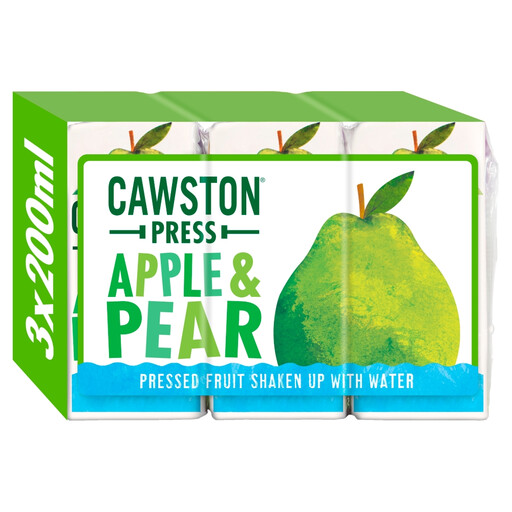
This option is an individually packed apple-and-pear fruit water for a ready-to-drink service. It is not an undiluted apple juice choice.
 No image available
CAWSTON PRESS Apple & Pear Fruit Water, 3 × 200ml
The individual cartons offer a ready-to-drink apple-based option without cordial preparation. The product description identifies it as no added sugar, but it is apple-and-pear fruit water rather than 100% apple juice. Check the delivered pack’s ingredients, allergens and storage directions before catering use.
View on Joybuy
Conference drinks questions
Does “no added sugar” mean an apple drink is sugar-free?
No. Apple juice can contain naturally occurring sugars. Check the exact pack’s ingredient and nutrition information rather than treating a no-added-sugar claim as a sugar-free claim.
What portion of apple juice should I plan to pour?
A 150ml pour is a useful reference when planning fruit-juice service: the NHS advises limiting fruit juice and smoothies to a combined 150ml a day. Work out the total order separately from expected attendance, event length and the other drinks offered.
Can no-added-sugar cordial replace pure apple juice?
Only if a diluted soft drink meets the event brief. M&S describes its Apple and Elderflower High Juice as a concentrated, 50%-fruit-juice drink containing sucralose and sulphites; it is not undiluted 100% apple juice.
How should chilled apple juice be stored for service?
Follow the chosen product’s label. For chilled food in England, Wales and Northern Ireland, GOV.UK states that it must be kept at 8°C or below and recommends setting refrigeration to 5°C or below. Do not assume that storage instructions for one apple drink apply to another.
Which pack details should catering staff have available?
Keep the delivered packaging or its details available so staff can check the food name, ingredients and allergens, quantity, date marking and storage instructions. UK government guidance identifies these as information relevant to prepacked-food labelling.


