Organisers serving mixed groups
Individually portioned cans make self-service straightforward. Keep a caffeine-free choice distinct from caffeinated cola, and retain the delivered-pack labels for ingredient checks.


For conference self-service, individually portioned zero-sugar cola cans are a practical starting point, but choose the flavour style rather than treating ‘diet’ and ‘zero sugar’ as interchangeable. Coca-Cola describes Zero Sugar as closer to its Original Taste and Diet Coke as lighter; if guests may avoid caffeine, offer a separately identified caffeine-free option and check the delivered labels for ingredient requirements.
Individually portioned cans make self-service straightforward. Keep a caffeine-free choice distinct from caffeinated cola, and retain the delivered-pack labels for ingredient checks.
Diet and zero-sugar names do not promise the same flavour. Coca-Cola describes Zero Sugar as closer to Coca-Cola Original Taste and Diet Coke as having a different, lighter flavour.
An own-label zero-sugar cola can meet a brief that does not specify a national brand. Compare the exact pack format and ingredient label rather than assuming its recipe matches a branded option.
Decide on flavour and caffeine choices first, then specify the serving format and check the labels of the products delivered.
| Priority | What to check | Your needs |
|---|---|---|
| Sugar and flavour | Read the sugars declaration per 100ml for each variant. For flavour, Coca-Cola says Zero Sugar is closer to Original Taste, while Diet Coke has a lighter profile. | I want a sugar-free cola, but guests may prefer different cola flavours. |
| Caffeine choice | Specify the caffeine-free variant by its full name; a diet or zero-sugar label alone does not establish caffeine status. Keep the options clearly identifiable during service. | Some guests may want to choose a cola without caffeine. |
| Ingredients | Check the exact delivered label for sweeteners and any source-of-phenylalanine declaration. Tesco advises that food ingredients and dietary information can change. | Before serving, I need to be able to check the cans against a guest’s stated ingredient requirement. |
| Serving format | Specify can size and pack count in the order. The products shown below include 330ml cans in different multipack quantities. | Individual cans would make self-service easier to organise than pouring from shared bottles. |
These words describe different aspects of a drink. Sugar-free colas can have different flavour positioning, while caffeine-free variants can still contain sweeteners.
Write the order in terms of the flavour wanted, sugar and caffeine status, and exact can format rather than relying on one category word.
An ingredient declaration for one cola does not describe another brand or variant. Tesco also advises that formulations and dietary information can change.
Check the cans or bottles received and keep their ingredient information accessible throughout the event.
These examples illustrate distinct cola choices; a brand name alone does not establish the ingredients of every variant.
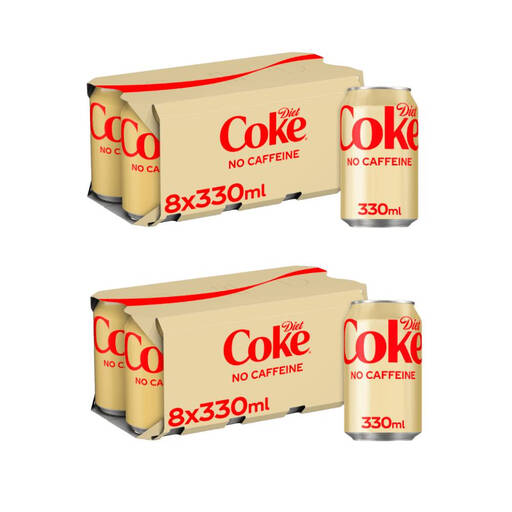
Coca-Cola Zero Sugar and Diet Coke offer two sugar-free flavour positions, with Diet Coke No Caffeine providing a separately labelled caffeine-free variant.
Pepsi Max, Diet Pepsi and Pepsi Max Caffeine Free give caterers distinct named variants to specify.
Tesco Xero Cola is an own-label sugar-free option listed in an 8 x 330ml can pack.
These canned multipacks cover diet, zero-sugar and caffeine-free choices for conference self-service. Select the variants and quantities that match the drinks you intend to offer.
 No image available
A caffeine-free diet-cola choice in individual cans. The product information reports 0g sugars per 100ml; it also lists sweeteners and a source of phenylalanine, so check the delivered label for specific ingredient requirements.
 No image available
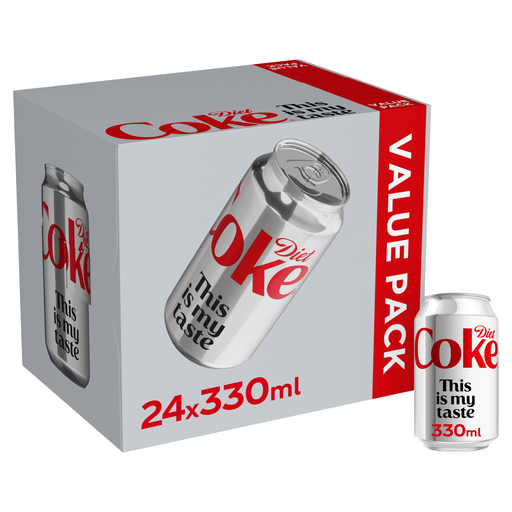
A diet-cola option in individual cans; Coca-Cola describes Diet Coke as having a lighter flavour than Coca-Cola Zero Sugar. The product information reports 0g sugars per 100ml and lists caffeine, sweeteners and a source of phenylalanine. Check the delivered label before serving.
 No image available
A separately named caffeine-free option for guests who want that choice. The product information reports 0g sugars per 100ml and lists sweeteners and a source of phenylalanine; check the delivered label against any specific requirements.
 No image available
A zero-sugar Pepsi option in individual cans. Its product information reports 0g sugars per 100ml and describes its flavour in relation to regular Pepsi; the listed ingredients include caffeine and sweeteners, with a source-of-phenylalanine declaration.
 No image available
An individually portioned zero-sugar option that Coca-Cola describes as closer in flavour to Coca-Cola Original Taste. The product information reports 0g sugars per 100ml and lists caffeine, sweeteners and a source of phenylalanine; check the delivered label for ingredient requirements.
Not necessarily: the names do not establish the same flavour. Coca-Cola says its Zero Sugar variant is closer to Coca-Cola Original Taste, while Diet Coke has a lighter flavour, so choose according to the options you want guests to have.
Include one if you want guests avoiding caffeine to have a cola choice. Pepsi Max Caffeine Free and Diet Coke No Caffeine are named no-sugar alternatives, but caffeine-free does not mean free of sweeteners; check the exact variant ordered.
The delivered label is the relevant one for service. Tesco advises that ingredients and dietary information can change, so check the received variant’s ingredients, caffeine status and declarations before putting it out.
No. Coca-Cola Zero Sugar and the Pepsi Max product information here declare a source of phenylalanine. Check each delivered variant’s label against any requirement a guest has stated rather than relying on the words ‘zero sugar’.