Organisers planning break snacks
If each attendee will take one sealed bag, the main decision is whether that bag is the break snack or one part of a wider catering offer.


Choose an individual 35–40g bag when crisps are meant to be a substantial break snack; a 25g bag suits a smaller single portion, while a 15–22g pack makes more sense alongside other food. Decide how the crisps will be served before choosing flavours, and check the exact packs against attendees’ dietary and allergen requirements. Keeping bags in their original packaging lets attendees see the product information.
If each attendee will take one sealed bag, the main decision is whether that bag is the break snack or one part of a wider catering offer.
Gather requirements before ordering, then check ingredients, allergen statements and stated dietary suitability for each flavour you intend to serve.
Compare the weight of the individual bags, not just the multipack count: the identified formats range from 15g and 22g snacks to 35g and 40g bags.
Start with the role crisps will play in the break, then check each proposed flavour and its individual pack before settling on quantities.
| Priority | What to check | Your needs |
|---|---|---|
| Portion size | Check the weight of each bag, rather than the total multipack weight. Identified individual formats include 15g, 22g, 25g, 35g and 40g. | If crisps are the main break snack, I want to consider a 35–40g bag. Alongside lunch or other snacks, a smaller bag may fit the catering plan. |
| Dietary and allergen information | Read the exact flavour’s ingredients, declared allergens, precautionary statements and stated dietary suitability. A gluten-free or vegetarian description does not answer every allergy question. | I need to match the options to requirements collected before the event, without assuming that all products from one brand have the same ingredients. |
| Nutrition per bag | Compare nutrition for the bag an attendee will receive; use per-100g figures when comparing recipes on the same basis. Check the stated basis of any reduced-salt or reduced-fat claim. | When portion size or salt matters to our selection, I want figures for the exact packs being ordered, not a comparison based on bag size alone. |
| Flavour mix | Confirm the flavours in each multipack and check their labels separately. A mixed selection may require different dietary options to be identified at service. | I would like to offer a choice of flavours while making it clear which individual bags meet particular attendee requirements. |
| Serving method | Plan how original bags and their product information will remain available when snacks are handed out. University of Reading Hospitality’s delivered-catering guide notes that original packaging already carries ingredient and allergen information. | Attendees should be able to inspect the bag they receive, especially where several flavours or separately selected dietary options are offered. |
A 15g snack bag and a 40g one-serving bag play different roles in a conference break. Ordering by the phrase “grab bag” alone can leave the portion out of step with the rest of the food.
Decide whether crisps are the break snack, a lunch accompaniment or a small add-on, then check the weight of each bag.
Seabrook Cream Cheese & Chive is described as gluten-free and vegetarian but contains milk. Tyrrells says its Lightly Sea Salted crisps may contain milk.
Collect attendee requirements before ordering and review the ingredients and allergen statements on each exact product and flavour.
A per-bag figure changes with portion size. Walkers lists 0.17g salt per 25g pack of Lightly Salted crisps, while Tyrrells lists 0.26g per 40g pack of Lightly Sea Salted crisps; those figures describe different-sized servings.
Use per-pack values to assess what one attendee receives, and compare per-100g values when the question is about the products’ salt content on an equal-weight basis.
A retailer title and its description can refer to different products or flavours. That makes the description an unreliable basis for planning pack counts or dietary choices.
Before placing a conference order, confirm that the current title, image, flavour, individual weight and pack count agree, then check product characteristics against the manufacturer’s information and the pack.
These examples show why a familiar brand name is only a starting point: portion size and dietary information still need checking for the chosen product.
Its Ready Salted and Lightly Salted products provide 25g examples for planning individual portions.
Lightly Sea Salted is an example of a larger individual break-snack portion.
Its pack-level dietary and allergy information is relevant when planning separately checked options.
Its identified products include a 25g crisp bag and a smaller 15g Bites bag.
A Ridge Cut multipack is an option when the plan calls for individually packed 25g bags.
Sea Salt & Black Pepper offers a 35g bag for a larger individual portion.
These multipacks offer individual bags of 22g, 24g or 25g for conference catering. They suit plans built around smaller portions rather than the 35–40g break-snack format.
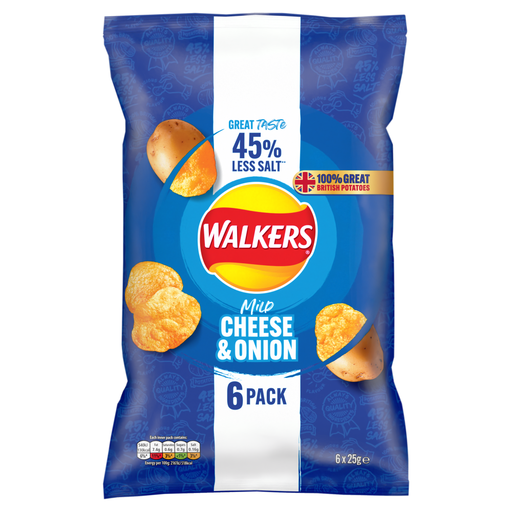 No image available
Six individual 25g bags suit a plan for smaller portions with a cheese-and-onion flavour. Check the exact pack’s ingredient and allergen information before assigning it to a dietary option.
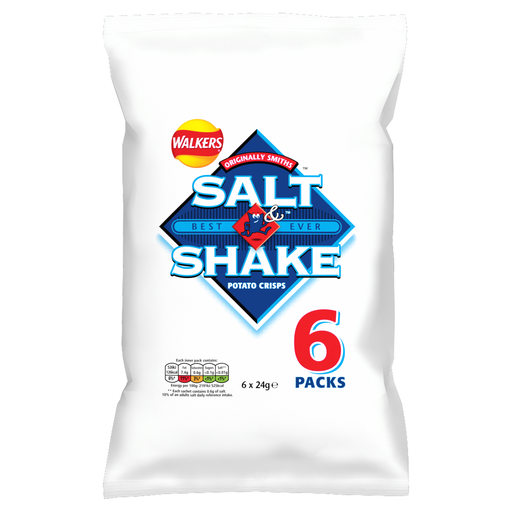 No image available
Six 24g bags provide individual portions close in size to a 25g pack. Check the current bag’s ingredients and allergen statements when planning who can receive it.
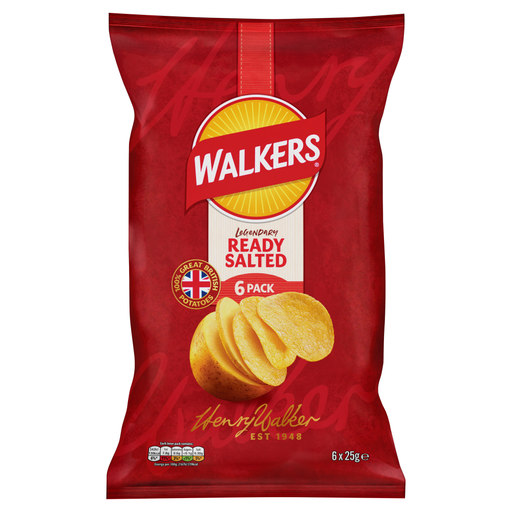 No image available
Six individual 25g Ready Salted bags suit a standard-sized portion alongside other catering. Walkers lists 130 kcal per 25g pack; check the current packaging for dietary and allergen information.
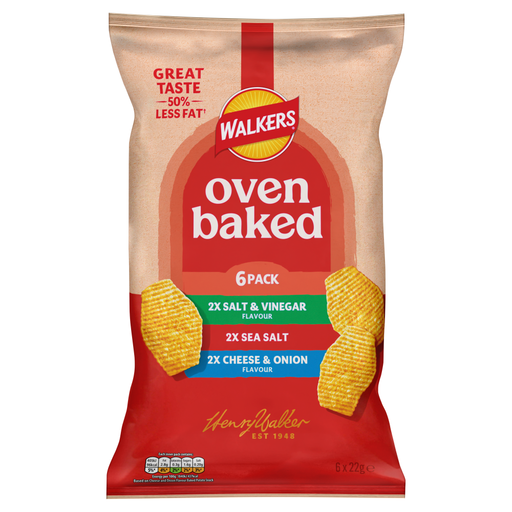 No image available
Six individual 22g bags fit a plan where crisps are a small part of the catering offer. Check the flavours in the current variety pack and review each flavour’s allergen information separately.
 No image available
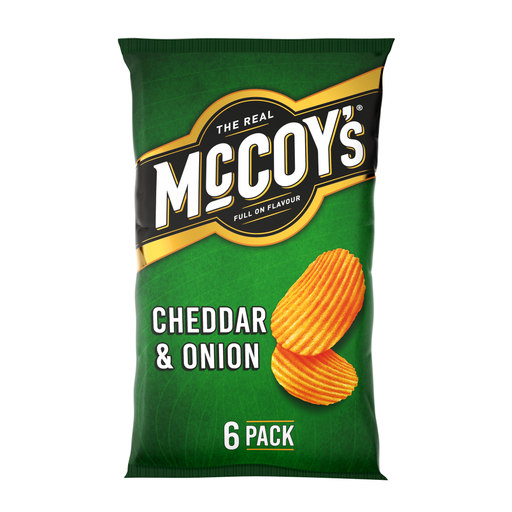
Six individual 25g bags offer a Cheddar & Onion choice within a standard-sized portion plan. Check the exact flavour’s ingredients and allergen statements before including it as a dietary option.
Yes, where you are serving individually packed crisps, keep the bags available for attendees to inspect. University of Reading Hospitality’s delivered-catering guide notes that original packaging already includes ingredient and allergen information; collect dietary requirements and select the options before the event.
No. Gluten-free status does not address every allergen: Seabrook describes its crisps and snacks as gluten-free and Coeliac UK accredited, but its Cream Cheese & Chive crisps contain milk. Check the exact product’s ingredients and precautionary statements against the attendee’s requirements.
Consider a 40g bag when crisps are intended as a more substantial break snack; Tyrrells identifies its 40g Lightly Sea Salted pack as one serving. A 25g bag is a smaller individual portion to consider when other food is being served. Check the pack weight rather than relying on “grab bag” in a listing.
No: a comparison claim does not, by itself, describe the salt content of every product or portion. Walkers says its Lightly Salted crisps have 45% less salt than the average regular potato crisp value and lists 0.17g per 25g pack. Check the stated comparison and the nutrition panel for the exact product you plan to order.