Organisers serving adult delegates
Choose clearly labelled individual cans so delegates can see what they are taking. Put water and caffeine-free soft drinks alongside the energy drinks.


For an adult conference, choose individual cans by the caffeine and sugar in the whole can, not just the flavour or a per-100 ml figure. A smaller standard can can make portions easier to compare, while a sugar-free sparkling option gives attendees another choice; neither should replace water and caffeine-free drinks at the refreshments table.
Choose clearly labelled individual cans so delegates can see what they are taking. Put water and caffeine-free soft drinks alongside the energy drinks.
Keep the sugar-free cans identifiable at the drinks station, and compare their caffeine per whole can with the standard options. Sugar-free does not mean caffeine-free.
Check the venue nation, attendees’ ages and the arrangements for serving or selling drinks. The UK Government announced in July 2026 a planned restriction on sales of qualifying high-caffeine drinks to under-16s in England from April 2027, subject to Parliamentary approval; that announcement does not establish a UK-wide rule.
Set the number of individual servings needed for each break, then compare the exact cans and multipacks you intend to order.
| Priority | What to check | Your needs |
|---|---|---|
| Caffeine per can | Read the caffeine declaration for the full can; if it is given per 100 ml, account for the can’s volume. Compare other caffeinated drinks offered at the event too. | I want delegates to recognise the difference between a 250 ml and a 500 ml serving, rather than treating both cans as equivalent. |
| Sugar-free choice | Check sugar and caffeine separately on each variant’s label. A zero-sugar name does not establish a lower caffeine amount. | A separate sugar-free sparkling can would give attendees a choice beyond a sugared option. |
| Sparkling format | Confirm carbonation for each selected variant, then check its flavour, sweeteners and can size. Do not assume every drink in a brand range has the same formula. | I’m ordering fizzy energy drinks, so the precise variant matters more than a familiar brand name alone. |
| Multipack quantity | Compare the number of cans, volume per can and total volume. Check the final stock position and supplied best-before dates before committing an event order. | The cans need to cover the planned breaks without mistaking a larger pack volume for more individual servings. |
| Attendee information | Keep caffeine warnings and ingredient labels accessible. The Food Standards Agency says food businesses must provide allergen information for prepacked and non-prepacked food and drink. | Delegates should be able to identify what is in each drink, including when a caterer sets up the serving station. |
Monster Ultra Zero Sugar’s product listing declares 30 mg caffeine per 100 ml in a 500 ml format. Its sugar-free name does not answer the whole-can caffeine question.
Record sugar and caffeine as separate checks for every can you order, and keep non-caffeinated refreshments available.
Pack count and can size both affect how many individual drinks an order provides. A volume comparison alone does not tell you how many delegates can each take a can.
Work out the required can count for the expected attendance and break schedule, then check the size and count of each proposed pack.
A product page does not establish that the exact variant and pack will be available for your event. Joybuy’s listing for Lucozade Alert Original 500 ml, for example, describes it as no longer available.
Confirm the final SKU, stock, pack size and supplied best-before date before placing the order. Check any substitute’s own label.
Decanting cans can make their caffeine warnings and ingredient information harder for delegates to identify. The Food Standards Agency’s allergen-information requirements also apply to food businesses serving drinks.
Where practical, serve labelled cans; otherwise, agree with the caterer how current product and allergen information will remain available at the serving point.
These product lines and retail listings provide useful comparison points; a brand’s wider range should not be treated as one recipe or pack format.
A reference point for smaller individual cans.
A range with larger cans and distinct standard and zero-sugar variants.
Its Alert range is described by Lucozade as sparkling and high in caffeine.
A flavoured option for a drinks table with more than one energy-drink variant.
A grocery retailer whose energy-drink listings can be used to identify pack formats.
A grocery retailer listing energy-drink multipacks across different brands.
These Joybuy listings cover individual-can multipacks for a conference drinks table, including smaller and larger cans. Check each final label before treating a variant as sugar-free or using its caffeine figures.
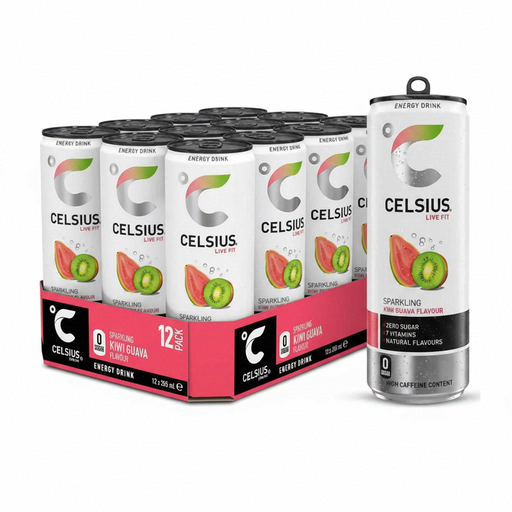 No image available
The 12-can format provides individual 355 ml servings. Check the supplied cans for carbonation, sugar, caffeine and ingredient details before assigning this flavour a place on the drinks table.
 No image available
This listing is for nine 500 ml cans. Its name says Zero Sugar, but the accompanying product information gives a sugar amount for a sugared drink; confirm the exact variant and its current label before choosing it for either a standard or a sugar-free place on the drinks table.
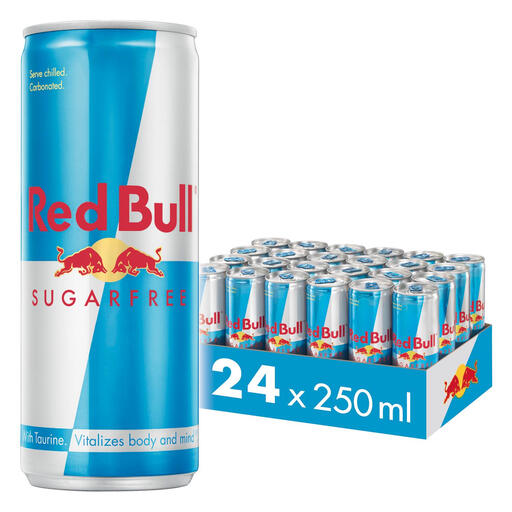 No image available
The 24-pack offers smaller individual cans for a sugar-free choice. Check the caffeine declaration and other label information on the supplied 250 ml variant rather than applying figures for Red Bull Original.
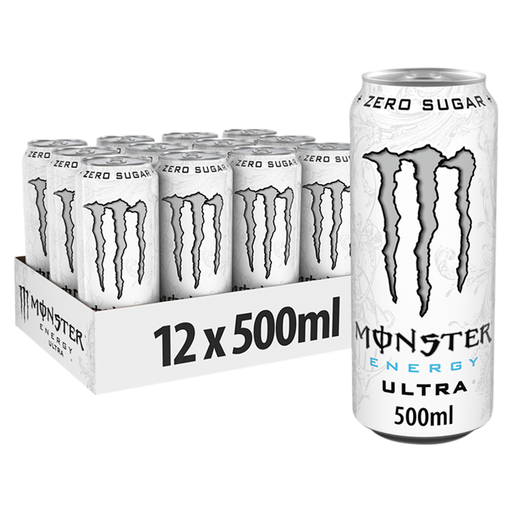 No image available
The 12-pack contains 500 ml cans. Joybuy describes this Ultra White variant as sparkling; check its own sugar and whole-can caffeine declarations when comparing it with smaller cans.
 No image available
The 24-pack provides individual 250 ml cans for a standard energy-drink choice. Check the supplied label before recording an exact sugar figure for this SKU; the product information and Red Bull’s Original product information give different amounts.
No. Offer them as an optional, labelled caffeinated drink alongside water and caffeine-free soft drinks. The European Food Safety Authority’s caffeine assessment concerns intake from all sources and does not address every attendee’s individual circumstances.
Compare caffeine and sugar for the entire can. Red Bull states that its Original 250 ml can contains 80 mg caffeine, while Monster Energy UK states that its Original Green 500 ml can contains 160 mg; those figures refer to those specific variants, not every drink from either brand.
Check the venue nation, whether drinks will be sold or served, and the rules and event arrangements that apply at the time. In July 2026, the UK Government announced a planned restriction on sales of qualifying high-caffeine drinks to under-16s in England from April 2027, subject to Parliamentary approval; the announcement is not a rule for every UK venue.
The Food Standards Agency says food businesses must provide allergen information for prepacked and non-prepacked food and drink. Ask for information covering each final drink variant, and keep the original can labels accessible where practical.