Multi-batch bake-sale organisers
If clafoutis shares the baking schedule with other sale items, usable shelf space, a second cavity and the time between batches all affect your choice.


Choose the oven format around how many clafoutis dishes you need to bake at once: a countertop convection oven can suit occasional baking if the dishes fit, a single built-in fan oven suits successive batches, and a double oven is worth considering when separate cavities would help with parallel cooking. Before ordering, check the fan setting, usable dish space, cabinet fit and electrical connection. Good Food’s mini clafoutis recipe gives 160°C fan and about 25 minutes for six shallow 125 ml dishes, but different dish sizes can change the cooking time.
If clafoutis shares the baking schedule with other sale items, usable shelf space, a second cavity and the time between batches all affect your choice.
A full-size fan oven needs to serve everyday cooking as well as the bake sale, while fitting the existing cabinet and electrical arrangement.
A countertop convection or combi oven may be practical without built-in installation, provided your baking dishes fit inside and you have worktop space for it.
Consider it: For occasional baking when a built-in oven is not an option and the exact model accommodates your dishes.
Allow for: Worktop space and model-specific interior clearance; a convection mode alone does not establish how many dishes will fit.
Consider it: For one main oven that can handle clafoutis and everyday cooking in a compatible cabinet.
Allow for: Successive batches when one cavity cannot accommodate the whole bake-sale load.
Consider it: When separate cavities would let clafoutis and another dish follow different timings or temperatures.
Allow for: Capacity split between cavities and the housing and electrical requirements of the exact model.
| Concern | What to check | Who this matters to |
|---|---|---|
| Batch space and fan baking | Check the fan mode, usable tray dimensions and the exact model’s stated multi-shelf capability. | I need several dishes ready for the sale without assuming they will all fit on one tray. Around 40% of consumers put batch space first. |
| Fit and electrical connection | Compare the cabinet aperture with the installation dimensions; confirm the plug or fixed-wiring requirement and electrical loading. | Replacing my main oven only works if it fits the housing and can be connected safely. For around 30% of consumers, fit and installation come first. |
| Cleaning | Compare the exact model’s cleaning method and the care its manual still requires. | After frequent fruit-and-custard bakes, I want to know what cleanup involves. That is the primary concern for around 20% of consumers. |
| Energy information | Review the energy label and product information sheet for the exact domestic oven model. | I want to compare documented energy information before choosing an oven I will use regularly. Around 10% of consumers prioritise that information. |
Multi-shelf cooking claims apply to particular models; they do not establish the result for your clafoutis dishes and load.
Check the model’s stated shelf capability and test your recipe before preparing the bake-sale batch.
An oven still has to fit its housing and suit the available electrical connection. Electrical Safety First advises qualified installation and notes that ovens differ in whether they use a plug or require hardwiring.
Measure the aperture and check the installation instructions, connection type and electrical loading for the exact model before ordering.
A different connection or housing arrangement can mean electrician work or cabinet alterations.
AEG describes pyrolytic cleaning as leaving ash to wipe away; catalytic cleaning uses a different approach to grease and fat.
Read the exact model’s cleaning instructions, including preparation for a cleaning cycle and any manual care afterwards.
Its cited built-in single ovens illustrate a choice between catalytic and pyrolytic cleaning.
The cited models offer a standard built-in single-oven format and a two-cavity double-oven format.
Its cited built-in ovens are relevant when stated multi-level hot-air cooking is a priority.
The Combi Wave 3 in 1 illustrates a countertop appliance with a convection-oven mode.
These built-in single and double ovens are options for successive baking or cooking in separate cavities. Match any choice to your dishes, cabinet and electrical installation; the countertop route needs its own interior-space check.
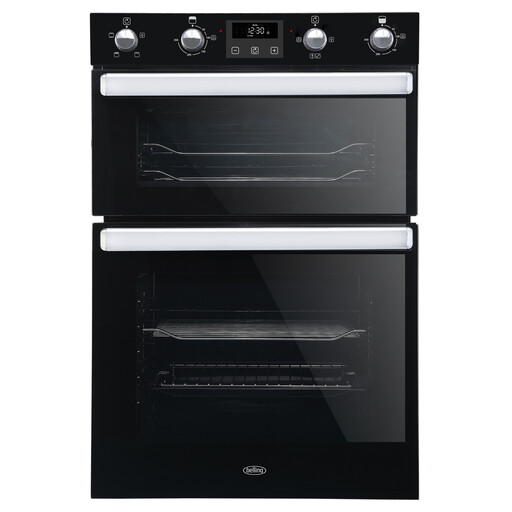 No image available
Consider the two-cavity format if bake-sale preparation overlaps with another dish. Check the cabinet fit, electrical connection and usable dish space before relying on it for parallel baking.
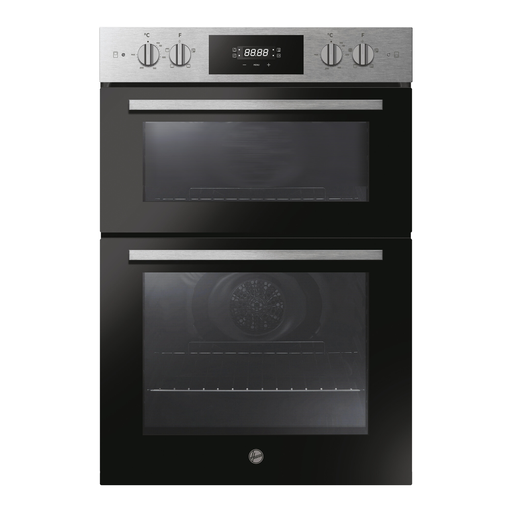 No image available
Its double-oven format may suit dishes with separate cooking schedules. Confirm the fuel type and connection instructions for this exact model before purchase, as the product information conflicts on whether it is electric or dual-fuel; check cabinet and dish dimensions too.
 No image available
A single cavity is an option for successive bake-sale batches. The Joybuy product description gives a 66 L cavity and 3D Hotair; check that your dishes fit, and confirm the connection against Bosch’s instructions because the retailer and Bosch give conflicting plug information.
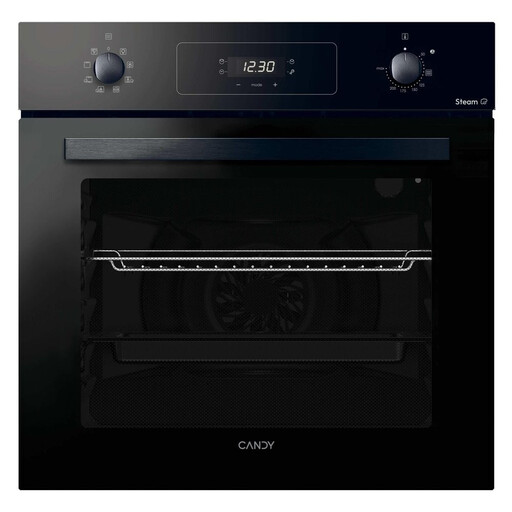 No image available
Consider this single-oven format if you can make clafoutis in successive batches. Confirm the fan-mode instructions, dish clearance, cabinet fit and exact electrical connection before ordering.
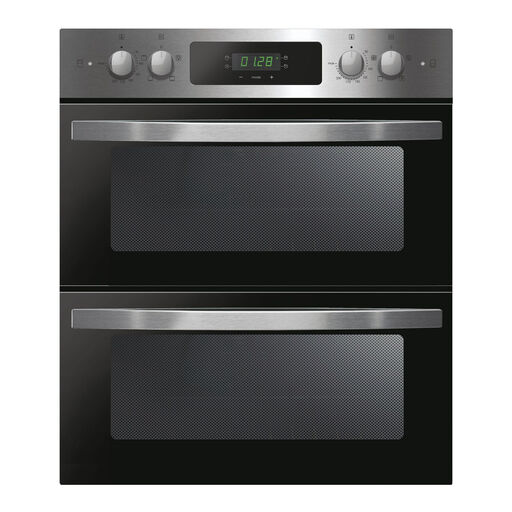 No image available
The built-under, two-cavity format may help when another dish needs separate cooking. Verify the exact cavity and tray dimensions, fan-mode instructions, housing fit and electrical requirements before planning simultaneous batches.
Start with the instructions for your recipe. Good Food’s mini cherry clafoutis recipe specifies 160°C fan for six shallow 125 ml dishes on a baking sheet, baking for about 25 minutes until golden; it also allows the same amount of blackberries in place of cherries. A different dish size can change the cooking time.
A double oven helps when you will actually use separate cavities for different dishes, timings or temperatures. Check each cavity’s usable dimensions rather than treating combined capacity as space for one large tray, and make sure the model fits its housing.
The connection depends on the exact oven. Electrical Safety First advises having an oven fitted by a qualified electrician and notes that some use a standard plug while others require hardwiring; check the model instructions and your existing installation before ordering.
Compare the energy label and product information sheet for the exact domestic oven. GOV.UK states that domestic ovens are within the scope of UK energy-information rules and that in-scope products require those documents, with the label displayed at the point of sale, including online.
No: marking does not tell you whether an oven fits your cabinet, electrical arrangement or baking dishes. GOV.UK explains that, for Great Britain, UKCA and CE markings indicate the manufacturer’s belief that relevant product requirements are met; the applicable process can differ in Northern Ireland.