What matters when choosing?
Plan a loaded tray of your actual pastry twists before comparing oven sizes. Then decide whether the number of bake cycles, the available space or the demands of regular service justify moving beyond a domestic or compact unit.
Compact plug-in convection oven
Consider it when: Buffet batches are small and counter space is restricted. Lincat specifies a 13A plug for its compact Lynx LCOS.
Trade-off: Its four half-GN positions may mean more bake cycles than a larger bakery-tray oven; check how your twists fit those trays.
Commercial multi-tray bakery oven
Consider it when: Regular buffet service calls for repeated batches on compatible bakery trays. UNOX lists BAKERLUX SHOP.Pro countertop options in multiple 600 × 400 mm tray capacities.
Trade-off: A larger oven needs more room, and its exact electrical connection and tray provision must be checked before installation.
| Concern |
Buying checks |
Who this matters to |
| Batch capacity |
Check tray dimensions, usable shelf spacing and how many twists fit on a loaded tray; confirm whether trays are supplied. |
If I need to replenish a buffet, I want enough twists ready without running a succession of small bakes. Around 33% of consumers put batch throughput first. |
| Repeatable baking |
Check the exact model’s fan controls, temperature range and timing options; test a loaded tray with your pastry. |
When I make several batches, I want a process I can repeat rather than assuming one setting suits every filling and tray load. Roughly 27% of consumers prioritise consistent results. |
| Space and electricity |
Measure the appliance and door-opening space; confirm its plug or hardwiring requirements and the suitability of the circuit. |
A restricted preparation area or electrical supply may determine which oven I can install safely. About 20% of consumers place space and power fit first. |
| Commercial operation |
If the buffet is part of a food business, check the applicable registration requirements, food-safety process and kitchen ventilation. |
For regular public-facing service, I need the oven to fit the wider preparation and service operation, not just the baking schedule. Approximately 20% of consumers make operational readiness their primary concern. |
Brands to consider
These ranges illustrate different commercial oven formats; compare specifications for the exact model rather than assuming a feature applies across a brand.
UNOX
UNOX’s BAKERLUX SHOP.Pro countertop bakery range includes 600 × 400 mm and 460 × 330 mm tray formats.
- UNOX lists three-, four-, six- and ten-tray options, giving regular pastry operators several batch-size choices.
- Check the exact variant’s tray format, plug and supply; UK connection details and other features differ between models.
Lincat
Lincat offers the compact plug-in Lynx LCOS alongside larger Convector catering ovens.
- Lincat specifies four half-GN positions, 2.5 kW and a 13A plug for the Lynx LCOS; selected Convector models offer additional fan and programme controls.
- The larger models have different dimensions and electrical ratings, so the LCOS installation details cannot be applied to them.
Buffalo
Buffalo lists convection ovens in several cavity sizes and GN formats, including humidity-capable models.
- Its range includes 4 × GN 1/1 and 5 × GN 1/1 options for kitchens planning around GN pans.
- Confirm the selected model’s trays, electrical requirements and pastry layout; GN capacity alone does not establish bakery-tray compatibility.
MONO Equipment
MONO Equipment presents bakery-oriented convection ovens in four-, five-, seven- and ten-tray sizes.
- MONO says some models offer variable fan speed and connectivity, which may be useful when setting up a repeated production routine.
- Check which features, tray format, electrical supply and service arrangements apply to the chosen model.
Joybuy options for home buffets
These domestic built-in ovens and a freestanding cooker are options for preparing occasional buffet batches at home. Compare their installation format with your kitchen, then check the usable tray layout against the number of pastry twists you intend to bake; they are not substitutes for a commercial multi-tray production setup.
 No image available
Bosch Series 4 MBA533BB3B Electric Double Oven
Consider this domestic double-oven format for an occasional home buffet if it suits your kitchen and planned pastry batches.
Check the usable tray dimensions and loaded layout before relying on it for a particular number of twists. Confirm the housing, clearances and electrical installation with a qualified professional.
Joybuy
 No image available
Bosch Series 2 HHF113BA0B Built-in Single Electric Oven
This built-in single-oven format is worth considering for a home buffet when one oven cavity meets your planned batch size.
Check runner and tray dimensions against your twists, and confirm that the intended installation and electrical circuit are suitable.
Joybuy
 No image available
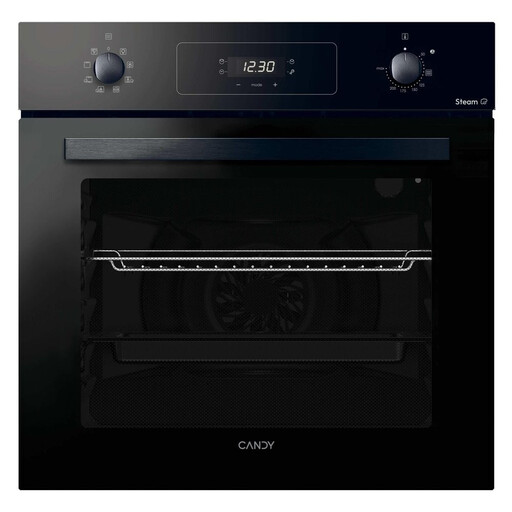
Candy FIDCN605 65L Built-in Single Electric Oven
For an occasional home buffet, consider this 65L built-in oven only after checking how your pastry trays fit.
Confirm the exact electrical connection and installation requirements before ordering; do not assume it can simply be plugged into an existing socket.
Joybuy
 No image available
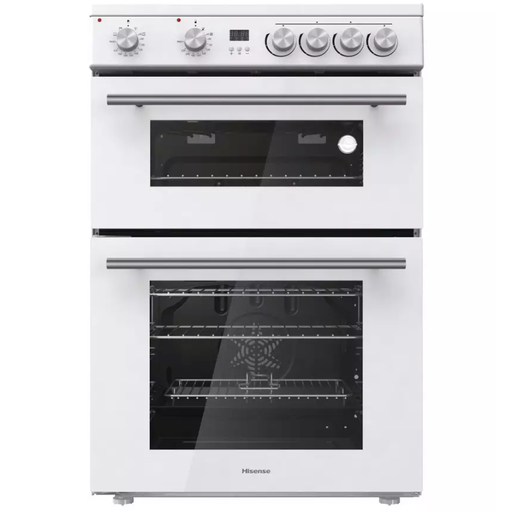
Hisense HDE3211BWUK 60cm Electric Cooker with Double Oven and Ceramic Hob
This freestanding cooker may suit a home buffet if a double-oven layout fits your cooking plans and kitchen space.
Check the usable pastry-tray layout and allow for the cooker’s 60cm format. Confirm the site’s electrical provision and installation suitability with a qualified professional.
Joybuy
Frequently asked questions
Do I need a commercial convection oven for buffet pastry twists?
Not for every buffet: a suitably sized domestic oven or compact plug-in convection oven may meet a small or occasional batch requirement. Consider a commercial multi-tray model when repeated larger runs and compatible trays matter, and compare loaded-tray capacity rather than the oven’s category name alone.
Which tray format should I choose for pastry twists?
Choose a tray format that fits both your twists and the oven’s actual runners. The options discussed here include 600 × 400 mm bakery trays, GN 1/1 trays and half-GN trays; do not assume that their layouts or fittings are interchangeable.
Does a food business need to register before serving buffet food?
For a food business in England, Wales or Northern Ireland, GOV.UK says registration is required at least 28 days before trading. A private buffet should not automatically be treated as a food business; establish the nature and location of the operation before applying that requirement.
What food-safety planning matters beyond the oven?
A commercial buffet operation needs to assess its preparation and service process, not just its baking equipment. The Food Standards Agency’s MyHACCP tool guides food businesses in developing a food-safety management system based on HACCP principles; consider the relevant storage, cooking, cooling and service steps in your own operation.
Can any convection oven use a normal UK socket?
No: check the connection requirements of the exact model before purchase. Electrical Safety First advises reviewing power requirements to avoid overloading wiring and notes that some ovens require hardwiring into a dedicated circuit; obtain qualified electrical advice if the proposed installation is uncertain.


