Weekly batch-cookers
You roast a large chicken traybake or several portions regularly. Tray clearance, accessible shelves and the cooking guidance for your intended number of trays matter more than the oven's litre figure alone.


For a regular chicken traybake, start with a built-in fan oven that fits your roasting tray, kitchen housing and electrical supply. A double oven becomes more useful when another dish regularly needs its own temperature or cooking mode; whichever format you choose, check the exact model's shelf guidance rather than assuming every fan setting cooks several trays alike.
You roast a large chicken traybake or several portions regularly. Tray clearance, accessible shelves and the cooking guidance for your intended number of trays matter more than the oven's litre figure alone.
You want a traybake cooking while another dish needs a different setting. Separate oven cavities are worth considering if both dishes need to be cooked at the same time.
You roast often enough that grease splatter, handling trays and checking when the chicken is cooked all affect which oven features you will use.
Decide whether you need one cooking cavity or two, then check tray fit, installation requirements and the functions you would use for repeated roasts. A smaller convection appliance is another option to assess, but measure it against your actual tray and batch size rather than assuming it replaces a built-in oven.
Consider it when: One chicken traybake is usually the main cooking task and a separate temperature for another dish is rarely needed.
Trade-off: A single cavity cannot cook a second dish independently at another temperature; multi-level guidance also differs by model and mode.
Consider it when: You regularly need the chicken traybake and a second dish cooking under separate controls.
Trade-off: Check the taller housing and electrical requirements, and measure the main cavity: a second oven does not establish that your roasting tray will fit.
| Concern | What to check | Who this matters to |
|---|---|---|
| Tray space and hot-air cooking | Measure your roasting tray against the usable cavity and shelf clearance. Check the stated cooking mode and guidance for the number of trays you plan to use. | If I prepare several portions at once, I need the tray to fit comfortably and want to know how the oven handles the shelves I use. Around 36% of consumers put usable tray space and cooking across those shelves first. |
| Kitchen fit and electrical connection | Compare the installation drawing with your housing, then check the model's electrical loading and connection instructions. | When replacing an integrated oven, I cannot choose a model until I know it can be fitted and connected in my kitchen. Roughly 29% of consumers make installation compatibility their primary concern. |
| Cleaning after roasting | Identify the exact cleaning system and read its cycle, accessory and maintenance instructions. | With frequent chicken roasts, I want a cleaning routine I am willing to carry out after grease splatters. About 21% of consumers place that ongoing workload first. |
| Roast checks | Check the cooking-mode instructions and whether a food probe is included if you want one; check the chicken is cooked through before serving. | If I repeat the same roast for batch meals, I need a dependable way to monitor it rather than relying on a fan setting alone. Around 14% of consumers prioritise roast monitoring and food-safety checks. |
A cavity volume does not tell you whether your roasting tray clears the door, fits a usable shelf or leaves the space required by the cooking instructions.
Measure the tray and kitchen housing, then compare both with the exact oven's technical and installation drawings.
Multi-level cooking claims depend on the model and function; instructions for a particular mode may still call for trays to be swapped during cooking.
Check the shelf guidance for the mode you intend to use, and monitor cooking across the trays on your first batch.
Built-in ovens differ in loading and connection requirements. Electrical Safety First advises checking an oven's power requirements before choosing it.
Read the exact installation manual and arrange a qualified electrician where connection work is required.
The installation may also involve arranging connection work or changes to the kitchen housing.
Steam-assisted, catalytic and pyrolytic cleaning involve different routines and care instructions, which matter when roasting leaves frequent splatter.
Choose a routine you are prepared to follow and check the exact model's manual for cycle preparation and accessory care.
Bosch has built-in single and double ovens relevant to cooks considering multi-level hot-air cooking.
NEFF's built-in range includes CircoTherm models for buyers interested in using several shelf levels.
AEG's built-in single and double ovens offer options to consider when separate cavities or cleaning features matter.
Hotpoint's built-in fan-oven range includes models with airflow, automatic-programme and cleaning features.
These built-in single and double ovens offer choices for a main chicken traybake or for cooking another dish separately. Compare your tray and kitchen installation requirements with the exact model before ordering.
 No image available
Consider the double-oven format if you want to roast a traybake while cooking another dish separately.
Check the housing and electrical connection requirements, and measure your roasting tray against the usable main-cavity space.
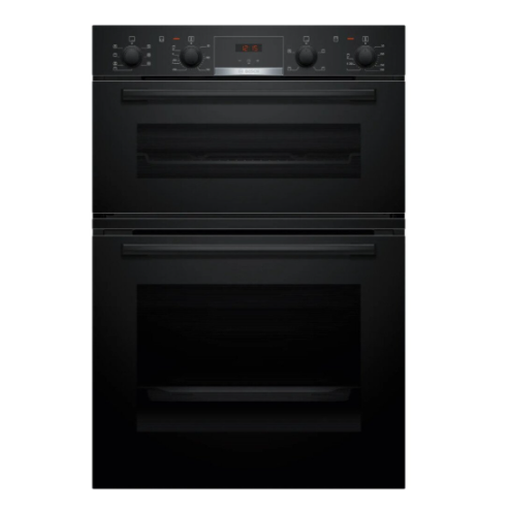 No image available
Consider this model when separate cooking cavities and multi-level cooking in the main oven both matter.
Bosch states that the MBA533BB3B's 3D Hotair supports cooking on up to three levels. Check your tray's clearance, the eye-level housing and the electrical installation requirements.
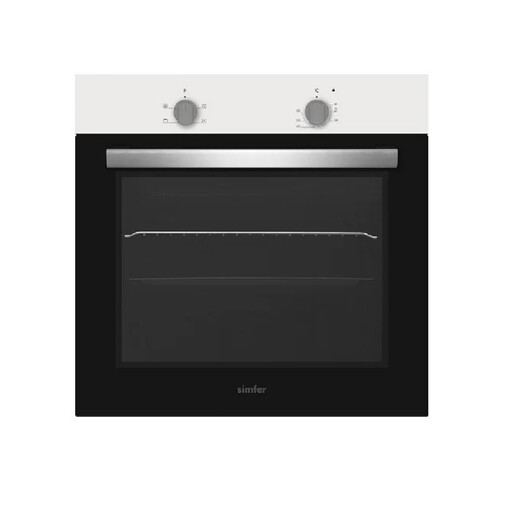 No image available
A single-oven option to consider when one chicken traybake is your main batch-cooking task.
Check the cabinet cut-out, electrical connection and internal tray clearance. If you intend to cook on several shelves at once, consult the model's cooking-mode guidance.
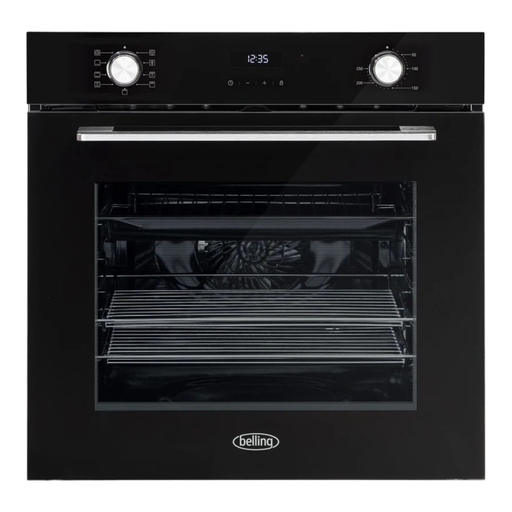 No image available
This single-oven format suits cooks planning a main traybake without a separately controlled second cavity.
Confirm that your tray fits, and check the electrical connection and shelf guidance for the cooking mode you would use.
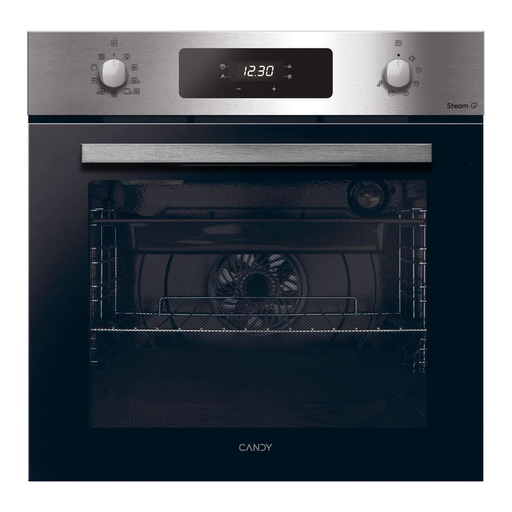 No image available
Consider this single-oven option if the cleaning routine after frequent roasts is a priority.
Follow the model's instructions for preparing a pyrolytic cycle, including removing shelves and trays and providing ventilation. Check electrical requirements and tray clearance before purchase.
A single built-in fan oven is a practical starting point when one large traybake is your main task. Consider a double oven if another dish regularly needs its own temperature or mode, and check the main cavity, housing and electrical requirements before choosing.
Not necessarily: the usable number of levels depends on the exact oven and cooking mode. Bosch and NEFF state up to three levels for the cited 3D Hotair and CircoTherm models, while Hotpoint's cited Convection Bake guidance limits that mode to two shelves and advises swapping trays halfway through.
Check the thickest portions before serving rather than relying on the oven's fan setting or programme alone. Follow the recipe and appliance instructions, keep raw chicken from contaminating cooked food, and check that the chicken is steaming hot and cooked all the way through, with no pink meat or pink or red juices.
Check the connection instructions for the exact model: some built-in ovens are specified for electrician connection rather than a plug. Electrical Safety First advises reviewing power requirements before purchase and using a qualified electrician for fitting work.
Check the exact model's installation drawing, connection instructions, cooking guidance and product information, including its energy label. GOV.UK publishes designated standards relating to ecodesign and energy labelling for domestic ovens; the model's own documents are what you need to assess its fit and stated requirements.