Small-batch lunchbox bakers
You make one small tart or a few portions and want a level baking surface without using a full-size oven. Your tin still has to fit the usable cavity and rack.


Choose an oven-style appliance with a level tray or rack and enough usable space for your tart tin if custard tarts are the main job. A compact mini oven may suit one small bake; a larger countertop oven offers a different balance of cavity space and worktop footprint, while a convection microwave makes more sense if you will also use its other cooking modes. Check tin clearance and suitable cookware before choosing by litre capacity alone.
You make one small tart or a few portions and want a level baking surface without using a full-size oven. Your tin still has to fit the usable cavity and rack.
You need a countertop appliance, but a compact exterior is useful only if there is also room to insert, bake and remove your tart level.
You want baking alongside reheating or grilling and are prepared to check which tin and accessories can be used in each cooking mode.
Consider it when: One small tart is the usual bake and a dedicated Bake setting matters more than extra cooking functions.
Trade-off: A compact cavity limits your choice of tin; Russell Hobbs lists its Express Mini Oven at 12.6L, which does not establish usable tin clearance.
Consider it when: You want an oven-style tray and rack for several portions and can accommodate a larger appliance.
Trade-off: It takes more worktop space. Russell Hobbs lists a 30L cavity for its Mini Kitchen, but capacity alone cannot confirm your tin will fit.
Consider it when: You will regularly use microwave reheating as well as convection baking; combination models described by Sage and listed by Joybuy illustrate this route.
Trade-off: Cookware and accessories may depend on the selected mode, so confirm what supports an oven-safe tart tin during convection baking.
| Concern | What to check | Who this matters to |
|---|---|---|
| Level baking and tin fit | Compare your tin’s outside dimensions with usable rack width and door clearance; check for a suitable Bake or convection mode. | If I am baking custard in a tart tin, I need it to sit level with room to move it in and out safely. Around 33% of consumers put reliable tart baking and tin fit first. |
| Worktop space | Check the appliance’s external size and required ventilation space as well as its usable cavity measurements. | When my worktop is crowded, I need an appliance I can place and use without sacrificing space for the tin. Roughly 27% of consumers prioritise this balance of footprint and usable room. |
| Cooking functions | Confirm there is a convection baking mode and that your tin and chosen support are approved for it. | I want to reheat food and bake with one appliance, but I cannot assume microwave cookware rules apply to convection mode. About 20% of consumers put multi-function convenience first. |
| Lunchbox handling | Plan cooling and chilled storage; check whether you will need a cool bag and ice pack for the journey. | If I make the tart the night before, I need to keep it cool until it is eaten, not just finish the baking. Around 20% of consumers make lunchbox handling their primary concern. |
A 12.6L, 23L or 30L label describes capacity, not usable rack width, door clearance or whether your tart tin sits level.
Measure the outside of the tin, including any handles, and compare it with the appliance’s internal and rack dimensions before ordering.
Russell Hobbs’ stated comparisons for its Express Mini Oven concern particular tasks, including preheating, frozen pizza and toast. They do not establish how a custard tart will bake.
Choose a suitable baking mode and level tin support, then follow your recipe’s temperature and doneness guidance.
Norfolk and Norwich University Hospitals NHS Foundation Trust advises keeping packed lunches cool, including with a cool bag and ice pack, and refrigerating food prepared the night before.
Allow the tart to cool before packing, follow your recipe’s storage instructions and arrange chilled transport where needed.
A product photo alone may not tell you which market version, plug or instructions you would receive.
Check the stated product version, plug compatibility, safety information and instructions before buying for use in Great Britain.
Countertop oven options range from the 12.6L Express Mini Oven 26090 to the 30L Mini Kitchen 22780.
A combination-appliance route for households interested in convection baking alongside other cooking modes.
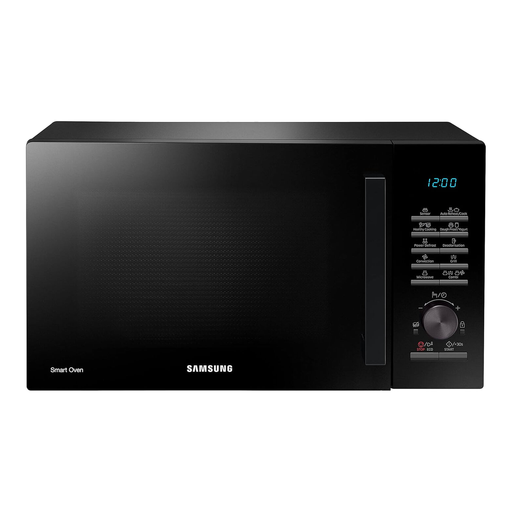
The Joybuy-listed MW3-SAC23SF (MB) represents a 23L combination-microwave option.
This combination microwave is relevant if you want a convection baking mode alongside microwave use. For lunchbox custard tarts, confirm that your tin fits and has suitable level support in convection mode.
 No image available
For consumers considering convection baking and microwave cooking in one appliance; measure your tart tin and confirm it can sit level on a support approved for convection mode.
The product name states a 28L capacity, 900W power and a Smart Moisture Sensor. Check the convection temperature settings, supplied accessories and GB-use information before ordering.
It may be usable if the appliance has an appropriate baking setting and your oven-safe tin sits level on an approved support with enough clearance. Do not assume that a basket and an oven-style rack accommodate the same tin.
Choose by your tin’s outside dimensions and the oven’s usable cavity and rack measurements, not litres alone. The 12.6L Russell Hobbs mini oven, 23L Toshiba combination model and 30L Russell Hobbs Mini Kitchen illustrate different formats, but their stated capacities do not establish fit for your tin.
Yes, if you plan its cooling and storage as well as the baking. Norfolk and Norwich University Hospitals NHS Foundation Trust advises refrigerating food prepared the night before and keeping the packed lunch cool with a cool bag and ice pack; also follow your recipe’s storage instructions.
Check that the listing identifies a suitable product version and provides clear plug, electrical and safety information and instructions. The Office for Product Safety and Standards sets out requirements for electrical equipment placed on the Great Britain market under the Electrical Equipment (Safety) Regulations 2016; a listing photo is not a substitute for checking the product details.
Check the full recipe and ingredient labels for anyone with an allergy, as well as any lunchbox rules that apply. The Food Standards Agency identifies milk as an allergen; milk, cream and butter may be relevant ingredients, and your particular recipe may contain other allergens.