Multi-tray home buffet host
If one small tray at a time would delay serving, look for rack levels that can be used together on the chosen baking setting. Check the usable tray dimensions and leave enough worktop room for the appliance.


Choose a two-level countertop convection oven if baking trays in parallel is the priority and you have room for the appliance. A combination oven makes more sense when you also need microwave or grill functions, provided your intended tray fits. For a food-business buffet, plan hot holding separately from baking.
If one small tray at a time would delay serving, look for rack levels that can be used together on the chosen baking setting. Check the usable tray dimensions and leave enough worktop room for the appliance.
A combination oven can bring convection baking, microwave and grill functions into one appliance. Match the cavity and accessories to your actual tray rather than treating the litre capacity as a measure of baking area.
Choose the baking equipment as part of a wider preparation and service plan. Food Standards Agency guidance treats hot holding as a separate stage that needs suitable equipment when food is displayed hot by a caterer.
Start with the tray and number of batches your serving plan allows, then decide whether worktop space or additional cooking functions change the format you need. If the buffet is run by a food business, plan the hot-service stage as well.
| Concern | What to check | Who this matters to |
|---|---|---|
| Batch capacity | Measure the intended tray and check which rack levels may be used together on the selected convection setting. | If I need to serve a larger buffet without baking one small tray after another, usable tray space is my main concern. Roughly 36% of consumers put batch capacity first. |
| Slice texture | Check the convection instructions and allow for arranging slices in a single layer rather than crowding the tray. | When browned edges matter most to me, I would rather allow room around the slices, even if that means another batch. Around 29% of consumers prioritise slice texture. |
| Space and functions | Check the appliance footprint, usable cavity and whether it provides the other cooking modes you want. | I have limited worktop room and want the appliance to handle other everyday cooking tasks after the buffet. About 21% of consumers place space and multiple functions first. |
| Hot service | For a food business, plan suitable hot-holding equipment and a way to monitor food during display. | If I am serving the buffet as a food business, the baking oven must fit into a separate hot-holding plan. Roughly 14% of consumers make that service requirement their primary concern. |
A capacity figure does not tell you whether your rectangular tray fits or how many slices can sit in one layer. Rack layouts also differ between combination ovens.
Measure your tray, then check the internal dimensions, supplied accessories and permitted shelf positions for the baking mode you intend to use.
For a food-business buffet, finishing the cooking cycle does not by itself provide a hot-holding setup. Food Standards Agency caterer guidance says displayed hot food should be kept at 63°C or above, subject to its exceptions, using suitable hot-holding equipment.
Plan how food will move from baking to display, how it will be monitored and how smaller quantities will be replenished.
Separate holding equipment takes up space and adds a monitoring task during service.
Preparing food for sale or service as a business brings requirements beyond choosing a domestic baking appliance. The Food Standards Agency directs food businesses to register with their local authority.
If the buffet is commercial, check the applicable food-safety requirements and arrange registration before operations begin. For a private gathering, plan batches, handling and serving without assuming that business-specific requirements apply.
Ninja’s DT200UK illustrates the larger two-level countertop-oven format for hosts considering parallel baking trays.
The NN-CF87LBBPQ illustrates a flatbed combination format with convection and two-level cooking.
The MW3-SAC23SF(MB) is a smaller combination-appliance reference for repeated buffet batches and everyday multi-function use.
These choices include a fitted double oven for kitchens considering a larger installation and combination appliances for smaller batches. Check each model’s tray fit and permitted convection arrangement against your buffet plan.
 No image available
Consider this fitted format if your kitchen can accommodate an eye-level double oven rather than a countertop appliance. It requires qualified hard-wired installation; check the housing dimensions, tray fit and permitted hot-air arrangement before choosing it for buffet baking.
 No image available
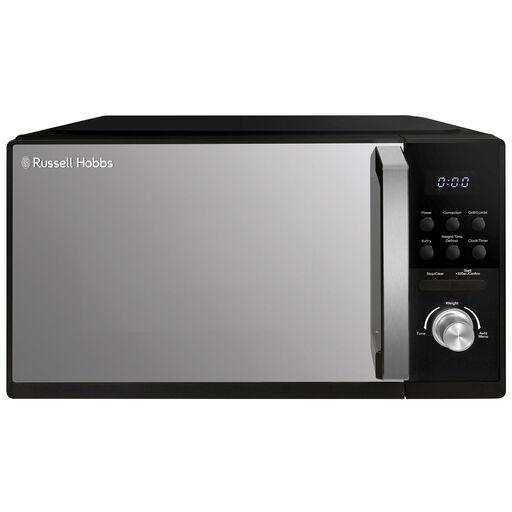
Consider this countertop combination format if smaller batches and other cooking modes suit your kitchen. Before planning the buffet around it, check the usable tray dimensions and whether its racks may be used together for convection baking.
 No image available
This combination format is worth considering when convection baking and microwave use both matter. The product title states 900W; check which function that rating describes, whether your baking tray fits and whether the convection instructions allow more than one level.
 No image available
This model suits consideration when repeated smaller batches are practical and you also want microwave and grill modes. Joybuy lists a 23L cavity and convection mode; check the internal dimensions and accessories before deciding whether your aubergine tray will fit.
It can work for a smaller buffet or for batches baked in sequence, but 23L does not establish how many slices fit in one layer. Check the cavity, supplied tray or rack, permitted convection arrangement and time available before serving.
Do not assume a cooking oven provides suitable hot holding. Food Standards Agency caterer guidance says displayed hot food should be kept at 63°C or above, subject to exceptions, using suitable hot-holding equipment; check the intended equipment and service process separately from the baking setting.
The Food Safety and Hygiene (England) Regulations 2013 set hot-holding requirements for food businesses. Food Standards Agency caterer guidance gives 63°C or above for hot food, subject to exceptions. This is not automatically a rule for a private home buffet; a business operating elsewhere in the UK should check the rules applicable in its nation.
If you are starting a food business from home, the Food Standards Agency says to register with your local authority at least 28 days before trading or food operations begin. Hosting a private, non-commercial buffet does not by itself make it a food business.