Pastry bakers focused on consistency
If you bake turnovers often, you may want a true-fan setting, suitable temperature controls and a way to watch browning without repeatedly opening the door.


For a tray of fruit turnovers, choose an oven with a documented true-fan mode and temperature controls that suit your recipe. If you regularly bake several trays, look for multi-level guidance for the exact model rather than assuming every fan oven cooks alike across shelves. Check cabinet fit and the electrical or gas connection before buying a built-in model.
If you bake turnovers often, you may want a true-fan setting, suitable temperature controls and a way to watch browning without repeatedly opening the door.
If you make several trays in a session, look for documented multi-level cooking guidance and enough room for your usual trays.
If you are fitting or replacing a built-in oven, cabinet dimensions, ventilation instructions and the required connection may determine which models suit your kitchen.
Check the cooking mode against your turnover recipe, then decide whether you need more than one tray at a time. For a built-in oven, confirm installation requirements before weighing up optional features.
| Concern | What to check | Who this matters to |
|---|---|---|
| Consistent baking | Confirm the exact fan mode and check that the temperature controls suit your recipe. | When I bake a tray of turnovers, I want to watch the pastry brown and use the recipe's fan setting without repeatedly opening the door; around 42% of consumers put consistent baking first. |
| Batch capacity | Check documented cooking levels and whether your trays fit with the required shelf spacing. | Making turnovers for a gathering means I want several trays in one session, provided the oven supports that arrangement; for around 33% of consumers, batch capacity is the main concern. |
| Fit and running costs | Compare the cut-out dimensions and connection requirements, then consider the energy label alongside oven size. | When replacing a built-in oven, I need it to fit my cabinet and suit the available connection before its cooking features matter; roughly 25% of consumers prioritise installation fit and running costs. |
Which? describes a true-fan mode as using a heating element around the fan. A fan-assisted label alone does not establish that arrangement, and multi-level guidance varies by model.
Check the exact mode in the product manual. For batch baking, follow its shelf guidance and watch the first batch to see how your recipe behaves.
Cabinet cut-outs and electrical connections vary by model; a gas oven also needs a suitable gas supply and installation arrangement.
Compare the appliance and cut-out dimensions with your kitchen, read the installation instructions and discuss the connection with a qualified installer before ordering.
A cabinet or connection that needs changing can add installation work before the oven can be used.
An added-steam function is not a substitute for checking whether your pastry recipe calls for dry fan heat.
Consider steam as an extra for recipes that call for it; for turnovers, start with the recipe's cooking instructions and the oven's fan settings.
Energy Saving Trust notes that larger appliances can use more energy even when they have the same rating.
Compare energy information for ovens of the same type, and check that the capacity you choose accommodates your usual tray and batch size.
Relevant if you are comparing built-in 3D Hotair models or considering an added-steam function.
Relevant if you regularly bake batches and want to compare CircoTherm models.
Relevant if you are comparing True Fan Cooking or a built-in double-oven format.
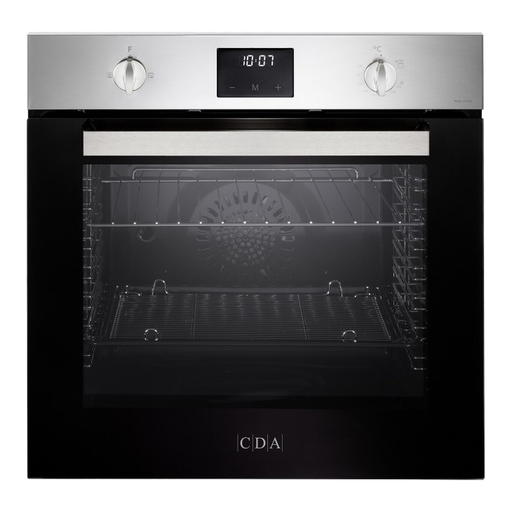
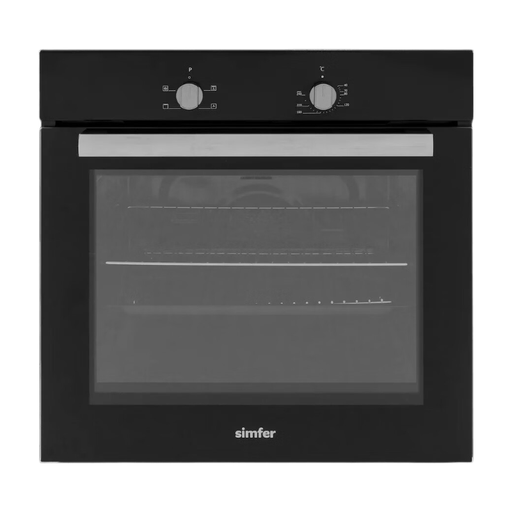
These built-in single fan ovens are choices for shoppers considering one oven for fruit turnovers. The CDA model is gas and the Simfer model is electric, so check which fuel and installation arrangement suits your kitchen before comparing baking features.
 No image available
A built-in gas fan oven to consider if your kitchen has a suitable gas supply. The product name states a 70 L capacity and an A energy rating.
Confirm the gas and installation requirements, and check the model's shelf guidance before planning to bake several trays at once.
 No image available
A built-in electric fan oven to consider for turnover baking where an electric connection suits the kitchen.
Check the installation instructions for the cabinet cut-out and connection, and consult the model's shelf guidance if you intend to bake several trays together.
Use the recipe's fan-oven temperature if it gives one, and check the oven manual. AEG says applicable SurroundCook ovens can use a 20°C reduction, while Which? provides a fan-oven conversion guide; neither makes one adjustment right for every recipe and oven.
You can plan to do so when the exact oven documents multi-level hot-air cooking and your trays have the required clearance. Bosch and Neff list cooking on up to three levels for specified 3D Hotair and CircoTherm models; follow the model's shelf instructions and watch your first batch.
No; the connection depends on the model. Bosch lists a GB plug for the HHF113BR0B but no plug and an electrician connection for the HQA534BB3B. Check the specification and installation instructions for the oven you choose; Electrical Safety First advises having an oven fitted by a qualified electrician.
Compare energy information for ovens of the same type and consider their size alongside the rating. Energy Saving Trust notes that a larger appliance can use more energy even when it shares a rating with a smaller one, so check that the oven fits your normal baking load.