Regular lunchbox bakers
If you often bake loaf cakes or traybakes, even browning and dependable timing may matter more than extra cooking programmes. Which? identifies even heat distribution as important for consistent baking results.


For regular lunchbox baking, a built-in single fan oven is a practical choice if it fits your kitchen and electrical arrangement; check exact-model heat-distribution evidence and whether your loaf tin fits inside. Consider a double oven when you regularly need separate cooking temperatures, or a countertop convection model only after confirming its baking mode and usable cavity space.
If you often bake loaf cakes or traybakes, even browning and dependable timing may matter more than extra cooking programmes. Which? identifies even heat distribution as important for consistent baking results.
If the oven must fit existing cabinetry, check the model’s installation dimensions and electrical requirements before comparing baking functions. Electrical Safety First advises checking power requirements before purchase.
If a fitted oven is unsuitable, a countertop convection-combination appliance may be worth considering. Confirm its convection baking instructions and the space available around your actual loaf tin; litre capacity alone cannot establish the fit.
Consider it when: One cavity suits your usual baking and meals, and the oven fits the available housing.
Trade-off: A single cavity cannot cook two dishes at different temperatures at the same time.
Consider it when: You regularly need a cake and another dish cooking separately at different temperatures.
Trade-off: It needs suitable cabinet space; check which cavity provides fan baking and the model’s electrical requirements.
Consider it when: A built-in replacement is unsuitable and the model’s instructions confirm a convection baking mode.
Trade-off: Its stated litre capacity does not show whether your loaf tin has enough clearance for baking.
| Concern | What to check | Who this matters to |
|---|---|---|
| Even baking | Exact-model evidence on heat distribution where available; fan mode and timer controls. | If I bake a loaf regularly, I want its centre and edges to cook consistently rather than relying on a fan label alone. Around 46% of consumers put even baking first. |
| Fit and installation | Cabinet cut-out and appliance dimensions, loaf-tin clearance, and the specified electrical connection. | When replacing a fitted oven, I need it to work with my cabinet and electrical arrangement as well as hold my tin. Fit and installation come first for around 27% of consumers. |
| Cleaning | The exact model’s cleaning method and its care instructions. | After frequent baking, I would rather have a cleaning routine I can manage than an extra cooking programme. Around 18% of consumers make cleaning convenience their primary concern. |
| Energy use and functions | The model’s energy information and whether its functions suit your normal cooking. | If I use the oven for more than cakes, I want functions I will use and energy information I can compare. For around 9% of consumers, that is the leading consideration. |
Which? identifies heat distribution as important to consistent cake results. A manufacturer’s fan-system description does not, by itself, establish how an exact model performs.
Look for independent heat-distribution and temperature-control results for the model where available, then use your recipe’s instructions when baking.
Uneven results can mean wasted ingredients and another bake.
Built-in ovens have model-specific installation dimensions and electrical requirements. Electrical Safety First advises checking power requirements before purchase.
Measure the housing and your loaf tin, read the installation instructions, and ask a qualified electrician to assess any uncertain electrical arrangement.
Electrical Safety First warns that high-power cooking appliances can overload extension leads. Scorch marks, blown fuses and tripping breakers are warning signs.
Follow the model’s connection instructions. If those warning signs appear, stop using the appliance and seek qualified help.
A stated capacity does not tell you the usable rack dimensions or the clearance around a loaf tin.
Compare the manufacturer’s cavity and rack measurements with your tin, and check its convection baking instructions before choosing it for cake baking.
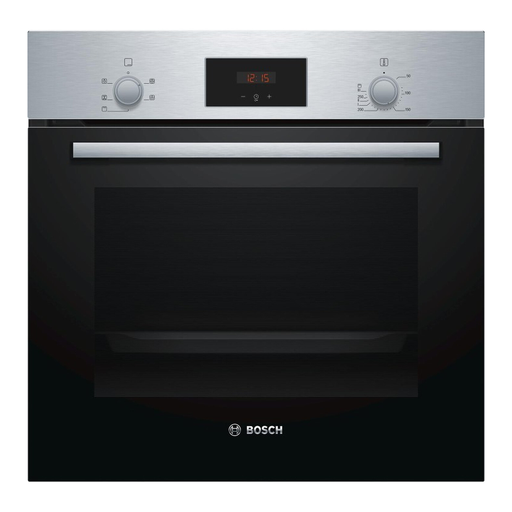
The HHF113BR0B is a built-in single oven for buyers considering Bosch’s 3D Hotair feature.
The OU5AB20CK is a built-in option to consider if true fan cooking, an electronic timer and a named cleaning feature matter to you.
The BBIF12311 is a built-in single fan oven with Beko’s AeroPerfect airflow feature and SimplySteam cleaning.
These built-in single ovens are options for kitchens where one oven cavity suits the usual baking routine. Compare each model’s cooking mode, loaf-tin clearance and installation instructions before deciding; the list does not cover double or countertop ovens.
 No image available
Consider this model if a built-in single oven suits your baking routine and you want to assess Bosch’s 3D Hotair setting.
Bosch states that 3D Hotair distributes heat across up to three levels. The appliance measures 595 × 594 × 548 mm; check the installation dimensions, electrical instructions and clearance around your loaf tin separately.
 No image available
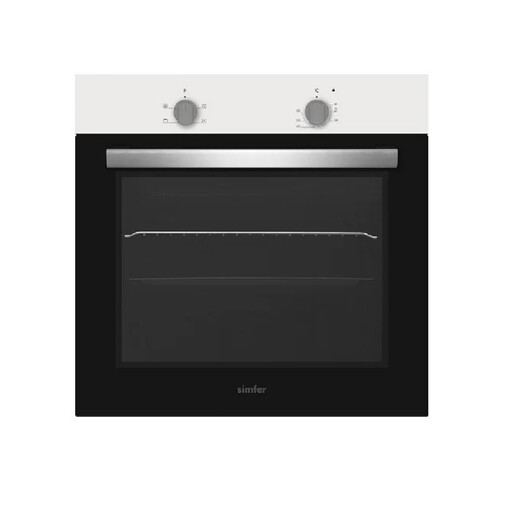
Consider this built-in single oven if it suits your kitchen layout and you want an option for fan baking.
Check the FO60W’s timer controls, cabinet cut-out and electrical instructions, as well as the space available for your loaf tin.
 No image available
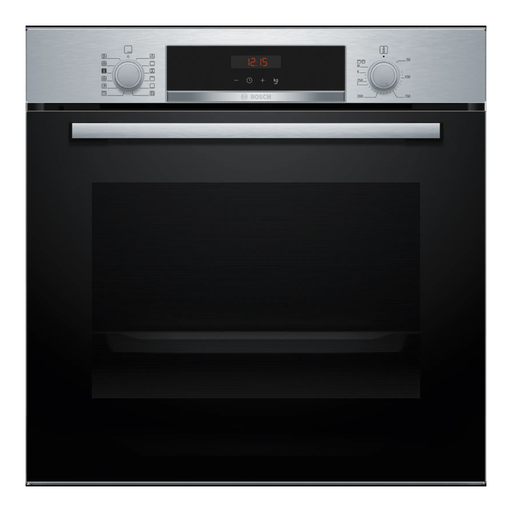
Consider this built-in single oven if a pyrolytic cleaning function matters alongside your baking needs.
Check its baking controls, loaf-tin clearance and installation requirements for the HQA574BS3B specifically. Follow the model’s precautions when using its high-temperature cleaning cycle.
 No image available
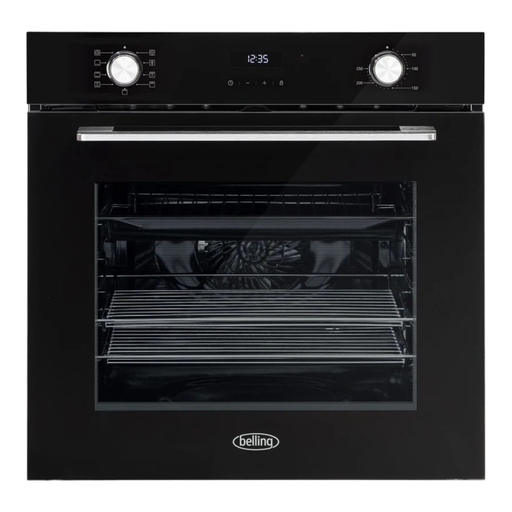
Consider this single oven if a built-in, fan-assisted option suits your replacement plans.
Check the BEL BI603MFC’s timer, usable shelf space and required electrical connection against your baking and installation needs.
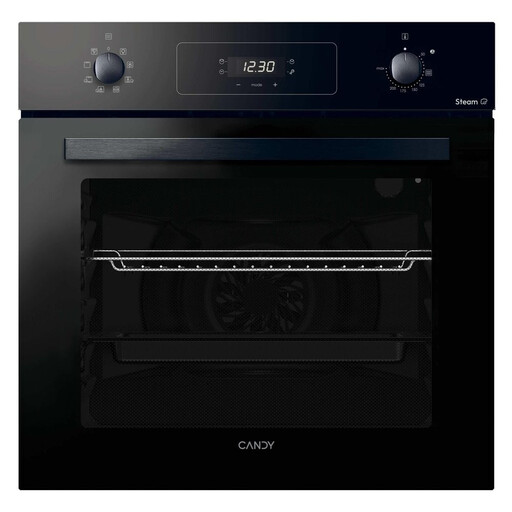 No image available
Consider this built-in single oven if you want to assess a fan-assisted option for timed baking.
Its stated 65 L capacity does not establish loaf-tin clearance. Check the cabinet dimensions and the permitted electrical connection in the FIDCN605 instructions.
Start with the setting in your chosen recipe. AGA Living’s lemon drizzle cake recipe specifies a preheated fan oven at 160°C for about 45 minutes and a skewer check; that timing and temperature are specific to its recipe, not every tin or oven.
Electrical Safety First advises having an oven fitted by a qualified electrician. Check the exact model’s power and connection instructions before purchase, as ovens can have different installation requirements.
Use the connection specified by the oven manufacturer rather than assuming an extension lead is suitable. Electrical Safety First warns that ovens and grills can overload extension leads, particularly alongside other high-power appliances; ask a qualified electrician if the available connection is uncertain.
Registering it can help you receive a safety-recall notification. Electrical Safety First recommends appliance registration so the manufacturer can contact you if a recall affects your model.