Regular oat-bar batch bakers
If you make traybakes often, check that the cavity accepts your usual tin and that the fan mode and shelf positions suit the number of trays you plan to bake.


For regular oat-bar batches, a built-in single fan oven is a practical choice if your baking tin fits and the kitchen can accommodate the installation. Choose a double oven when you also need a second cavity; for occasional smaller batches, consider a countertop convection oven or convection combination microwave only after checking tin fit, temperature settings and placement requirements.
If you make traybakes often, check that the cavity accepts your usual tin and that the fan mode and shelf positions suit the number of trays you plan to bake.
If you work from recipes written for different oven settings, accessible temperature controls, a timer and an oven thermometer can help you adjust the bake without relying on a fixed conversion.
If a built-in replacement is impractical, compare the usable space and placement instructions of countertop appliances before choosing a format for your oat-bar tin.
Choose the oven format around how often you bake and whether you need a second cavity; then check your tin against the usable shelf or tray, not just the stated capacity.
Consider it when: oat bars are a regular bake and you have a suitable integrated-oven opening.
Allow for: cabinet measurements and the exact model’s electrical connection requirements.
Consider it when: you need a separate cavity for another dish while the main oven is in use.
Allow for: a taller opening and model-specific installation requirements.
Consider it when: you bake smaller batches occasionally and have a suitable place for a countertop appliance.
Allow for: a smaller usable tray area and the ventilation and hot-surface precautions in the manual.
Consider it when: you also want microwave and grill functions alongside fan-assisted convection.
Allow for: a turntable or cavity shape that may restrict your choice of rectangular tin.
| Concern | What to check | Who this matters to |
|---|---|---|
| Fan heat and temperature control | Check for a fan setting, usable temperature controls and a timer. Start with the recipe’s fan temperature where one is given. | If I follow recipes written for different oven types, I want to adjust the setting without over-browning the bars. Around 36% of consumers put consistent fan baking first. |
| Tin fit and batch size | Compare your tin’s outside dimensions with the usable rack or tray; check supported shelf positions if you plan to bake multiple trays. | When I make enough bars for several days, my usual tin needs to fit and I may want room for another tray. Roughly 29% of consumers make batch capacity and tin fit their main concern. |
| Kitchen fit and connection | For a built-in model, check the cabinet opening and electrical requirements. For a countertop model, follow its placement and ventilation instructions. | If I am replacing an integrated oven or working with limited worktop space, the appliance has to suit my kitchen before its cooking features matter. Around 21% of consumers prioritise format and installation. |
| Cleaning and energy information | Check the exact model’s cleaning features and compare energy information on a like-for-like basis. | Frequent sticky traybakes make clean-up important to me, and I want energy information I can compare sensibly. About 14% of consumers put these upkeep considerations first. |
Recipes may be written for conventional heat, while fan ovens and their settings vary. Too high a setting can brown or dry the surface before the centre is ready.
Use the recipe’s fan setting if it has one. For a conventional-only recipe, Delia Online suggests reducing the temperature by 20°C as a starting point; check the bars before the stated finishing time and use an oven thermometer to assess your oven.
A capacity figure does not tell you whether a rectangular traybake tin fits on a rack, supplied tray or turntable.
Measure the tin, including any handles, and compare it with the exact appliance’s usable dimensions. A Good Food granola-bar recipe, for instance, uses an 18 × 25 cm tin.
Connection requirements differ by model: Bosch specifies electrician connection for the HQA534BB3B, while AEG specifies a hardwired connection and a 30 A fuse requirement for the OU5NP20B.
Check the installation instructions, cabinet opening and electrical supply for the oven you intend to buy, and seek qualified installation advice where needed.
An appliance maker’s result for one food load and test setup does not establish what will happen when you bake your usual batch of oat bars.
Compare energy information with its stated conditions in mind, alongside the tin size, preheating and number of batches your choice would require.
Its built-in oven range includes models aimed at multi-level hot-air cooking in an integrated kitchen.
Its built-in single and double ovens offer a route for buyers considering true-fan cooking or separate cavities.
Its built-in range includes models for buyers interested in baking on several shelf levels.
Its countertop appliances offer alternatives for kitchens where an integrated oven is not the preferred format.
These single and double built-in ovens are choices to consider if you have an integrated-oven opening. For oat bars, confirm your tin fit and the exact installation requirements before settling on a model.
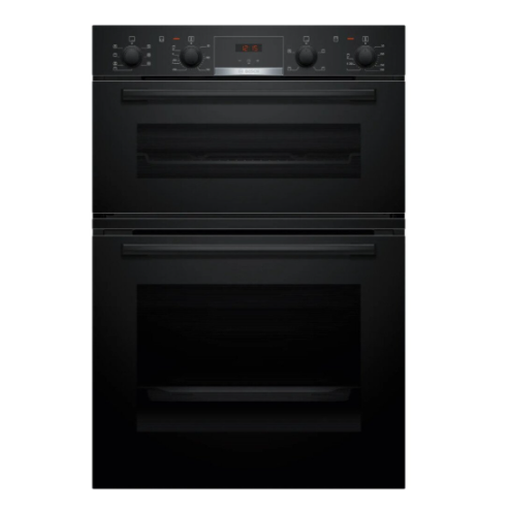 No image available
Consider this double-oven format if you need a separate cavity while baking oat bars. Check the cabinet opening, electrical connection and usable rack dimensions for your tin.
 No image available
This single-oven format suits a kitchen with an appropriate built-in opening. The Joybuy product information describes a 66 L cavity and 3D Hotair cooking on up to three levels; confirm tin fit and the electrical connection before ordering.
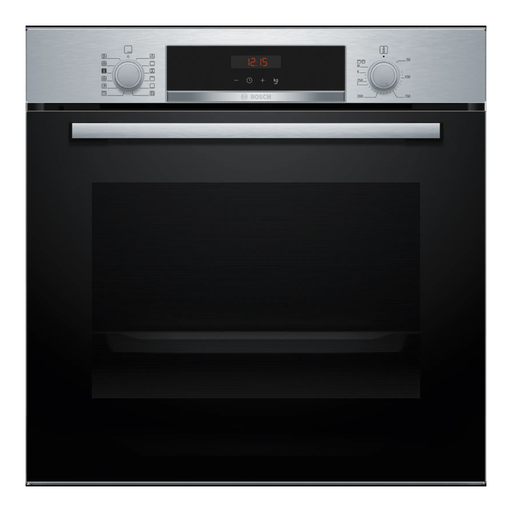 No image available
Consider this built-in single oven if a pyrolytic cleaning feature matters alongside baking. Confirm your tin and cabinet fit, follow the cleaning-cycle safety instructions and arrange the electrical connection specified for the model.
 No image available
The double-oven format is relevant if you want a separate cooking cavity while making oat bars. Check that the 90 cm built-in format suits your opening, then confirm the electrical requirements and usable tin space.
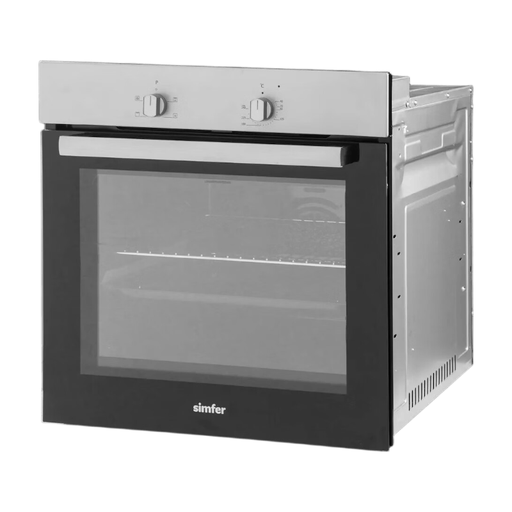 No image available
This single fan oven is a built-in option for an oat-bar baking tin that fits its usable shelf space. Compare the model’s cabinet and electrical requirements with your kitchen, and check that its temperature controls suit your recipe.
Use your recipe’s stated fan temperature if it provides one. A Good Food granola-bar recipe specifies 140°C fan for an 18 × 25 cm tin and a 30-minute bake; for a conventional-only recipe, Delia Online suggests a 20°C reduction as a starting point, alongside checking the oven handbook and using an oven thermometer.
No. Measure the tin, including its handles, and compare it with the exact model’s usable rack, tray or turntable dimensions. A stated cavity capacity alone does not establish clearance for a rectangular tin.
Check the exact oven’s connection instructions and your property’s electrical setup before planning installation. Bosch specifies electrician connection for the HQA534BB3B, and AEG specifies a hardwired connection and 30 A fuse requirement for the OU5NP20B. In England, Approved Document P addresses electrical safety in dwellings; check the requirements applicable where you live and seek qualified advice when needed.
Follow the chosen appliance’s placement and ventilation instructions, and allow for hot surfaces during use. Tefal’s instructions for the Optimo 19 L oven call for airflow around the appliance, specify that its rear faces a wall during use and warn that metal parts and the glass door become hot.