Baking several trays
If you want to make oat biscuits without repeating many small batches, look for a fan mode that supports multiple shelves. Check the tray dimensions and shelf guidance for the exact oven, not just its cavity volume.


Choose the oven format around what else you need to cook: a built-in double oven gives biscuits and other dishes separate cavities, while a multi-level fan single oven suits several biscuit trays when one cavity is enough. A countertop convection appliance avoids built-in installation but needs enough usable tray space for your batch. Check each model’s fan modes, kitchen fit and recipe guidance rather than relying on cavity litres alone.
If you want to make oat biscuits without repeating many small batches, look for a fan mode that supports multiple shelves. Check the tray dimensions and shelf guidance for the exact oven, not just its cavity volume.
If biscuits must share oven time with other dishes, separate cavities may make the schedule easier to manage. Check the cooking functions of each cavity independently: a second oven is not necessarily a second fan oven.
A countertop convection appliance offers a way to bake without changing cabinetry if smaller or staggered batches suit your plans. Measure the usable tray space and check the appliance’s required worktop clearances first.
Choose when: Biscuits and other dishes need separate oven space during the gathering.
Trade-off: It needs a suitable built-in opening, and the second cavity may have different cooking modes.
Choose when: Baking several biscuit trays matters more than cooking dishes in separate cavities.
Trade-off: Other dishes must share the single cavity or wait their turn.
Choose when: Avoiding built-in installation takes priority and smaller biscuit batches are workable.
Trade-off: Its stated capacity does not establish that your baking sheet will fit.
| Concern | What to check | Who this matters to |
|---|---|---|
| Batch capacity | Measure usable tray space and confirm which shelf positions the fan mode supports. Consider whether other dishes need a separate cavity. | If I need enough biscuits for everyone, repeated small batches could take up the time needed for the rest of the meal. Around 33% of consumers would put batch capacity first. |
| Kitchen fit | For built-in ovens, check the cabinet opening and connection requirements; for countertop appliances, check footprint and ventilation clearance. | When an oven has to fit my existing kitchen, I need an installation route I can actually accommodate. Kitchen fit would come first for around 27% of consumers. |
| Biscuit consistency | Confirm the exact model’s multi-level fan mode and follow its guidance when adapting a conventional-oven recipe. | If I bake on more than one shelf, I want to manage biscuit colour and timing without assuming conventional settings will transfer unchanged. Around 27% of consumers would prioritise that control. |
| Cleaning | Check the exact model’s cleaning features and which trays or rails need separate cleaning. | After repeated baking and hosting, I want the clean-up to fit my routine. Easier cleaning would be the primary concern for around 13% of consumers. |
Capacity does not tell you whether your baking sheets fit or how many can be used in fan mode. A double oven’s total volume is also divided between its cavities.
Measure the sheet you intend to use, then check the model’s usable tray dimensions and permitted shelf positions.
Bosch lists hot-air cooking in the main cavity of the MBA533BB3B, while the second cavity has different functions. The extra space can help with scheduling without providing an equivalent second fan-baking area.
Read the cooking-mode list for each cavity before planning simultaneous biscuit trays.
Built-in openings and electrical requirements vary by model. Bosch and NEFF specify electrician connection for the built-in models discussed here.
Check the exact installation manual against your cabinet opening, ventilation space and available connection before ordering.
Fan-mode guidance is specific to the appliance. AEG advises a 20°C temperature reduction for its SurroundCook true-fan mode when adapting conventional settings; that is not a rule for every oven or recipe.
Use a recipe’s fan setting when it provides one. Otherwise, follow your oven’s guidance and watch the first biscuit batch closely.
Relevant to built-in double ovens when biscuits need to share the cooking schedule with other dishes.
Relevant to built-in single ovens for buyers comparing multi-level fan cooking and cleaning features.
Relevant to built-in single ovens where baking on several levels is the main requirement.
Relevant to a countertop alternative when avoiding built-in installation matters more than baking large batches at once.
These choices focus on built-in double ovens for scheduling biscuits alongside other dishes, plus a single built-in gas fan oven for one-cavity baking. Compare each model’s tray fit, cooking modes and installation needs with your kitchen and planned batch.
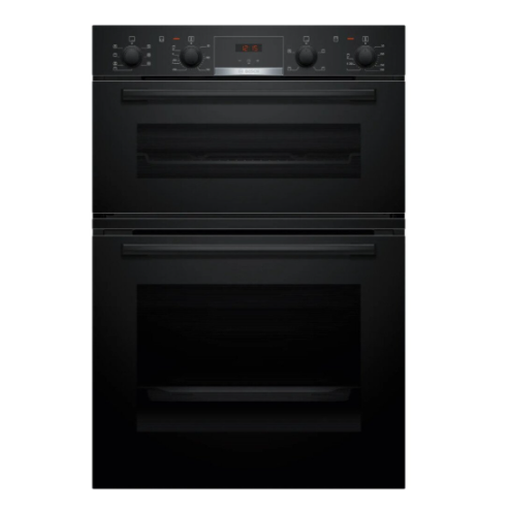 No image available
Consider this model if biscuit baking and other dishes need separate cavities during the gathering.
Bosch specifies a 71 L main cavity with 3D Hotair and a 34 L second cavity; do not assume the second cavity has the same fan mode.
Check usable tray dimensions, supplied accessories and the cabinet and electrical requirements before ordering.
 No image available
A double-oven format is worth considering if you want to set aside oven space for dishes other than biscuits.
The product name states a 90 cm format; check the actual installation dimensions rather than treating that nominal size as a cabinet measurement.
Confirm which cavity has a fan mode, whether it supports your intended tray arrangement and what electrical installation is required.
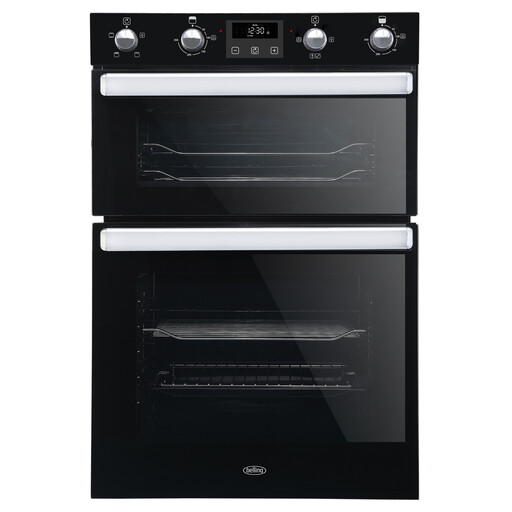 No image available
This double-oven format may suit a gathering meal that needs separate space for biscuits and another dish.
Before planning several biscuit trays, check the fan functions, usable tray space and permitted shelf positions for the exact model.
Compare its installation dimensions and connection requirements with your kitchen.
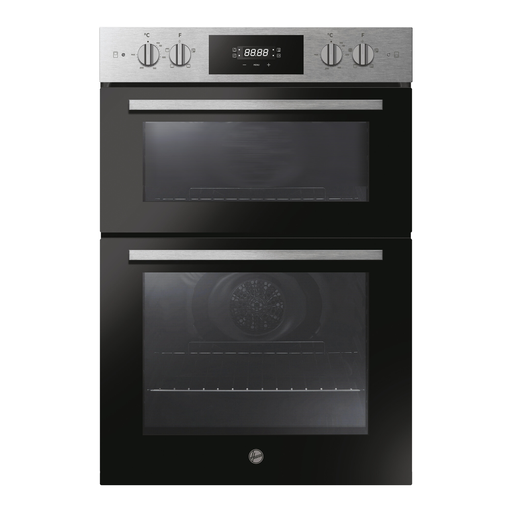 No image available
Separate cavities could help if biscuits and other food need oven time during the same gathering.
Confirm the exact fuel type and connection requirements before choosing this model: its listing describes the fuel type inconsistently.
Also check which cavity and shelf arrangements support your planned biscuit trays.
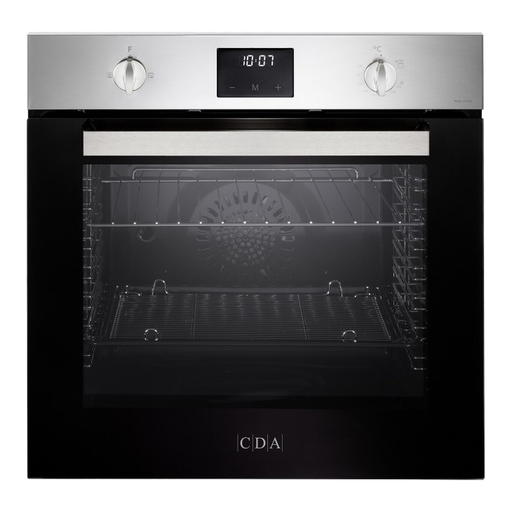 No image available
Consider this single-cavity option if gas fan baking fits your kitchen and you do not need a separate oven for other dishes.
The product name specifies a 70 L gas fan oven; that figure alone does not establish usable biscuit-tray space or multi-level baking support.
Check compatibility with your gas supply, the installation requirements and the permitted tray arrangement.
Yes, if the exact oven and selected mode support multi-level baking and the trays leave the required airflow space. AEG describes multi-level cooking for SurroundCook, while Bosch and NEFF state support for up to three levels on specified models; follow your model’s shelf guidance.
Use the recipe’s fan-oven setting if it gives one; otherwise consult your oven’s instructions rather than applying one adjustment to every model. AEG advises reducing the temperature by 20°C for its SurroundCook true-fan mode, and the first batch still needs watching.
It can suit smaller or staggered batches if its usable tray fits the biscuits you plan to bake. Check the internal and tray dimensions, how many trays the cooking mode permits and the required worktop clearances; litre capacity alone cannot answer the batch-size question.
Check the installation instructions for the exact model before arranging the work. Bosch and NEFF specify electrician connection for the built-in models discussed here; confirm your cabinet opening and electrical arrangements at the same time.
Yes. Compare the energy label and product information sheet for the exact models you are considering. UK government energy-information guidance identifies these documents for domestic ovens; use the corresponding model documents rather than a label for a different variant.