Shared-kitchen batch bakers
You need room for your spinach-pastry trays without taking over a shared worktop. Check where the oven can stand, which electrical supply it can use and how it will be cleaned between sessions.


Choose around the kitchen’s electrical supply, available space and the trays needed for each batch—not litre capacity alone. A compact countertop oven may suit smaller batches, while a larger tray format may suit repeated production; add humidity control only if tests with your pastry justify its water and cleaning requirements.
You need room for your spinach-pastry trays without taking over a shared worktop. Check where the oven can stand, which electrical supply it can use and how it will be cleaned between sessions.
Repeated batches make tray format and usable shelf positions especially important. Compare the pastries needed per bake with the oven’s stated tray capacity before giving up floor or bench space to a larger model.
If the finish of a particular pastry recipe is driving your choice, test it with the intended filling, trays and load. A humidity-capable oven also calls for a check of water access and shared cleaning responsibilities.
Confirm where the oven can be installed and powered, then work backwards from your trays and batch size. Consider humidity and cleaning arrangements in the context of the recipe and the people sharing the kitchen.
| Concern | What to check | Who this matters to |
|---|---|---|
| Electrical supply and space | Check the exact model’s power, plug or installation requirements, dimensions and final position against the kitchen’s supply and available space. | If an oven cannot safely use the available circuit or fit its allocated position, the tray capacity will not help me. Roughly 36% of consumers put electrical and physical fit first. |
| Batch and tray capacity | Count pastries per bake and compare your tray dimensions with the stated GN format, cavity dimensions and usable shelf positions. | I need to finish repeated batches using trays that fit, rather than judge output by litres alone; around 29% of consumers prioritise batch and tray capacity. |
| Pastry finish | Test the actual pastry, spinach filling, tray and intended load; assess browning and bottom crispness before deciding whether humidity control is useful. | For my recipe, a repeatable finish matters more than adding another shelf. About 21% of consumers make pastry control their primary concern. |
| Cleaning and shared use | Agree who cleans the cavity, racks, trays and surrounding surfaces, and how allergen cross-contamination will be controlled. | When other people use the same equipment, I need a workable handover routine. Roughly 14% of consumers place shared-use hygiene first. |
Buffalo Appliances specifies its DA957 for 3 × 1/2 GN trays and its CW864 for 4 × GN 1/1 trays. Those formats tell you more about whether existing pastry trays will fit than the cavity volume alone.
Write down the dimensions and number of trays used per batch, then check them against the exact oven’s stated tray capacity and internal dimensions.
If the trays do not fit, replacing them or changing the batch plan adds work.
Buffalo Appliances specifies a fitted 13A plug for the CW864, while Lincat specifies professional installation for its 4.0kW V7/4. The installation route depends on the model, not just the fact that it is electric.
Get the exact installation instructions and ask the kitchen operator or a competent electrical professional to confirm the supply before ordering.
A model needing electrical work may take longer to put into use.
Buffalo Appliances says the CU769 needs a water connection for its humidity function, although the oven can operate without that function. Humidity capability alone does not establish how your spinach pastries will turn out.
Test the intended recipe and confirm water access and cleaning responsibilities before making humidity a requirement.
Using the humidity function also means coordinating its water connection and cleaning.
Easy-to-clean surfaces and removable racks do not replace a routine for shared trays, worktops and allergenic ingredients. Food Standards Agency MyHACCP guidance calls particular attention to contamination controls in shared facilities.
Agree a cleaning and handover routine with the other kitchen users, including responsibility for the oven cavity, racks, door seals and surrounding surfaces.
These brands offer different formats worth comparing against your kitchen and batch plan; the requirements of one model should not be assumed to apply to another.
Buffalo Appliances lists countertop ovens with different tray formats, alongside a humidity-capable model.
Lincat Catering Equipment lists freestanding fan-assisted ovens for kitchens that can allocate a more permanent position.
UNOX offers commercial convection ovens across multiple tray and capacity formats, including options aimed at pastry production.
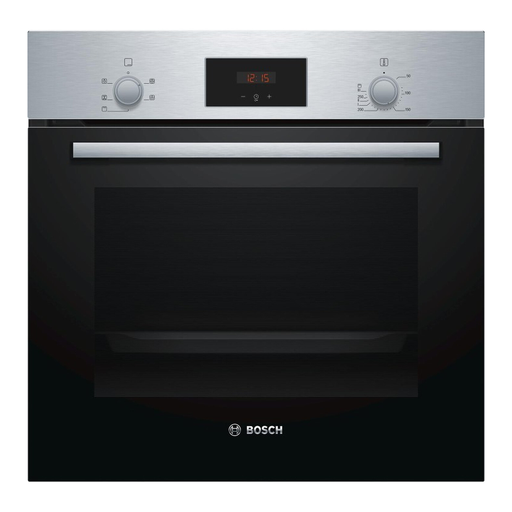
This built-in electric oven is a choice to assess if the shared kitchen can allocate a permanent housing position. Check its cooking modes and tray fit against your spinach-pastry batches; the countertop and freestanding formats discussed above involve different space and installation decisions.
 No image available
Consider this built-in oven if the kitchen can accommodate a permanent installation. Confirm the electrical arrangements, suitable housing and compatibility with your pastry trays before ordering.
Stainless steel finish.
Only if the exact oven is specified for that connection and the kitchen’s circuit and operating rules allow it. Buffalo Appliances specifies a fitted 13A plug for the CW864, but that does not establish the requirements of another model or the capacity of your kitchen’s supply.
Not necessarily: test your pastry and filling before deciding whether humidity improves the result you need. If you choose the Buffalo CU769 for that function, Buffalo Appliances says it requires a water connection, although the oven can operate without using humidity.
Confirm its location, electrical provision, tray compatibility and cleaning responsibilities with the kitchen operator. The Health and Safety Executive advises maintaining portable electrical equipment to prevent danger, using checks, inspection and testing appropriate to the equipment and its environment.
If you are starting a food business, the Food Standards Agency says to register with the local authority at least 28 days before trading or food operations begin. Confirm the arrangements for the establishment with its local authority.
In a food-business setting, shared equipment needs a clear procedure to protect other foods from allergen cross-contamination. Food Standards Agency MyHACCP guidance calls for contamination controls and highlights the importance of shared facilities; agree how trays, the oven and nearby surfaces will be cleaned between users.