What matters when buying?
Work out your tray load and likely number of cycles before comparing controls. Then check the proposed oven against the venue and the way food will be prepared and sold.
| Concern |
What to check |
Who this matters to |
| Batch capacity and trays |
Count the trays needed per batch and check their dimensions and format. GN1/1 and 600 × 400 bakery trays are different standards; confirm what the exact oven includes. |
If I need to finish a large quantity of squash cubes in a manageable number of cycles, tray space is my primary concern. Around 33% of consumers put batch capacity and tray format first. |
| Power and workspace |
Check the exact model’s voltage, phase, connection, dimensions, clearances and the support available at the venue. Have a competent person assess electrical work where needed. |
When the preparation space or supply is constrained, I need an oven that can be accommodated there before considering extra capacity. For around 25% of consumers, site compatibility comes first. |
| Repeatable cooking |
Compare the model’s temperature, timer and fan controls, then test your intended cube size and tray loading before the sale. |
If I will cook several batches, I want a process I can repeat without assuming another oven’s recipe times will transfer. Cooking control is the primary concern for around 25% of consumers. |
| Cleaning and sale workflow |
Check access for cleaning and plan food handling and allergen information appropriate to how the sale operates. |
When I am preparing food for customers, I need cleaning and food information to fit the way the sale is run. Around 17% of consumers place that workflow first. |
Joybuy product choices
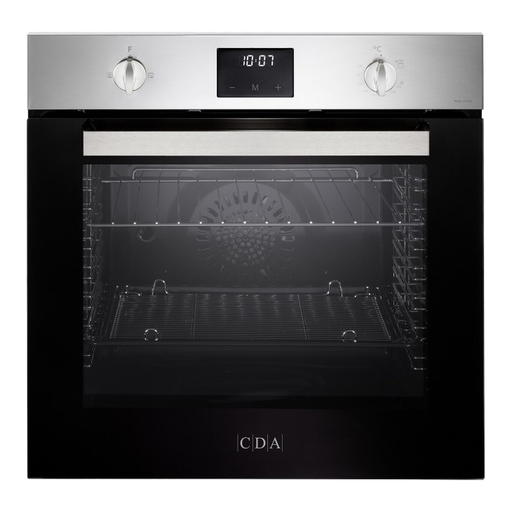
This built-in gas fan oven is a different route from the commercial tray-format ovens discussed above. Consider it only if a built-in gas appliance suits your venue, and check its tray capacity and installation requirements against your bake-sale plan.
 No image available
CDA SG121SS Built-In Single Gas Fan Oven, 70 L
A built-in gas fan oven to assess for a venue with a suitable installation, rather than assuming it will meet a commercial multi-tray batch plan.
The stated capacity is 70 L. Confirm the usable tray dimensions, number of tray positions and gas-installation requirements for your intended batches before choosing it.
View on Joybuy
Frequently asked questions
What oven size is practical for bake-sale squash cubes?
Choose by the tray load and number of cycles you need, rather than oven volume alone. Lincat specifies four GN1/1 positions for the CO343M, UNOX lists 600 × 400 bakery-tray variants, and Electrolux Professional specifies six GN1/1 positions for the 260688; confirm your tray format and venue requirements before settling on a size.
Will any commercial convection oven use an ordinary socket?
No single connection requirement applies across commercial convection ovens. Lincat specifies 230 V and 3 kW for the CO343M, whereas Electrolux Professional specifies 380–400 V/3N and up to 7.7 kW for the 260688. Check the exact model and venue supply; the Health and Safety Executive advises that electrical work be carried out by people who can demonstrate competence.
Does a bake sale need food-business registration?
Registration depends on whether the activity is a food business, not simply whether it is called a bake sale. The Food Standards Agency advises food businesses to register with their local authority at least 28 days before trading or food operations start. Somerset Council’s guidance distinguishes occasional voluntary or charity food provision by people who are not food businesses; ask the relevant local authority about your circumstances.
What allergen information should a food-business sale provide?
A food business needs to provide allergen information appropriate to how it offers the food. GOV.UK’s guidance for food businesses in England, Northern Ireland and Wales addresses prepacked and non-prepacked food; establish whether your squash dish will be loose, prepacked or prepacked for direct sale, and check the rules applicable where the sale takes place.
Does using a convection oven replace food-temperature checks?
No. Food Standards Agency food-safety guidance calls for adequate cooking facilities and temperature monitoring where needed for food safety. Plan the cooking and any subsequent holding process around your ingredients and sale setup rather than relying on the oven’s fan or timer alone.


