Small-kitchen picnic bakers
You are making one small bread pudding, have limited worktop space and need to check that your baking dish fits inside the oven.


Choose a fan-assisted mini oven if you want oven-style baking and have room for your dish; a larger cavity makes more sense when you are preparing several picnic portions. A convection microwave is worth considering if the same appliance must also reheat or defrost food, provided you check its baking mode and cookware rules. Whichever you choose, plan chilled transport separately if the finished pudding needs refrigeration.
You are making one small bread pudding, have limited worktop space and need to check that your baking dish fits inside the oven.
You need room for a larger dish or several portions and can accommodate a larger countertop appliance.
You want convection baking alongside microwave reheating and defrosting, and can follow the cookware instructions for each mode.
Start with the type of appliance your kitchen can accommodate, then check whether your dish and recipe will work with the exact model.
Consider it when: You are baking a small dish and worktop space is tight; confirm that the model has a fan or convection mode if circulated heat is essential.
Trade-off: A compact cavity limits dish and batch size, while a short mechanical timer may need attention during a longer bake.
Consider it when: You need space for a larger bread pudding or more picnic portions.
Trade-off: It needs more worktop room. Check electrical requirements and any restrictions on using built-in hobs alongside the oven.
Consider it when: You also need microwave reheating or defrosting and have space for the appliance or suitable cabinetry for a built-in model.
Trade-off: Baking and microwave modes have different cookware rules; check the manual before choosing a dish or rack.
| Concern | What to check | Who this matters to |
|---|---|---|
| Dish fit and batch size | Compare your dish’s outside measurements with the cavity, rack height and door opening; litres alone do not establish fit. | If I already have a baking dish, I need to know it will go in and come out safely without cutting the batch down. Around 30% of consumers put dish fit and batch size first. |
| Baking controls | Confirm the fan or convection mode, recipe-temperature coverage and timer on the exact model. | When I am baking rather than reheating, I want controls that let me follow my recipe and monitor the pudding. Baking control is the primary concern for around 40% of consumers. |
| Safe use and transport | Check the manual’s electrical and clearance requirements, and arrange chilled transport if the finished dish needs refrigeration. | Before taking pudding to a picnic, I need a safe place to use the oven and a way to keep a chilled dish cool on the journey. Around 30% of consumers prioritise those practical safety needs. |
A litre figure does not tell you whether your ceramic dish will clear the rack or door opening.
Measure the dish, then compare its outside dimensions with the oven’s usable cavity dimensions and allow room to handle it safely.
Power requirements do not establish temperature control, fan operation or whether the dish fits.
Check the cooking mode, temperature range and timer for your recipe; use the stated power requirement to assess electrical suitability.
Electrical Safety First warns that ovens and grills can overload extension leads, particularly when other large appliances share them. Hot surfaces also need the space specified for the model.
Follow the manual’s plug or installation and clearance instructions, keep combustible items away and seek advice from a qualified electrician if the kitchen circuit is in doubt.
Baking does not remove the need to keep a finished dish cool if it would normally be refrigerated. The Food Standards Agency advises keeping foods normally stored in the fridge cool at a picnic.
Cool and refrigerate the pudding as appropriate, then carry it in a closed, shaded cool bag or box with ice or frozen gel packs.
A chilled dish may also require a cool bag or box and ice or frozen gel packs.
The Cookworks 28L Mini Oven with Hob is a tabletop option for a larger dish and a kitchen that can accommodate its hob functions.
The Quest 35379 is a 26 L convection mini oven with an integrated double hotplate.
The Sage Smart Oven Pro BOV820BSS suits buyers considering programmed controls in a 21 L countertop oven.
The De'Longhi E12012W is a compact conventional mini oven to consider when a small dish matters more than a specified fan mode.
The Sharp R-922STM combines microwave functions with convection baking and grilling in a 32 L appliance.
These two convection microwaves offer baking alongside microwave functions: one is a combination model and the other is built in. For either, check dish clearance and recipe controls before choosing it for bread pudding.
 No image available
Consider this model if you want convection cooking and microwave functions in one appliance.
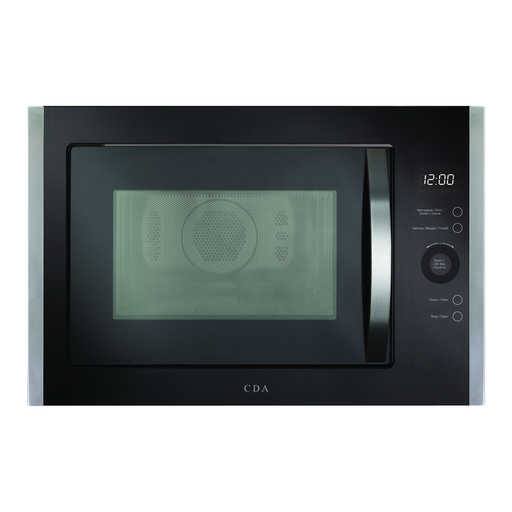 No image available
Consider this model if you want convection baking in a built-in appliance and have compatible cabinetry.
Choose by the outside dimensions of your baking dish, not capacity in litres alone. Check usable cavity height, rack position and door clearance so you can insert and remove the dish safely; a larger stated capacity does not guarantee that a particular dish will fit.
Choose a model that explicitly lists fan-assisted or convection baking if circulated oven heat is a requirement for your recipe. A conventional mini oven can also bake, but it uses a different heating approach: the Cookworks 28L and Quest 35379 list fan-assisted or convection operation, while the De'Longhi E12012W lists conventional and grill modes.
Do not assume an extension lead is suitable. Electrical Safety First warns that ovens and grills may overload one, particularly alongside other large appliances; follow the exact model’s electrical instructions and ask a qualified electrician if you are unsure about the circuit.
If the finished pudding would normally be refrigerated, keep it chilled during transport. The Food Standards Agency advises keeping fridge-stored picnic foods cool, while Food Standards Scotland recommends a cool bag or box with ice or frozen gel packs; keep the container closed and shaded where possible.