For an occasional two-layer coffee cake, start with an oven that has a fan setting and enough usable space for your tins: Sainsbury's Magazine specifies 160°C fan and two 19 cm tins in its coffee-cake recipe. Multi-level hot air is more relevant if you regularly bake several trays; steam assistance is optional, not a requirement for that recipe. Check the exact oven's controls, tin fit and installation requirements before choosing.
Who is each type of oven for?
Occasional coffee-cake bakers
If you usually make one two-layer cake, focus on following the recipe's fan setting and fitting both tins in the oven. Sainsbury's Magazine gives a two-tin fan-oven recipe; BBC Good Food advises checking the sponge before removing it.
Regular batch bakers
If you often bake extra layers, trays or other dishes, compare the shelf positions supported by each model's hot-air mode. Bosch, NEFF and Siemens describe multi-level systems, but the stated capability differs by model.
Moisture-conscious home bakers
If you want humidity-assisted baking beyond a standard coffee cake, consider whether you will use and maintain a steam function. AEG presents SteamBake as suitable for cakes; it is not needed for the Sainsbury's Magazine fan-oven recipe.
What matters when choosing?
Start with the recipe and your tins, then decide whether frequent batch baking or a preference for steam-assisted baking justifies additional functions.
| Concern |
What to check |
Who this matters to |
| Single-cake baking |
Check for the recipe's heating mode and temperature, and confirm that your tins fit in the intended positions. |
If I usually make one two-layer cake, I want to follow its fan setting and check that the centre is baked before taking it out; around 50% of consumers put reliable single-cake baking first. |
| Several shelf levels |
Compare the exact model's stated shelf-level capability for its hot-air mode and the shelves supplied. |
When I regularly bake extra layers or trays, usable space across several levels matters more to me than a mode I would rarely use; roughly 30% of consumers prioritise batch-baking capacity. |
| Moisture and upkeep |
Confirm whether steam assistance is included and what its water-use and cleaning instructions require. |
If I choose humidity-assisted baking, I need to be willing to add water and deal with moisture afterwards; about 20% of consumers put moisture management and upkeep first. |
Buying pitfalls
-
Using the same temperature for every cake
Recipes can specify different settings for fan and conventional heat. Sainsbury's Magazine gives 160°C fan or 180°C conventional for its coffee cake, while BBC Good Food notes that ovens vary.
Use the mode and temperature in the recipe you are making, preheat if instructed, and test the centre rather than relying on time alone.
-
Choosing specialist modes for an occasional cake
A standard fan setting is enough to follow the cited two-tin coffee-cake recipe. Multi-level hot air addresses more frequent batch baking, while steam assistance adds water-use and care steps.
Choose those functions for baking you expect to do regularly, and check that they are included on the exact model.
-
Checking appliance size but not installation needs
An oven must fit its housing and suit the available electrical or gas arrangement. Electrical Safety First advises checking power requirements before choosing an electric oven.
Compare the model's installation instructions with your kitchen housing and supply; seek a qualified installer where work is needed.
An incompatible housing or supply can mean kitchen alterations or installation work before the oven can be used.
-
Assuming every oven from a brand has the same functions
Hot-air, steam and cleaning features differ between models, even within the same brand.
Check the full model number and its listed heating modes, accessories, dimensions and care instructions before ordering.
Brands to consider
Bosch
Relevant if you are comparing standard built-in fan ovens with models offering multi-level hot air.
- Bosch says its 3D Hotair function supports cooking on up to three shelves at once.
- Check the selected model: a Bosch oven with 3D Hotair does not necessarily include steam or sensor functions.
NEFF
Relevant to frequent bakers considering multi-level cooking.
- NEFF describes CircoTherm as distributing heated air through the oven for cooking on multiple levels.
- That capability is less relevant if you normally bake only one two-tin coffee cake.
AEG
Relevant if you want to compare true-fan baking with models offering optional steam assistance.
- AEG presents SteamBake as a function suitable for cakes.
- Steam functions vary by model and bring water-use and post-use care instructions; they are not required for a standard fan-oven coffee-cake recipe.
Siemens
Relevant if you are comparing multi-level hot air with conventional one-level baking or considering a compact built-in format.
- Siemens says its 4D hotAir function can cook on up to four shelves; its buying guidance also describes standard and compact oven formats.
- Check the exact model's functions and installation drawing rather than using a format's typical dimensions as fitting measurements.
Joybuy ovens for coffee-cake baking
These built-in fan ovens are options to consider for a fan-setting coffee-cake recipe. Check the controls, space for your tins and the appropriate installation requirements for each model.
 No image available
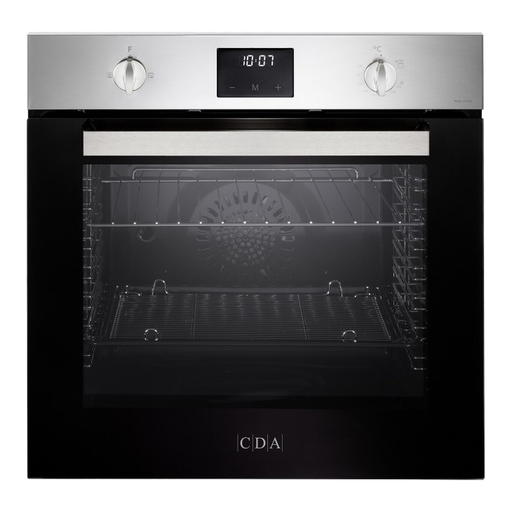
CDA SG121SS built-in gas fan oven, 70L, stainless steel
Consider this built-in gas fan oven if a gas installation suits your kitchen and you want to follow a fan-oven cake recipe.
Confirm that your two tins fit as intended and that the temperature controls suit the recipe. Check the installation requirements against your gas supply before ordering.
View on Joybuy
 No image available
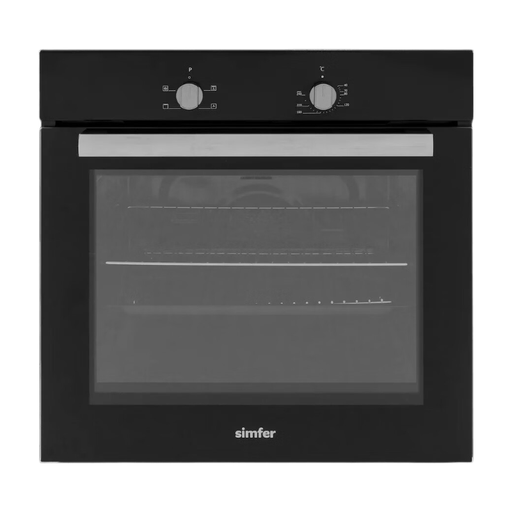
Simfer FO60B built-in electric fan oven, black
Consider this built-in electric fan oven if you plan to use a recipe's fan setting and have a suitable kitchen installation.
Check the fit for your tins, temperature controls, housing dimensions and electrical connection requirements for the exact model.
View on Joybuy
Common questions
What fan-oven temperature should I use for coffee cake?
Use your recipe's stated fan setting: Sainsbury's Magazine specifies 160°C fan for its coffee cake made in two 19 cm tins. Its alternative is 180°C conventional, but other recipes and tin sizes may call for different settings; test the cake's centre before removing it.
Do I need steam assistance to bake coffee cake?
No: the Sainsbury's Magazine recipe uses a standard fan setting without steam. AEG presents SteamBake as an option for cakes, but follow the selected model's water-use and cleaning instructions if you choose it.
Should I use fan heat or conventional heat for cakes?
Follow the mode specified by the recipe rather than applying one setting to every cake. BBC Good Food notes that fan ovens can dry a cake slightly, while Siemens describes top-and-bottom heat for traditional one-level baking; check which modes the oven offers if you use varied recipes.
What should I check before ordering a built-in oven?
Check the exact model's installation dimensions, housing fit and connection requirements before ordering. Electrical Safety First advises reviewing an electric oven's power requirements to avoid overloading the wiring; consult a qualified electrician if installation work or an assessment of the existing circuit is needed.


