Picnic-batch biscuit bakers
If you are making biscuits to share, give usable tray space and the fan setting priority over extra programmes. Good Food’s ginger-biscuit recipe uses 170°C fan, two large lined trays and space between the dough portions.


For a picnic batch of ginger biscuits, start with a fan-bake setting that covers the recipe temperature and enough usable tray space for the number you plan to make. Good Food’s recipe specifies 170°C fan and two large lined trays; a litre capacity alone cannot tell you whether either tray will fit. An oven-led mini oven suits baking-focused use, while a combination microwave makes more sense if you will also use its other cooking modes and can confirm its baking controls and tray arrangement.
The right format depends on whether the picnic bake, limited worktop space or everyday use of other cooking modes drives the purchase.
If you are making biscuits to share, give usable tray space and the fan setting priority over extra programmes. Good Food’s ginger-biscuit recipe uses 170°C fan, two large lined trays and space between the dough portions.
A worktop oven may appeal when a full-size oven is inconvenient or you need another place to bake. Which? identifies mini ovens as relevant to small kitchens and shared accommodation; check the appliance’s external footprint as well as its baking space.
If you also need microwave reheating and grilling, a combination appliance can put those modes alongside convection cooking. Confirm that its oven mode and approved bakeware suit the biscuits you intend to make.
Choose the appliance format around the jobs it will do regularly, then check its fan-bake controls and the space available for your biscuit tray.
Choose it when: Tray bakes are the main job and you want an oven-led appliance; Russell Hobbs lists a fan-assisted setting and an oven tray for its Mini Kitchen 22780.
Allow for: Permanent worktop space, and check cavity and rack measurements before planning a two-tray bake.
Choose it when: You expect to use baking alongside other oven functions. Ninja lists Bake, Roast and Pizza modes for its DT200UK.
Allow for: Additional modes do not establish the temperature control or tray arrangement needed for your biscuits.
Choose it when: Microwave cooking and grilling will be useful as well as baking; the Toshiba MW3-SAC23SF (MB) listing describes all three modes.
Allow for: A compact cavity may require a smaller tray or separate batches, depending on its usable dimensions and approved accessories.
| Concern | What to check | Who this matters to |
|---|---|---|
| Fan-bake temperature | Look for a fan-bake mode with a selectable 170°C setting, as specified by Good Food’s ginger-biscuit recipe. Check the manual rather than treating a grill or air-fry label as the same setting. | When I follow a fan-oven recipe, I want to select its stated temperature instead of relying on a different cooking mode; around 50% of consumers would put baking controls first. |
| Usable tray space | Compare your tray with the internal width, depth and rack clearances. Ask whether the instructions allow baking on two racks if you plan to use both recipe trays at once. | For biscuits I plan to share, I need room to space out the dough rather than judge batch size by litres alone; roughly 30% of consumers would prioritise usable tray space. |
| Other cooking modes | Check which microwave, grill and oven modes you will use, and which trays or racks are approved for each mode. | I want one appliance for reheating and baking, provided I can use its oven mode for biscuits; about 20% of consumers would put multiple cooking functions first. |
Good Food’s recipe calls for two large trays with gaps between the biscuits. A cavity capacity does not give you the internal tray width or clearance between racks.
Measure the tray you intend to use, then compare it with the appliance’s internal dimensions, rack positions and supplied accessories.
A list of cooking modes does not establish whether you can select the fan setting and temperature called for by the recipe.
Check the model instructions for its convection or fan-bake controls and the permitted rack or tray arrangement.
Electrical Safety First warns that exceeding an extension lead’s rating or connecting leads in a chain can create an overheating risk.
Use a suitable wall socket where possible. If an extension lead is needed, compare its marked rating with the appliance rating and do not daisy-chain leads.
GOV.UK advises checking appropriate product marking and the manufacturer’s name and address when buying electrical goods online. Marking requirements must be considered for the place where the product will be used.
Review the marking, manufacturer details, instructions and warnings before purchase. If you are in Northern Ireland, check the requirements applicable there rather than relying on Great Britain guidance.
These product lines illustrate different appliance formats; a brand’s inclusion does not establish that every model has the same baking controls or tray space.
Its Mini Kitchen 22780 is an oven-led worktop option for buyers focused on tray baking.
The DT200UK represents a countertop-oven format for buyers who will use several oven functions.
The MW3-SAC23SF (MB) is a combination-appliance option for buyers who also need microwave cooking.
The COF01CRUK is a multifunction mini-oven option for buyers interested in a wider programme set.
These combination microwaves are worth considering if other cooking modes matter alongside occasional biscuit baking. For a picnic batch, check the fan-bake temperature, approved baking accessories and usable tray space before choosing either model.
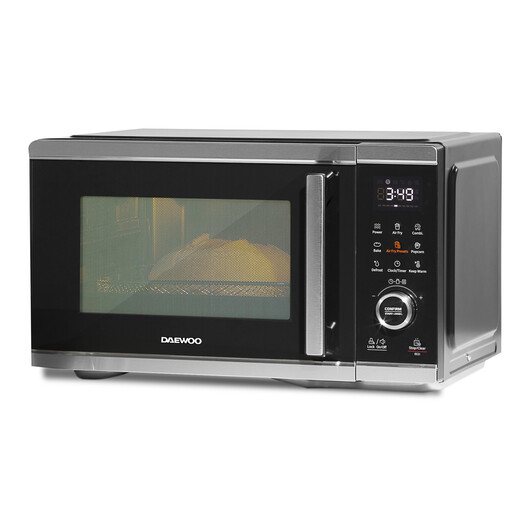 Image unavailable
Consider this model if you want microwave cooking and a Bake function in the same appliance, subject to confirming the setting needed for your ginger-biscuit recipe.
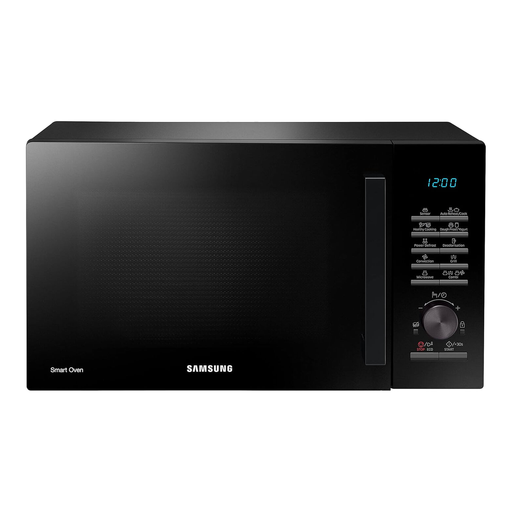 Image unavailable
This model suits consumers considering convection cooking alongside microwave use, provided its baking controls and tray arrangement match their planned batch.
For Good Food’s ginger-biscuit recipe, look for a fan setting you can select at 170°C; its alternative is 190°C in a conventional oven. Russell Hobbs states that the Mini Kitchen 22780 has a 60°C–230°C thermostat, but follow the instructions for whichever appliance you use and check the biscuits near the end of the recipe’s 8–10-minute bake time.
Neither capacity figure guarantees that two trays will fit. Good Food’s recipe uses two large trays, so compare their dimensions with the oven’s usable cavity and rack clearances, and check whether the instructions allow baking on two racks at once.
Only use an extension lead if its marked rating is suitable for the oven’s electrical load, and never connect extension leads in a chain. Electrical Safety First warns against overloading leads; a suitable wall socket avoids the need for one where available.
Check appropriate product marking, manufacturer identification, instructions and warnings before buying. GOV.UK gives this consumer-safety advice and explains that electrical equipment placed on the Great Britain market must meet applicable requirements. Northern Ireland has different marking requirements, so check the rules that apply there if that is where you will use the oven.